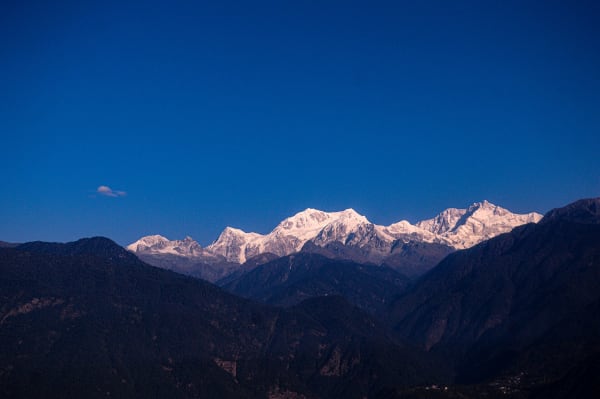
Kanchenjunga is the least-visited of the world's three highest mountains, and the south side is the most accessible way in. Eleven days from Kathmandu gets you to the Oktang viewpoint (4,730 m) above the Yalung Glacier, where Kanchenjunga, Kabru, Rathong and Talung form a continuous wall across the head of the valley.
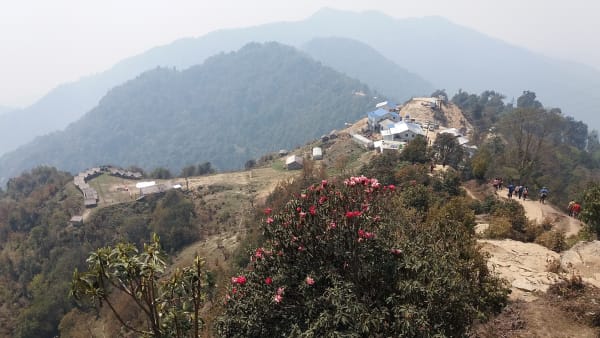
The route flies to Bhadrapur, drives through the tea country to Taplejung and Helok, and then climbs the Simbua Khola valley through dense forest — prime red panda habitat — into high pasture. The base for the final days is Cheram (3,870 m), with a full acclimatisation day before the early walk up the moraine.
It remains a restricted region that sees very few trekkers, and every night is in a lodge.

The Trek at a Glance
| Duration | 11 days Kathmandu to Kathmandu |
| Highest point | Oktang viewpoint, 4,730 m |
| Highest night | Cheram, 3,870 m |
| Difficulty | Moderate — the gentlest Kanchenjunga itinerary |
| Best seasons | April to May, October to November |
| Accommodation | Teahouses and village lodges throughout — no camping |
| Access | Flight to Bhadrapur, then road to Taplejung and Helok |
| Permits | Kanchenjunga Restricted Area and Conservation Area permits |
| Price | From USD 1,125 per person |
We run it as an 11-day trek. For the more dramatic north side, see the North Base Camp trek; for both, the full circuit.
The Route
Bhadrapur to Yarsang (91 m to 1,700 m)
Flight to the Terai, then the drive north through the Ilam tea gardens to Taplejung and on to Helok at 1,270 m. The walking starts there with a short day up to Yarsang — a gentle introduction after two days of travel.
Yarsang to Cheram (1,700 m to 3,870 m)
Two hard days climbing the Simbua Khola. The forest here is exceptional — dense, mossy, dripping rhododendron and oak, and prime red panda habitat, though sightings are rare. Tortong at 2,995 m, then a long climb into high pasture and the lodges at Cheram.
The acclimatisation day at Cheram (3,870 m)
A full day, and it matters — the climb from Yarsang has gained over 2,000 m in two days. The day is spent walking a few hundred metres higher and coming back down, which is the right way to use it.
Oktang (4,730 m)
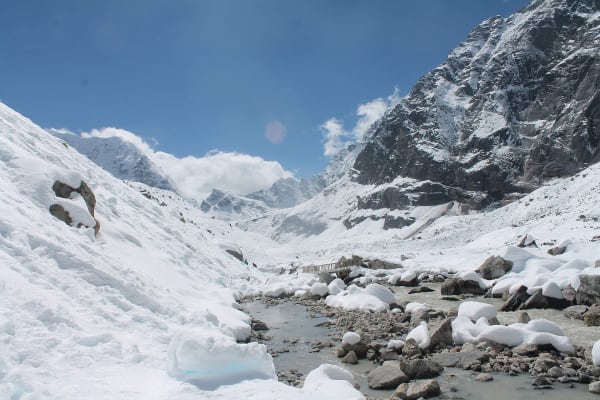
An early start for the out-and-back up the Yalung Glacier moraine, seven to nine hours in total. The viewpoint at Oktang has prayer flags, a chorten and the whole southern wall of the massif — Kanchenjunga at 8,586 m with Kabru, Rathong and Talung ranged beside it. Unlike the north side, which is a single overwhelming face, this is a panorama.

The descent
A long day from Cheram down to Yarsang, losing over 2,000 m, then out to Helok and the drive to Taplejung and Bhadrapur.
Difficulty and Who It Suits
This is the easiest way into a genuinely remote Himalayan region. Graded moderate, and the numbers back it up — nothing above 4,730 m, no night above 3,870 m, and lodges every night.
- Five to seven hours a day on most days.
- The Oktang day is the longest at seven to nine hours from a pre-dawn start, on glacial moraine.
- The descent from Cheram to Yarsang drops over 2,000 m in a single day and is hard on the knees.
- One acclimatisation day at Cheram, which is adequate for a 4,730 m maximum.
- -5 °C to -15 °C at Cheram and Ramche, with heating limited to the dining room.
A bag rated to -15 °C plus a liner is appropriate. If you are weighing the eastern routes against each other, our Makalu Base Camp guide covers the other big one.
What It Costs
At USD 1,125 this is the cheapest restricted-area trek we run, and one of the best value trips in Nepal by any measure — flights, permits and all meals included, in a region almost nobody reaches.
| Group size | Price per person |
|---|---|
| 1 trekker | USD 1,250 |
| 2 to 4 | USD 1,225 |
| 5 to 7 | USD 1,200 |
| 8 to 10 | USD 1,175 |
| 11 to 14 | USD 1,150 |
| 15 and over | USD 1,125 |
Restricted-area rules require a minimum of two trekkers on a permit. Taplejung has the last reliable ATM.
What Is Included
- Airport pickup and drop-off in Kathmandu.
- Kathmandu–Bhadrapur return domestic flights.
- Ground transport between Bhadrapur, Taplejung and Helok.
- Hotel accommodation in Kathmandu and Taplejung with breakfast.
- Teahouse accommodation throughout the trek.
- Three meals a day during the trek.
- Kanchenjunga Restricted Area Permit and Kanchenjunga Conservation Area Permit.
- A licensed English-speaking trekking guide.
- Group trekking map, first aid kit carried by the guide, and all government taxes, permit fees and service charges.
What Is Not Included
- International flights and the Nepal entry visa fee.
- Travel insurance including emergency helicopter evacuation.
- Personal trekking equipment and clothing, including a bag rated to -15 °C and a liner.
- Porter services, available at additional cost.
- Lunch and dinner in Kathmandu.
- Snacks, bottled water, hot showers, Wi-Fi, charging and drinks.
- Laundry, phone calls, souvenirs and personal expenses.
- Tips for guides, drivers and support staff.
- Extra accommodation or transport caused by flight delays, weather or anything outside the itinerary.
Charging above Tortong is solar, limited and usually charged for. Bring a large power bank.