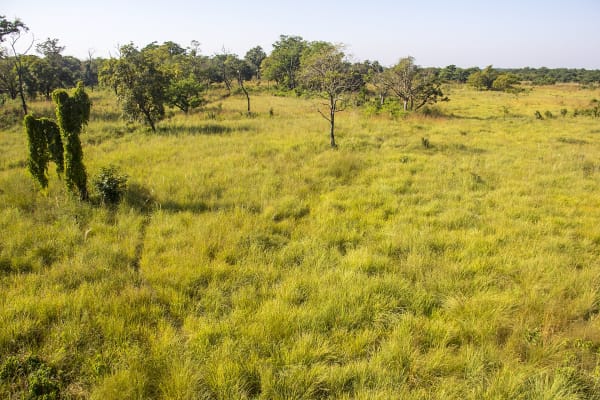
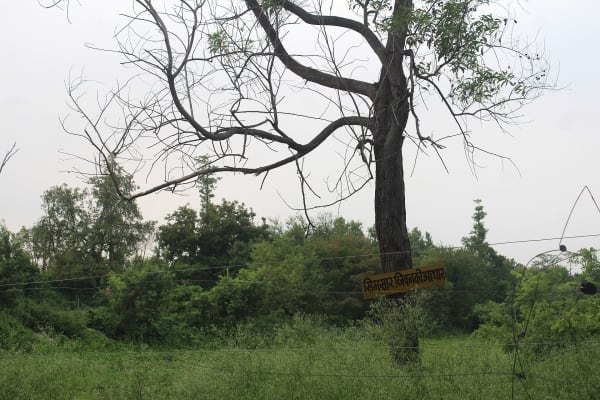
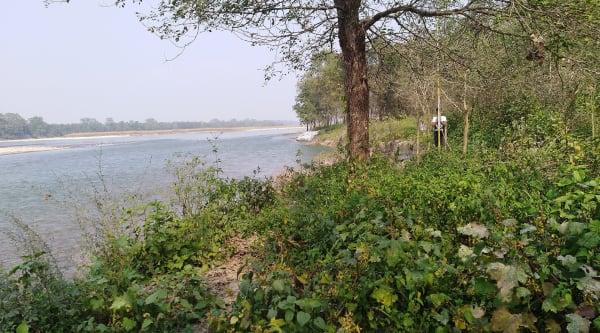
Almost everyone who comes to Nepal comes for the mountains, and a good proportion leave without realising the country has subtropical jungle holding rhino, tiger and wild elephant at 150 m above sea level. The Terai lowlands along the Indian border carry some of the best-protected grassland and sal forest habitat in South Asia, and visiting is straightforward.
Three destinations matter: Chitwan for convenience and guaranteed rhino, Bardia for tigers and wildness, and Koshi Tappu for birds and wild water buffalo. Here is how they compare.
The Three Compared
| Chitwan | Bardia | Koshi Tappu | |
|---|---|---|---|
| Size | 952 km² | 968 km² | 175 km² |
| Getting there | 4–5 hrs by road from Kathmandu | Flight to Nepalgunj plus 2–3 hrs | Flight to Biratnagar plus 1–2 hrs |
| Rhino | Over 600 — sightings routine | Present, reintroduced, fewer | Absent |
| Tiger | Around 125, sightings uncommon | Around 125, materially better odds | Absent |
| Wild elephant | Occasional | Resident herds | Occasional crossings |
| Wild water buffalo (arna) | Absent | Absent | The last wild population in Nepal |
| Birds | Over 500 species | Over 400 species | Over 500 species — the best birding in Nepal |
| River dolphin | Absent | Gangetic dolphins in the Karnali | Occasional in the Sapta Koshi |
| Visitors | Nepal's busiest park | A small fraction of Chitwan | Very few |
| Days needed | 3 | 4–5 | 2–3 |
| Best for | A reliable first safari on a circuit | Serious wildlife watching | Birds and wetland |
Chitwan: The Convenient Choice
Nepal's first national park, a UNESCO site since 1984, and the place where the greater one-horned rhino recovered from around 100 animals to over 600. It sits on the Kathmandu–Pokhara corridor, which makes it the easiest wildlife stop in the country to add to a trip.
- Rhino sightings are close to routine, often several in a three-day visit.
- Activities: jeep safari, dawn canoe on the Rapti, guided jungle walk with armed naturalists, birdwatching, the elephant breeding centre, and Tharu cultural programmes.
- The dawn canoe is the single best activity — silent, excellent for crocodiles and waterbirds, and frequently with rhino on the bank.
- Tigers are present and uncommon. Around 125 in dense habitat; a sighting is luck.
- Crowding is real at good sightings in peak season, with several jeeps at once.
Three days is the practical minimum. See our Chitwan guide for the detail, and our itineraries at three days, four days or a short two-day trip.
Bardia: The Wildlife Choice
Further west, harder to reach, and the better park. Bardia receives a small fraction of Chitwan's visitors and holds a growing tiger population, resident wild elephant herds, and Gangetic river dolphins in the Karnali.
- Tiger odds are materially better, with most sightings coming from patient riverbank or hide watching rather than driving.
- Wild elephant herds move through the park and across the Indian border, including very large bulls.
- Gangetic dolphins in the Karnali — one of very few places in Nepal to see them.
- No crowding. A sighting here is yours.
- Access: a flight to Nepalgunj then two to three hours by road. This is what keeps the visitor numbers down.
- Four days minimum, five better — the park is large and rewards patience.
See our Bardia guide, and itineraries at four days or five days.
Koshi Tappu: The Bird Choice
A 175 km² wetland reserve on the Sapta Koshi floodplain in eastern Nepal, designated a Ramsar site and completely different in character from the forest parks. It is a mosaic of river channels, oxbow lakes, marsh and grassland, and it is the best birding destination in Nepal.
- Over 500 bird species recorded, including large numbers of migratory waterfowl in winter — storks, ibises, ducks, waders, and the endangered Bengal florican in the grasslands.
- Wild water buffalo (arna) — Koshi Tappu protects the last wild population in Nepal, a few hundred animals, and the reserve exists largely for them.
- Gangetic dolphin occasionally in the river channels.
- Activities: boat trips, walking in the grasslands, and long hours with binoculars. It is not a jeep-safari park.
- Season: November to March is the window, with peak migratory numbers in the middle of winter.
It suits birdwatchers specifically. Our Koshi Tappu tour runs three days, and our bird watching guide covers the country's birding more broadly.
The Elephant Question
Nepal's Terai parks were for decades associated with elephant-back safaris, and this has changed for good reason. Making an elephant rideable requires training methods widely regarded as cruel, and the practice is in decline across the region.
- We do not offer elephant riding at any park, and we will not arrange it on request.
- Jeep safaris and canoe or boat trips see as much or more, and from a vehicle wildlife is less disturbed than by an approaching elephant.
- So-called ethical elephant bathing experiences generally still involve captive, trained animals. We do not include them.
- Breeding centres are observation rather than participation, though the chaining practices at them are themselves a legitimate subject of criticism.
- Wild elephants exist in both Chitwan and especially Bardia, and a wild herd is a completely different experience from a captive animal.
This is one of the clearer cases where the responsible option is also the better one — a dawn canoe on the Rapti or a riverbank sit in Bardia delivers more than an elephant ride, and leaves nothing behind. Our responsible travel guide covers the wider principles.
When to Go and What to Bring
| Season | Conditions | Wildlife viewing |
|---|---|---|
| October – December | Warm days, cool nights, grass being cut | Good, improving through the season |
| January – March | Cool, dry, short grass | The best window across all three parks |
| April – June | Very hot, often above 40 °C | Best tiger odds at waterholes; hard on visitors |
| July – September | Monsoon, flooding, tall grass | Poor — Bardia and Koshi Tappu largely inaccessible |
- Binoculars. Essential, particularly in Bardia and Koshi Tappu. Bring your own rather than hoping to borrow.
- Neutral clothing — greens, browns, greys. Long sleeves and trousers for mosquitoes.
- Insect repellent, a sun hat, and a long camera lens if you are photographing.
- Malaria: low but present risk in the Terai. Take current medical advice.
- Patience. The difference between a good and a poor safari is usually willingness to sit still rather than drive around.