Nepal has roughly 880 recorded bird species — about 8% of the world's total — in a country smaller than England. The reason is altitude: the land rises from 60 m in the Terai to 8,848 m at the summit of Everest within 200 km, stacking subtropical jungle, broadleaf forest, conifer, alpine scrub and high-altitude desert one above another.
For birdwatchers that makes Nepal one of the best-value destinations in Asia, and it is extraordinarily under-visited for the purpose. Here are the sites that matter.
The Best Sites by Habitat
| Site | Habitat | Species | Highlights |
|---|---|---|---|
| Koshi Tappu | Wetland, floodplain, grassland | Over 500 | Migratory waterfowl, storks, ibises, Bengal florican. Nepal's best. |
| Chitwan | Sal forest, grassland, oxbow lakes | Over 500 | Great hornbill, paradise flycatcher, Bengal florican, fish eagles |
| Phulchowki and Godavari | Mid-hill broadleaf forest | Over 300 | Spiny babbler (endemic), laughingthrushes, sunbirds, cutias |
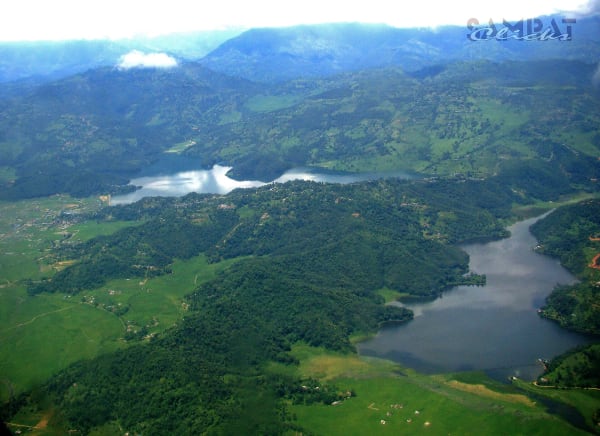
| Pokhara lakes | Lake, marsh, foothill forest | Over 400 in the valley | Waterfowl on Phewa and Begnas, raptors, kingfishers |
| Ilam and the Singalila ridge | Eastern cloud forest | Very high | The richest forest bird diversity in Nepal — eastern specialities |
| Rara Lake | High lake, conifer forest | Over 200 | Migratory waterfowl, coots, grebes, teal, Himalayan species |
| Bardia | Sal forest, riverine grassland | Over 400 | Sarus crane, Bengal florican, white-rumped vulture |
| Langtang and Khumbu | Alpine and subalpine | Fewer but specialised | Himalayan monal, blood pheasant, snow pigeon, choughs, lammergeier |
The Birds to Look For
The endemic and the near-endemic
Nepal has one true endemic: the spiny babbler (Turdoides nipalensis), a skulking brown bird of dense scrub found nowhere else on earth, most reliably seen at Phulchowki and in the mid-hills around the Kathmandu Valley. Finding one is a genuine tick and requires patience in thick cover.
The Himalayan pheasants
Himalayan monal — the national bird, danphe — is an iridescent copper, green and blue pheasant found above the treeline from about 3,000 m, commonly seen on the Langtang, Annapurna and Khumbu trails. Blood pheasant, satyr tragopan, koklass and cheer pheasant complete a set that is one of the great attractions of Himalayan birding.
The vultures
South Asia's vulture populations collapsed by over 95% from the 1990s because of diclofenac, a veterinary drug fatal to birds feeding on treated carcasses. Nepal banned it and established vulture safe zones and community-run feeding sites, and populations of white-rumped, slender-billed and Egyptian vulture are recovering. The lammergeier or bearded vulture, with a three-metre wingspan, is a regular sight over high trails.
The wetland birds
Koshi Tappu in winter holds large numbers of migratory waterfowl on the Sapta Koshi floodplain, along with black-necked and woolly-necked stork, ibises, and the endangered Bengal florican in the grasslands. It is the single richest site in the country.
When to Go
| Season | What is happening | Where to be |
|---|---|---|
| November – February | Peak migratory waterfowl; resident species concentrated at water | Koshi Tappu, Chitwan, Bardia, the Pokhara lakes |
| March – April | Breeding season, birds in full song and plumage; forest at its best | Phulchowki, Ilam, mid-hill forest, the trekking trails |
| May | Breeding continues; high-altitude species accessible as snow retreats | Langtang, Khumbu, Annapurna |
| June – September | Monsoon — difficult, though some high-altitude breeding is accessible | Rain-shadow regions only |
| October | Autumn passage; excellent all-round conditions | Everywhere |
The two peak windows are November to February for wetland and lowland birding, and March to April for forest species in song and breeding plumage. A trip combining Koshi Tappu or Chitwan in winter with a mid-hill forest site gives the widest species list.
Planning a Birding Trip
- Take a specialist guide. Nepal has excellent bird guides, and the difference between a general naturalist and a birder who knows the calls is enormous — often 60 species in a morning rather than 20. Tell us at the enquiry stage so we assign the right guide.
- Bring your own binoculars — 8x42 or 10x42 — and a field guide. Grimmett, Inskipp and Inskipp's Birds of Nepal is the standard.
- Plan around habitats rather than destinations. A trip that takes in a lowland wetland, a mid-hill forest and an alpine trail will out-list a trip that does one habitat thoroughly.
- Early mornings. Almost everything happens in the first three hours of light, and a birding day realistically starts at 5.30 a.m.
- Combine with a trek. The walk in to Langtang, the Khumbu forest below Namche, and the Ilam cloud forest are all superb, and a trekking itinerary can be paced for birding on request.
- Allow for weather. Mist in the eastern hills is common and it closes down forest birding for hours.
Our dedicated birding trips run at Chitwan, the Kathmandu Valley and the Pokhara lakes, and the Koshi Tappu tour is the one to build a trip around if birds are the priority.