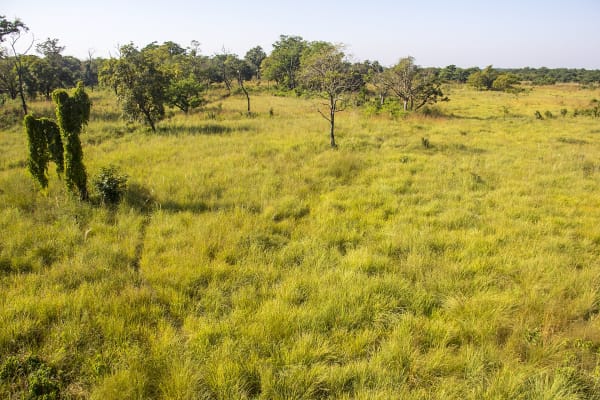
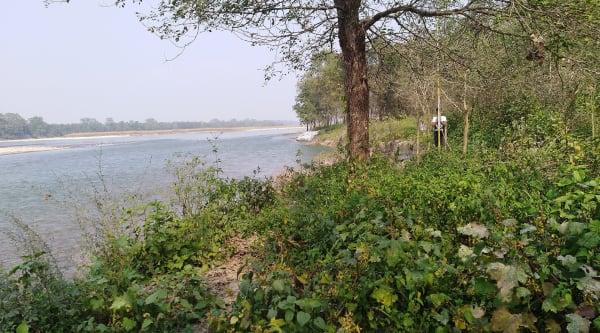
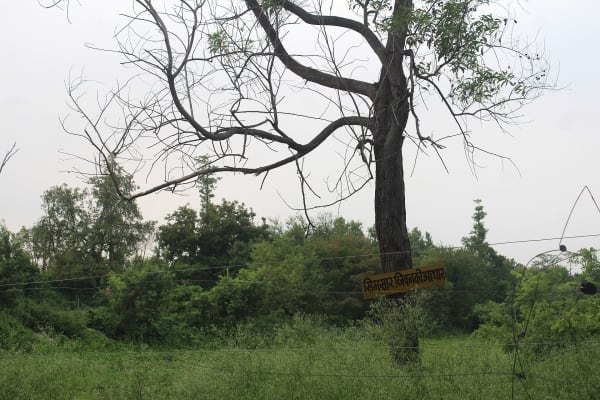
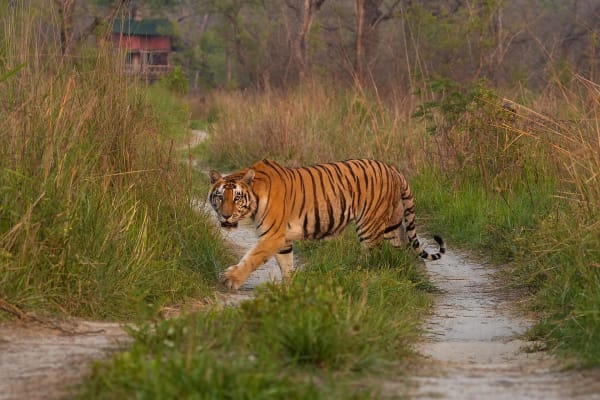
Bardia lies in Nepal's far west, on the Karnali river, and at 968 km² it is the largest protected area in the Terai. It is harder to reach than Chitwan, receives a small fraction of the visitors, and for wildlife it is the better park — a growing Bengal tiger population, resident wild elephant herds, Gangetic river dolphins in the Karnali, and grassland and sal forest with far less human pressure.
If you have the days and a serious interest in wildlife rather than a convenient stop, this is where to go.
Bardia or Chitwan?
| Bardia | Chitwan | |
|---|---|---|
| Size | 968 km² | 952 km² |
| Visitors | A small fraction of Chitwan's | Nepal's busiest park |
| Getting there | Flight to Nepalgunj, then 2–3 hours by road | 4–5 hours by road from Kathmandu |
| Tiger sightings | Materially better odds | Uncommon |
| Rhino | Present, reintroduced, fewer than Chitwan | Over 600 — sightings close to routine |
| Wild elephant | Resident herds | Occasional |
| River dolphin | Gangetic dolphins in the Karnali | Absent |
| Crowding on sightings | Minimal | Several jeeps at a good sighting |
| Days needed | 4 minimum, 5 better | 3 |
| Best for | Serious wildlife watching | A convenient, reliable first safari |
The honest summary: go to Chitwan if you want a rhino and a good three-day stop on the Kathmandu–Pokhara route. Go to Bardia if you want a real chance at a tiger and do not mind a flight and four days.
The Wildlife
- Bengal tiger. Bardia's population has grown substantially over the last two decades through anti-poaching work and habitat protection, and the park now holds around 125 tigers. Sightings — typically from a riverbank hide or on a jeep track in the early morning — are far more frequent here than in Chitwan, though still not guaranteed.
- Wild elephant. Resident herds move through the park and across the Indian border, including some very large bull elephants. A wild herd is a completely different experience from a captive animal.
- Greater one-horned rhino. Reintroduced from Chitwan and now breeding, though in smaller numbers.
- Gangetic river dolphin. A small, critically endangered population in the Karnali — one of very few places in Nepal where they can be seen.
- Gharial and marsh mugger crocodile on the Karnali and Babai rivers.
- Swamp deer, spotted deer, sambar, hog deer, blackbuck, nilgai and gaur.
- Over 400 bird species, including Bengal florican, sarus crane and the endangered white-rumped vulture.
How You See It
- Full-day jeep safari. The main activity, reaching the Babai valley and the interior grasslands — Bardia's size is the point, and a half day does not do it.
- Riverbank tiger watching. Sitting quietly at a hide or on a riverbank for hours, which is how most Bardia tiger sightings actually happen. It requires patience and it works.
- Guided jungle walk. On foot with two armed naturalists, which in Bardia's more open grassland is a superb way to spend a morning.
- Karnali river trip. By raft or boat, for dolphins, crocodiles and waterbirds.
- Tharu village visit. The Tharu communities of the far west have a distinct culture from those around Chitwan, with their own architecture and traditions.
- Birdwatching. Early morning in the grasslands and along the rivers.
We run it as a 4-day tour, a 5-day jungle safari, and a 3-day trip for travellers tight on time. Four days is the minimum that allows two full safaris plus a river trip.
Getting There and When to Go
- Flight to Nepalgunj from Kathmandu, about 55 minutes, then two to three hours by road north-west to Thakurdwara on the park boundary. This is the practical route.
- By road from Kathmandu is 12 to 15 hours, which almost nobody does by choice.
- From Pokhara, a long day by road or a flight via Kathmandu.
- Combining with Rara Lake or the far-western treks, both of which also route through Nepalgunj, works well — see our Rara guide.
| Season | Conditions | Wildlife |
|---|---|---|
| October – December | Warm, drying out, grass being cut | Good and improving |
| January – March | Cool, dry, short grass | The best window — excellent visibility |
| April – June | Very hot, above 40 °C | Best tiger odds of the year at waterholes, if you can stand the heat |
| July – September | Monsoon, flooding, tall grass | Park largely inaccessible |
A specific note on April and May: it is brutally hot, and it is also when tigers come to water most predictably and the grass is shortest. Serious wildlife photographers often choose it deliberately.
Practicalities
- Accommodation is lodges and community-run guesthouses at Thakurdwara on the park edge, ranging from simple to comfortable. There is no large-resort development here, which is part of the appeal.
- Park fees are charged per entry day and included in our packages.
- What to bring: neutral clothing, long sleeves and trousers, insect repellent, binoculars — essential here more than anywhere — a sun hat, and a long lens if you are photographing.
- Patience. The difference between a good and a poor Bardia visit is usually willingness to sit still for three hours at a riverbank rather than drive around looking.
- Malaria: low but present risk in the Terai. Take current medical advice.
- Safety: on foot, follow your naturalist exactly. Wild elephant and rhino are the genuine hazards rather than tigers.
- No elephant riding. As in Chitwan, we do not offer or arrange it.
One last argument for Bardia: the far west is Nepal's poorest region and sees very little tourism revenue. A four-day visit here puts money into community lodges and into the anti-poaching economy that has driven the tiger recovery. Our jungle safari guide compares all of Nepal's wildlife parks.