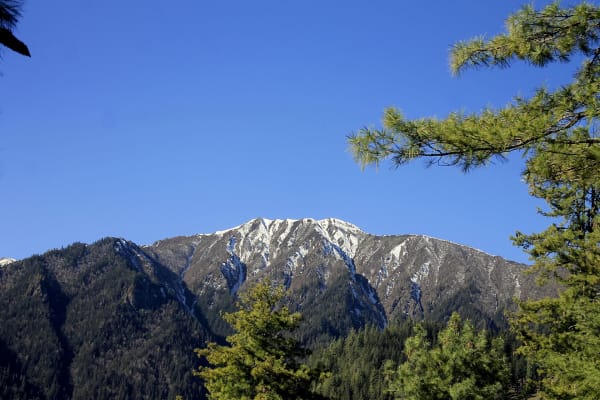
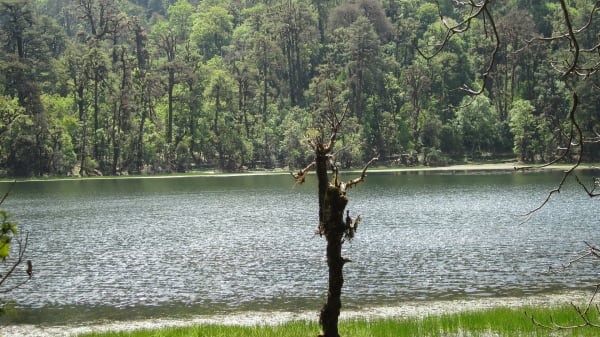
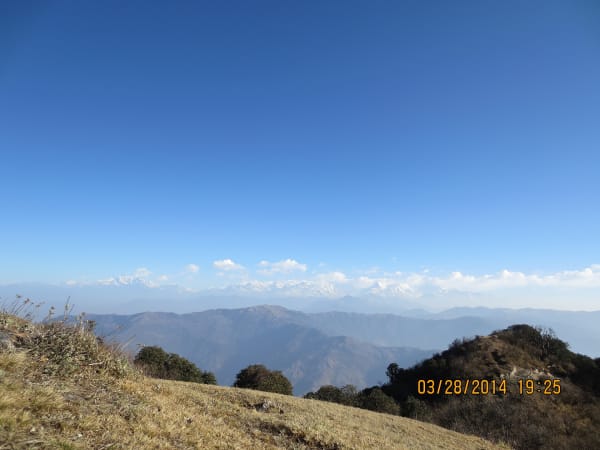
Rara Lake sits at 2,990 m in Mugu district in Nepal's far west, and at roughly 10.8 km² it is the largest lake in the country. It lies inside Rara National Park, Nepal's smallest, which exists essentially to protect it — a deep blue lake ringed by blue pine, spruce and juniper forest, with snow peaks on the northern horizon.
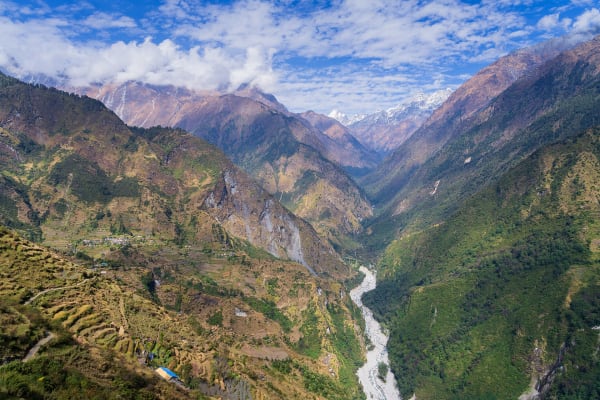
The far west is the least developed and least visited part of Nepal, and a trek here is a different experience from the Annapurna or Everest corridors: fewer lodges, a road journey or flight that takes real effort, and villages where trekking is not part of the economy.
The Trek at a Glance
| Duration | 11 days from Kathmandu |
| The lake | Rara, 2,990 m, about 10.8 km² — Nepal's largest |
| Highest point | About 3,450 m on the Ghurchi Lagna pass |
| Difficulty | Moderate — remote, basic lodges and camping, modest altitude |
| Access | Flight to Nepalgunj, then to Jumla or Talcha |
| Permits | Rara National Park entry and trekking registration |
| Best seasons | September to November, April to June — and viable in monsoon |
| Accommodation | Basic lodges, homestays and camping |
We run it as an 11-day Rara Lake trek.
The Route
Getting there
A flight to Nepalgunj in the western Terai, then a second flight to Jumla at 2,370 m or, on some itineraries, directly to the strip at Talcha above the lake. Both legs are small-aircraft and weather-dependent, so spare days matter. Jumla is a district town in a broad valley and an interesting place in its own right — the historic centre of the Khas kingdom and the origin of the Nepali language.
Jumla to Rara
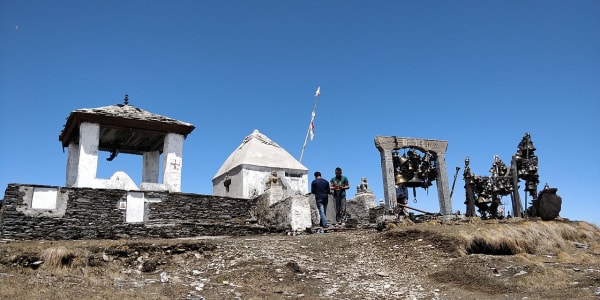
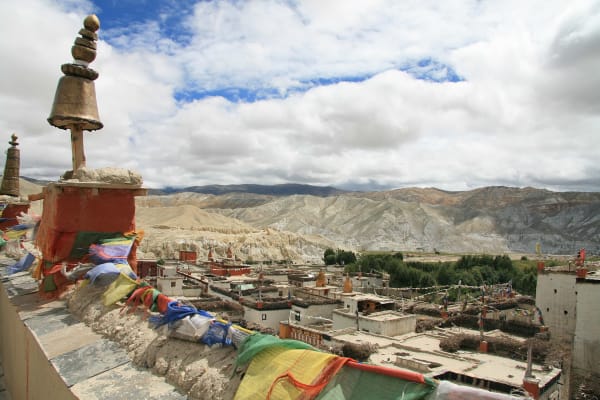
North over a series of ridges and the Ghurchi Lagna pass at around 3,450 m, through villages of stone and slate houses that look nothing like the Himalayan architecture further east. The forest through here is blue pine and spruce, and the farming is barley, buckwheat and apples.
The lake
Rara itself, reached after three or four days. The full circuit of the lake is a comfortable day's walk — about 13 km — and the view from Murma Top above the southern shore takes in the whole lake with the Kanjirowa and Sisne ranges beyond. The water changes colour through the day, and at dawn it is as still as anything in Nepal.
Out via Talcha or back to Jumla
Most itineraries fly out from Talcha, 30 minutes' walk above the lake, or walk back to Jumla by a different route via Gamgadhi.
Rara National Park
The park covers only 106 km², making it Nepal's smallest, and it was gazetted in 1976 specifically to protect the lake and its catchment. Two villages were relocated out of the park at the time, which is a contested part of its history.
- Forest — blue pine, black juniper, west Himalayan spruce, and oak, with rhododendron in the understorey. The juniper and spruce association is characteristic of the far west and not seen in the central Himalaya.
- Mammals — Himalayan black bear, red panda, musk deer, leopard, and Himalayan tahr, though sightings are uncommon.
- Birds — over 200 species recorded, with the lake an important stop for migratory waterfowl including coots, grebes and teal. It is one of the best birding lakes in Nepal.
- The lake itself drains via the Nijar Khola into the Mugu Karnali, and holds the endemic snow trout.
Why the Monsoon Works Here
The far west sits at the western end of the monsoon's reach, and Rara gets considerably less summer rainfall than the central and eastern hills. That makes June to August a genuine option, and an unusually good one.
- The meadows around the lake are in flower from June, which is the single most beautiful time to be there.
- Temperatures are comfortable — 2,990 m in summer is pleasant walking.
- Nobody is there. Rara is quiet in October; in July it is empty.
- The caveat is the flights. Nepalgunj and Jumla are both affected by weather over the plains and the lower hills, so build in three spare days.
September to November gives the clearest views of the northern peaks, and April to June combines reliable flights with the flowers starting. Winter is cold, the passes hold snow, and some lodges close. Our monsoon guide covers the rain-shadow and low-rainfall regions together.
Practicalities and Who It Suits
- Accommodation is basic lodges and homestays with camping on some stages. There is no trekking lodge economy here in the way there is in Annapurna.
- Food is simple and local — dal bhat, potato, buckwheat, dairy. Our crew carries supplies for the remoter stages.
- Altitude is modest: 2,990 m at the lake and 3,450 m at the pass, so risk is low.
- Permits are Rara National Park entry at NPR 3,000 plus trekking registration. No restricted permit.
- Flights are the main uncertainty. Three spare days is the right margin.
- Development — the far west is Nepal's poorest region, and services of all kinds are limited. Travel with that expectation and it is not a problem.
It suits trekkers who have seen the main regions and want somewhere genuinely different, travellers looking for a monsoon option, birdwatchers, and anyone drawn to the idea of the least-visited corner of the country. It does not suit anyone who wants big mountains close up, or lodge comfort. For high far-west mountains, Api Himal Base Camp is the alternative — see our Api Himal guide.