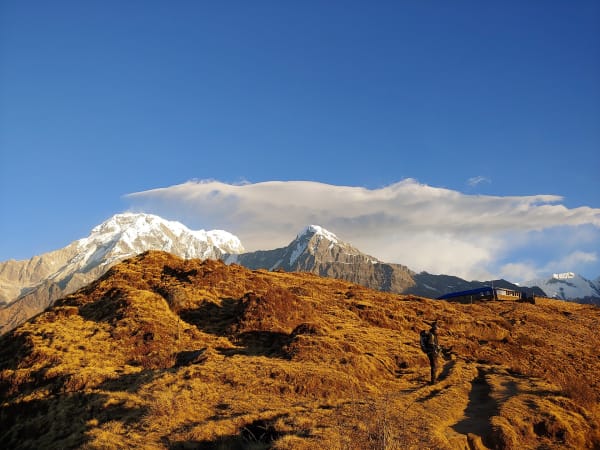

The complaint arrives every autumn: the trail to Namche was a queue, the dining room at Gorak Shep was standing room only, Poon Hill at sunrise felt like a station platform. All true. What is also true is that the people are concentrated on a handful of trails, at a handful of places, at particular hours — and the moment you step outside that pattern the mountains are as empty as they ever were.
Nepal has hundreds of trekking routes. Most visitors walk one of three. That imbalance is the whole opportunity.
Where the Crowds Actually Are
| Busy | Why | Worst moment |
|---|---|---|
| Lukla to Namche Bazaar | Every Everest trekker, porter and yak train shares one trail | Mid-morning, when the flights have landed |
| Lobuche and Gorak Shep | Very few lodges, no alternatives | Any afternoon in October |
| Poon Hill summit | Hundreds of people arrive for the same sunrise | The half hour before dawn |
| Annapurna Base Camp | One cluster of lodges at the end of a one-way gorge | Early afternoon, when beds run out |
| Thorong La | Everyone crosses on the same morning schedule | Between 6 and 9 am |
Notice what is missing. The Manaslu Circuit, Langtang, the whole of the east and west, and every side valley off the main trails. Notice also that the busy places are busy at specific times. Both facts can be used.
Shift Your Dates
The peak is narrower than the season. On the main trails it runs from roughly the second week of October to the middle of November. Either side of that the weather is nearly as good and the numbers are sharply lower.
- Late September to early October. The tail of the monsoon: greener, some afternoon cloud, an occasional shower, and trails that are half empty.
- Mid-November to early December. The best-kept window of the year. Colder, with the same clear sky and a fraction of the people. See trekking in November.
- Festival days. On the main days of Dashain and Tihar the number of Nepali trekkers drops and many groups time their trips to avoid them. In 2026 that means around 20 – 22 October and 8 – 11 November.
- Start midweek. Group departures cluster on weekends, and the wave moves up the trail together. Starting on a Tuesday or Wednesday puts you between waves.
Choose the Quieter Route
For almost every famous trek there is a neighbour with a similar view and a fraction of the traffic.
| Instead of | Consider | What you gain |
|---|---|---|
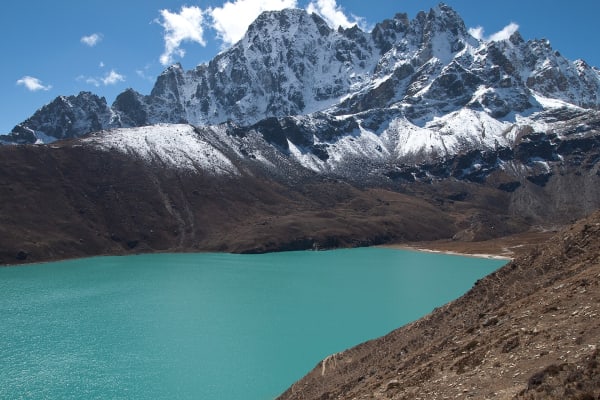
| Everest Base Camp | Gokyo Lakes | Turquoise lakes, the view from Gokyo Ri, a third of the trekkers |
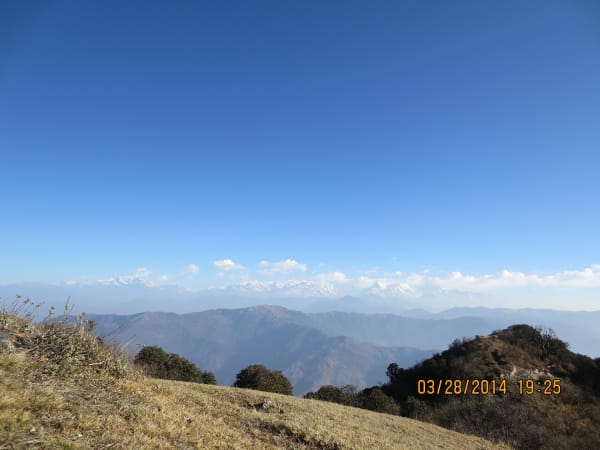
| Everest Base Camp | Pikey Peak | A panorama from Kanchenjunga to Annapurna, no flight, almost nobody |
| Poon Hill | Mohare Danda or Khopra Danda | The same mountains from a ridge with community lodges and silence |
| Annapurna Base Camp | Mardi Himal | A ridge walk under Machhapuchhre; busy by its own standards, calm by ABC's |
| Annapurna Circuit | Manaslu Circuit | What the Annapurna Circuit was thirty years ago: no road, strong culture |
| Langtang Valley | Tamang Heritage Trail | Villages and hot springs instead of a single valley trail |
If you want to go further off the map, our guide to off-the-beaten-path treks covers the routes where you may meet no other foreigners at all. They ask for more time and more tolerance of basic lodging, and repay both.
Use the Side Trails
You can also stay on the famous route and simply leave the main line of it. Most major treks have a parallel path that the standard itineraries skip.
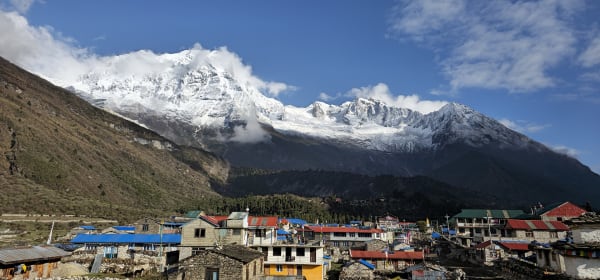
- Everest: go by Phortse. From above Namche, the high trail through Mong La and Phortse to Pangboche runs along the opposite side of the valley from the Tengboche route. It has better views of Ama Dablam, far fewer people, and frequent sightings of Himalayan tahr.
- Everest: return by Thame. A day's detour west of Namche takes you to a quiet Sherpa valley most trekkers never see.
- Annapurna Base Camp: enter by Landruk. Approach from the east bank through Landruk and Jhinu rather than up the main staircase from Nayapul and Ghandruk.
- Annapurna Circuit: take the upper trail. Between Pisang and Manang the high route through Ghyaru and Ngawal is a stiff climb with the best views on the whole circuit, while the road and most trekkers follow the valley floor.
- Langtang: sleep beyond Kyanjin. Day-walk up the valley towards Langshisha Kharka and you will have a glacial valley to yourself.
Sleep Where Others Don't
Standard itineraries stop in the same villages, so those villages fill and the ones an hour either side sit half empty. Staying off the standard stops is the single easiest change to make, and it puts you on the trail at a different time from everyone else for the whole of the next day.
| Everyone stops at | Try instead |
|---|---|
| Phakding | Monjo or Benkar, further on — which also shortens the climb to Namche |
| Tengboche | Deboche, twenty minutes beyond, or Pangboche |
| Dingboche | Pheriche, in the next valley, where the rescue clinic gives a daily altitude talk |
| Lobuche | Thukla, below the memorial ridge, for those acclimatising slowly |
| Ghorepani | Tadapani or Deurali on the ridge towards Ghandruk |
| Chhomrong | Sinuwa, across the valley |
| Manang | Braga or Ngawal |
Altitude still governs. Moving a night's stop is fine; moving it higher than the schedule allows is not. Check any change against the sleeping-altitude rule in our altitude guide.
Walk at Different Hours
- Leave at first light. Groups breakfast at seven and walk at eight. Be on the trail by half past six and you have two hours of empty path in the best light of the day.
- Or leave late. On short stages, start after nine and let the wave go ahead.
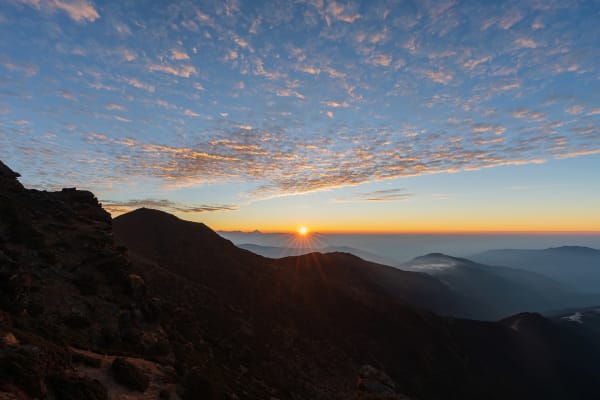
- Skip the sunrise scrum. At Poon Hill, the tower is packed for dawn and deserted an hour later with the same view. Or go for sunset, when almost nobody does. Kala Patthar at sunset is warmer and arguably better lit than at dawn.
- Eat lunch early or late. Trail-side kitchens cook to order; arriving at noon with three groups means an hour's wait.
- Reach the bottlenecks by early afternoon. Where beds are limited, the people who arrive at one have rooms and the people who arrive at four do not.
When Busy Is Fine
A full trail has its compensations. Lodges are lively, there is always someone to walk with, and on a first trek the company is reassuring. Busy routes are also the best supplied: more lodges, better food, working phone signal, a clinic within reach. If this is your first time at altitude, the well-trodden trail is the sensible choice, crowds and all. The advice above is for making it more comfortable, not for avoiding it.
A good guide does much of this without being asked — phoning ahead for rooms, choosing the lodge the groups do not use, setting off before the rush. It is one of the less obvious reasons to walk with one in peak season; our guide to guides and porters covers the rest. Tell us which trek you had in mind and how you feel about company, and we will suggest the version of it that fits.