There are fourteen mountains on earth above 8,000 m. Eight of them are in Nepal or on its borders: Everest, Kangchenjunga, Lhotse, Makalu, Cho Oyu, Dhaulagiri, Manaslu and Annapurna I. Between them they account for most of the history of high-altitude mountaineering and a substantial share of its deaths.
This guide covers all eight — where each one is, how it is climbed, what it costs, and what its reputation is among climbers — and then the far more accessible question of how to see them on foot.
All Eight
| Peak | Altitude | Rank | Region | Reputation |
|---|---|---|---|---|
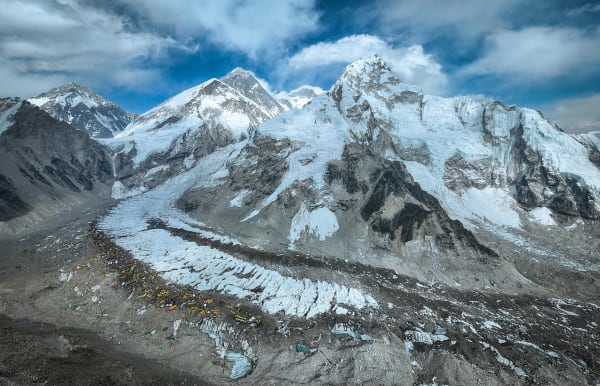
| Everest (Sagarmatha) | 8,848.86 m | 1st | Khumbu | The highest. Commercially climbed, heavily fixed, crowded in spring. |
| Kangchenjunga | 8,586 m | 3rd | Far east, Taplejung | Remote, long, and considerably harder than its rank suggests |
| Lhotse | 8,516 m | 4th | Khumbu | Shares Everest's route to the South Col, then a steep couloir |
| Makalu | 8,485 m | 5th | Barun valley | Technically demanding, exposed, and much less climbed |
| Cho Oyu | 8,188 m | 6th | Khumbu, Tibet border | The most accessible eight-thousander, usually climbed from Tibet |
| Dhaulagiri I | 8,167 m | 7th | Dhaulagiri Himal | Serious avalanche exposure, a formidable reputation |
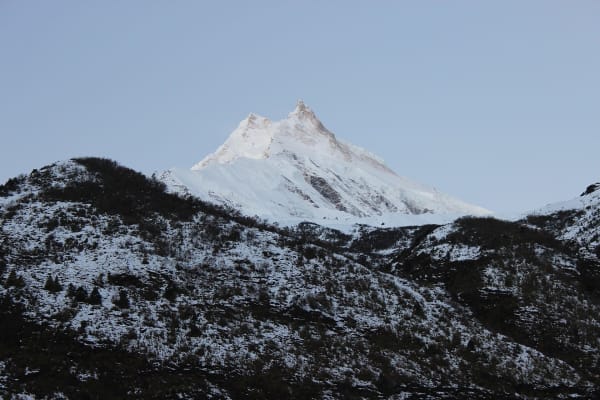
| Manaslu | 8,163 m | 8th | Gorkha | The usual first eight-thousander, autumn season |
| Annapurna I | 8,091 m | 10th | Annapurna Himal | The most dangerous. Historically the highest fatality rate of the fourteen. |
Annapurna I deserves the emphasis. It was the first eight-thousander ever climbed, by Herzog and Lachenal in 1950, and it has historically carried the highest ratio of deaths to summits of any of the fourteen, because of persistent serac and avalanche danger on its routes.
The Ones We Run
| Expedition | Days | Season | Note |
|---|---|---|---|
| Everest | 50 | Spring | South Col route from the Nepal side |
| Everest and Lhotse | — | Spring | Two eight-thousanders from the same base camp and route |
| Lhotse | 50 | Spring | The Everest route to Camp 4, then the Lhotse couloir |
| Makalu | 51 | Spring | Remote, technical, and rarely crowded |
| Manaslu | 47 | Autumn | The standard first eight-thousander |
| Annapurna I | 44 | Spring | For very experienced climbers only |
Cho Oyu is normally climbed from the Tibetan side, and Kangchenjunga and Dhaulagiri are run on request. Our Everest guide and Manaslu guide cover the two most commonly attempted in detail.
What an Eight-Thousander Costs
The permit is a fraction of the total, and it is the visible fraction.
| Line | Everest | Other 8,000 m peaks |
|---|---|---|
| Permit royalty (spring) | USD 15,000 | About USD 1,800 |
| Garbage and liaison deposits | USD 3,000–4,000 | USD 3,000–4,000 |
| Full expedition package | Typically USD 45,000–120,000 | Typically USD 15,000–40,000 |
| Duration | About 50 days | About 40–50 days |
| Oxygen and Sherpa support | Included in most packages | Varies by peak and style |
The wide range on the package line is real and it reflects genuine differences: the number of Sherpa staff per client, how much oxygen is carried, the quality of base camp infrastructure, and whether the operator maintains its own fixing team and medical support. Our permits guide breaks down the fee structure.
Seeing Them Without Climbing
For almost everyone, the useful question is how to look at these mountains rather than climb them.
| Peak | Best trek to see it | Where from |
|---|---|---|
| Everest | Everest Base Camp | Kala Patthar, 5,545 m |
| Lhotse | Island Peak | The south face from the summit, and from Chhukung |
| Makalu | Makalu Base Camp | The Barun valley, from below the south-west face |
| Kangchenjunga | Kanchenjunga North Base Camp | Pangpema, beneath the north face |
| Manaslu | Manaslu Circuit | Samagaun and Manaslu Base Camp |
| Annapurna I | Annapurna Base Camp | The head of the Sanctuary, 4,130 m |
| Dhaulagiri I | Khopra Danda or Poon Hill | Across the Kali Gandaki gorge |
| Five at once | Mera Peak or Pikey Peak | Everest, Lhotse, Makalu, Cho Oyu, Kangchenjunga |
The best single viewpoint for the greatest number is Mera Peak's summit at 6,476 m, which takes in five eight-thousanders. For the same range without climbing, Pikey Peak at 4,065 m gives Everest, Makalu and Kangchenjunga on an eight-day trek with no flight — see our Pikey Peak guide.
A Note on the Commercial Era
Since the 1990s, most eight-thousander ascents have been made with commercial support: fixed rope from base to summit, supplementary oxygen, and Sherpa climbers carrying loads and breaking trail. That has made the summits reachable by people who could not have climbed them independently, and it has changed what an ascent means.
- Sherpa climbers do the hardest work on almost every commercial expedition — fixing rope, carrying oxygen, and taking the greatest cumulative risk. Their pay, insurance and equipment are the clearest single measure of an operator's ethics.
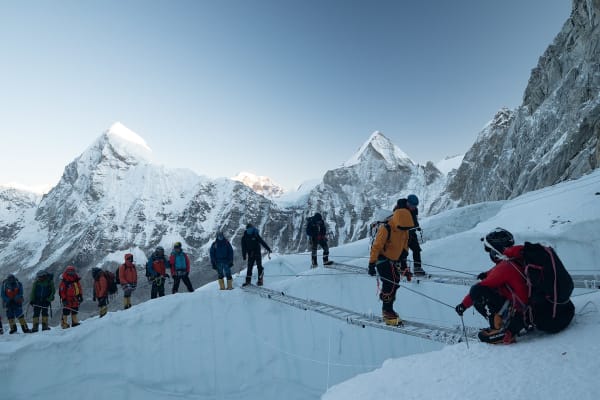
- Crowding is real on Everest in spring, with queues on the Hillary Step and at the Icefall in narrow weather windows.
- Nepal has responded with rules including, from 2025, a requirement that Everest applicants show a previous ascent above 7,000 m.
- Waste and human remains on the high mountains are a continuing problem, addressed partly by the garbage deposit system and by clean-up expeditions.
- Climbing style matters. An oxygen-free ascent, an alpine-style attempt or a new route is a different achievement from a fixed-line summit, and the mountaineering world distinguishes clearly between them.
If you are considering an eight-thousander, the questions worth asking an operator are about staff ratios, Sherpa pay and insurance, oxygen supply, and the medical and rescue plan — not the summit success rate.