An Everest expedition from Nepal takes around fifty days and follows the South Col route that Hillary and Tenzing pioneered in 1953 — through the Khumbu Icefall into the Western Cwm, up the Lhotse Face to the South Col at 7,950 m, and along the south-east ridge to the summit at 8,848.86 m.
It is the most written-about climb in the world and the most misunderstood. This is what it actually involves, without either the romance or the cynicism.
The Expedition at a Glance
| Summit | 8,848.86 m |
| Duration | About 50 days from Kathmandu |
| Route | South Col, from Nepal |
| Camps | Base camp 5,364 m, C1 6,065 m, C2 6,400 m, C3 7,200 m, C4 South Col 7,950 m |
| Season | Spring — summit windows typically in the second half of May |
| Permit | USD 15,000 spring royalty per person, from September 2025 |
| Prerequisite | Evidence of a previous ascent above 7,000 m, required since 2025 |
| Oxygen | Standard from around 7,000 m on commercial ascents |
We run it as a 50-day Everest expedition, and as a combined Everest and Lhotse expedition, which uses the same route and base camp to attempt two eight-thousanders in one season.
The Route
Base Camp (5,364 m)
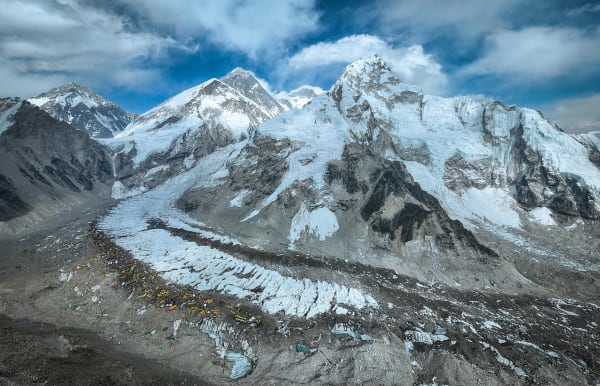
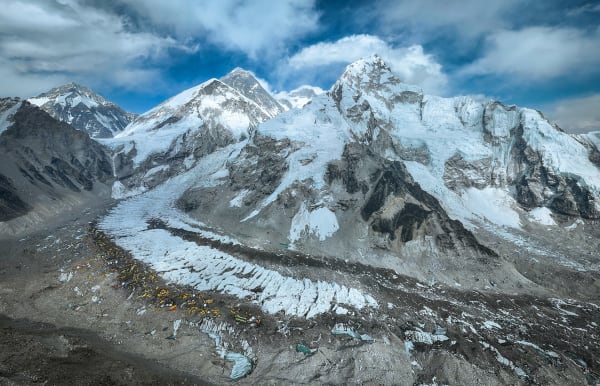
A tent city on the Khumbu glacier below the Icefall, occupied from early April to late May. Expeditions live here for weeks, with dining tents, communications, medical support and a cook team, running rotations up the mountain between rest periods.
The Khumbu Icefall
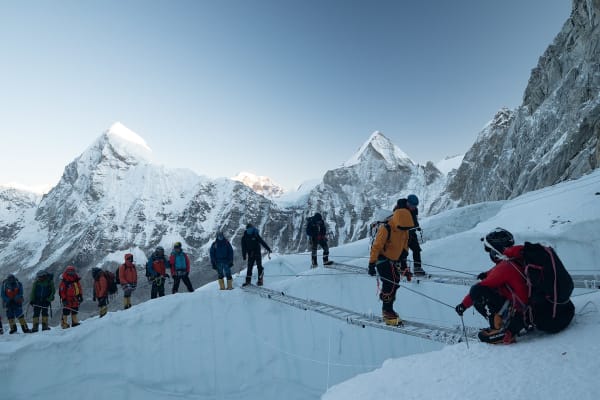
The most dangerous section of the route and the one crossed most often — a moving jumble of seracs and crevasses between base camp and Camp 1, fixed each season with ladders and rope by the Icefall doctors, a Sherpa team employed by the Sagarmatha Pollution Control Committee. It is crossed in the cold of early morning when the ice is most stable, and a climber may pass through it six or eight times across the expedition.
The Western Cwm and Camp 2 (6,400 m)
Above the Icefall the valley opens into the Western Cwm — a broad, crevassed glacial basin between Everest, Nuptse and Lhotse, and famously hot in the middle of the day because the walls reflect the sun. Camp 2 at 6,400 m is the advanced base camp where most of the expedition's time above the Icefall is spent.
The Lhotse Face and Camp 3 (7,200 m)
A 1,000 m wall of blue ice at 40 to 50 degrees, climbed on fixed rope. Camp 3 is cut into ledges on the face itself, and it is where most climbers first use oxygen to sleep.
The South Col (7,950 m)
Above Camp 3 the route crosses the Yellow Band and the Geneva Spur to the South Col — a windswept plateau of rock and ice between Everest and Lhotse, and the launch point for the summit. Nobody spends longer there than necessary.
Summit day
A departure around 10 p.m. or midnight, climbing through the night up the south-east ridge past the Balcony (8,400 m), along the corniced ridge to the South Summit (8,750 m), across the Hillary Step, and onto the summit at first light or shortly after. Then down — and the descent, on tired legs with oxygen running low, is where most Everest deaths occur.
How the Season Works
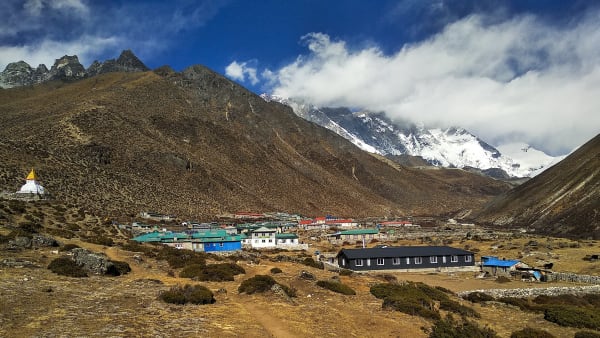
- Early April: teams walk in from Lukla and establish base camp. A puja ceremony is held before anyone enters the Icefall.
- April: the Icefall doctors complete the route, and teams run acclimatisation rotations — base camp to Camp 1, then Camp 2, then a touch of Camp 3 — returning to base camp between each.
- Late April to early May: Sherpa teams fix rope to the summit and stock the high camps with oxygen.
- Early May: most teams descend to Namche or lower for a rest week, to recover before the summit push.
- Mid to late May: the jet stream lifts off the summit for a few days at a time, opening summit windows. Teams move up over three or four days and push for the top.
- Late May: the mountain empties before the monsoon arrives.
Everything hinges on those windows. When only one or two open in a season, several hundred climbers move at once, which is where the queue photographs come from. A good operator plans its push to avoid the busiest day rather than the earliest one.
Cost, and What Separates Operators
| Line | Typical figure |
|---|---|
| Permit royalty | USD 15,000 per person, spring, south side |
| Garbage and liaison deposits | USD 3,000–4,000 per expedition |
| Full package | USD 45,000–120,000 depending on service level |
| Oxygen | 5–8 bottles per climber on a standard ascent |
| Personal Sherpa | One-to-one on most commercial packages |
| Duration | About 50 days |
The spread in package price is not marketing. What it buys:
- Sherpa ratio. One-to-one is standard on a well-run expedition. Two clients per Sherpa on summit day is a materially different risk.
- Oxygen supply. More bottles and a higher flow rate on summit day is expensive and it is what gets tired climbers down.
- Staff pay, insurance and equipment. The clearest ethical measure of an operator, and invisible in a brochure.
- Medical support. A doctor at base camp, a hyperbaric chamber, and a clear evacuation plan.
- Weather forecasting. Dedicated high-altitude forecasting is what allows an operator to choose a quieter window.
- Base camp infrastructure. Heated dining tents, individual sleeping tents, communications and food quality all affect how you arrive at the summit push.
The Experience Requirement, and Whether You Are Ready
Since 2025, Nepal has required Everest applicants to show evidence of a previous ascent above 7,000 m. That is a floor rather than a recommendation. The realistic preparation is a progression:
- A high trek — Everest Base Camp or equivalent, to establish how you handle altitude.
- A trekking peak — Island Peak and Lobuche East for rope and crampon competence.
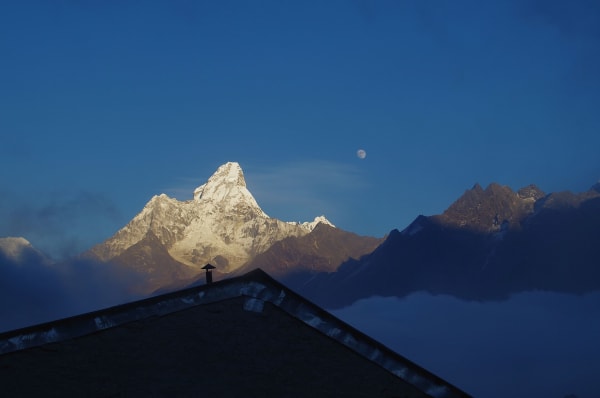
- A technical 6,800 m peak — Ama Dablam, which is the standard technical benchmark.
- A 7,000 m peak — Baruntse or Pumori, which satisfies the requirement and tests you at genuine altitude.
- An eight-thousander — Manaslu in autumn is the standard step, and the one most Everest climbers take.
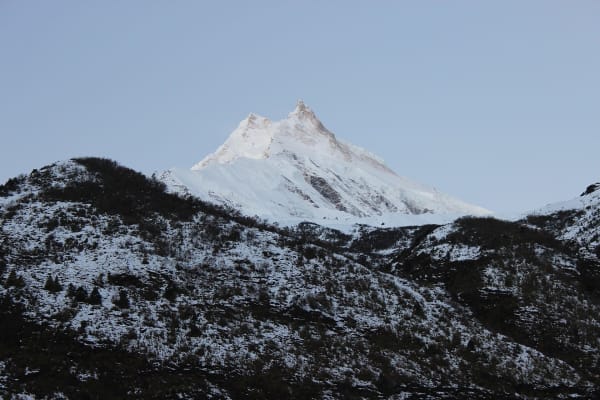
That progression takes several years and several seasons, and skipping it is why the mountain has the reputation it does. Our Manaslu guide covers the usual penultimate step, and the eight-thousanders guide the wider picture.