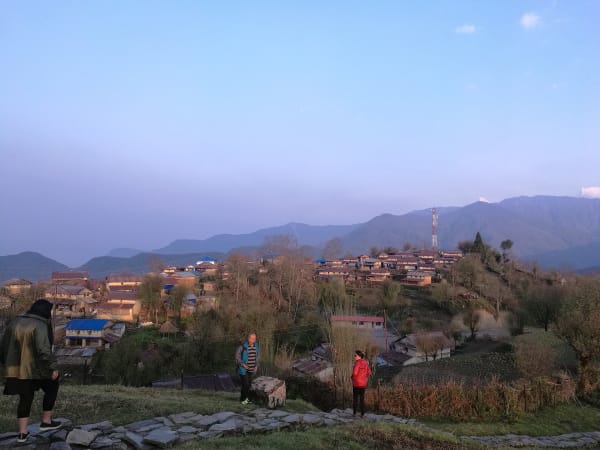
For most Nepali households meat is an occasional thing. At Dashain it is the whole point. A goat is bought, sometimes weeks ahead, and from the eighth day the family eats its way through the entire animal — curry, dry-fried, grilled, the offal, the blood — with relatives arriving in relays to help.
A visitor who is invited to a tika will meet all of it on one plate. This guide explains what you are looking at. The ceremony that precedes the meal is covered in receiving Dashain tika.
Why Dashain Is a Meat Festival
The animal is first an offering. On the eighth or ninth day a goat — or, in some communities, a buffalo, a duck or a chicken — is sacrificed to the goddess, and what has been offered is then eaten as her blessing. A family that cannot afford a goat shares one with neighbours; a family that prefers not to kill offers a pumpkin and buys meat from the butcher.
The demand is enormous. In the weeks before the festival, herds of long-haired mountain goats are driven down from Mustang along the Kali Gandaki, and lorries bring more from the plains and across the border. Temporary goat markets appear on open ground in every city. More on the ritual in animal sacrifice at Dashain.

The Dishes
| Dish | What it is |
|---|---|
| Khasi ko masu | Goat curry on the bone, cooked with onion, ginger, garlic, cumin and chilli. The centre of every plate |
| Pakku | Goat cooked slowly and dry in its own fat and spices until dark. Made in quantity because it keeps for days |
| Bhutan | The offal — tripe, intestine, liver — fried hard with spices. Eaten as a snack with drinks |
| Sekuwa | Marinated meat grilled over a wood fire |
| Rakti | The blood, set and fried with spices. For the committed |
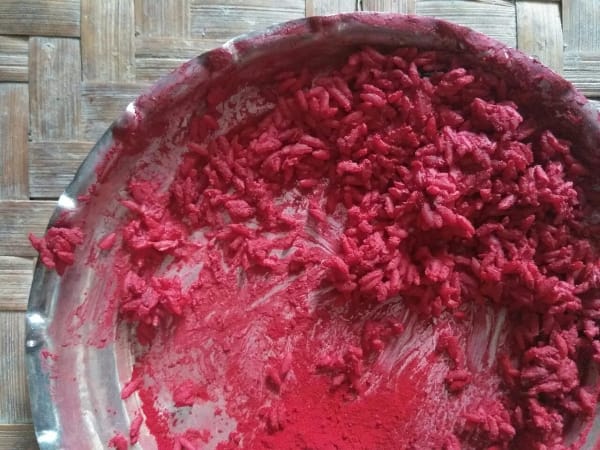
| Chiura | Beaten rice: dry, flattened flakes that need no cooking. The staple of the feast, eaten with everything |
| Aloo ko achar | Potato and cucumber salad dressed with ground sesame, lemon and chilli |
| Mula ko achar | Fermented or fresh radish pickle; sharp, to cut the fat |
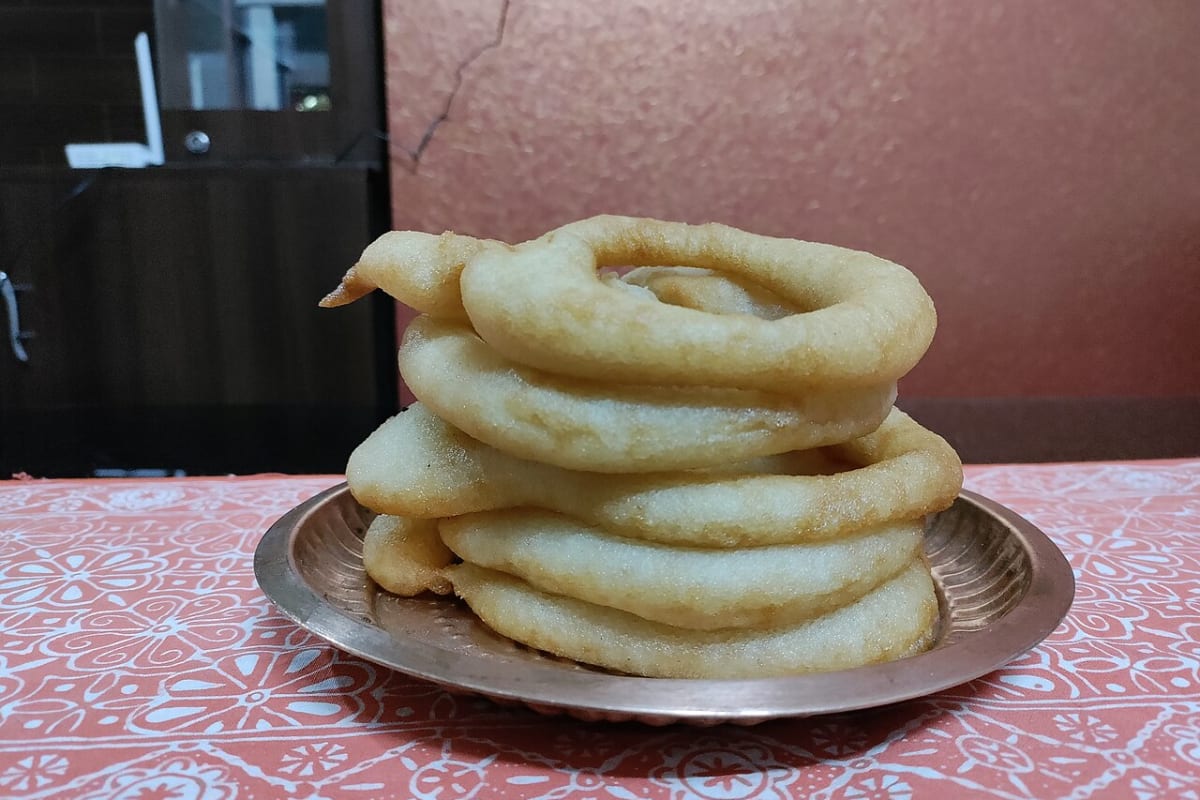
| Sel roti | A ring of slightly sweet rice-flour batter, deep-fried. Crisp outside, soft inside |
| Dahi | Thick yoghurt, eaten with beaten rice and banana, and the base of the tika itself |
| Sweets | Lalmohan, barfi, peda and anarsa — a rice-flour biscuit rolled in poppy seeds |
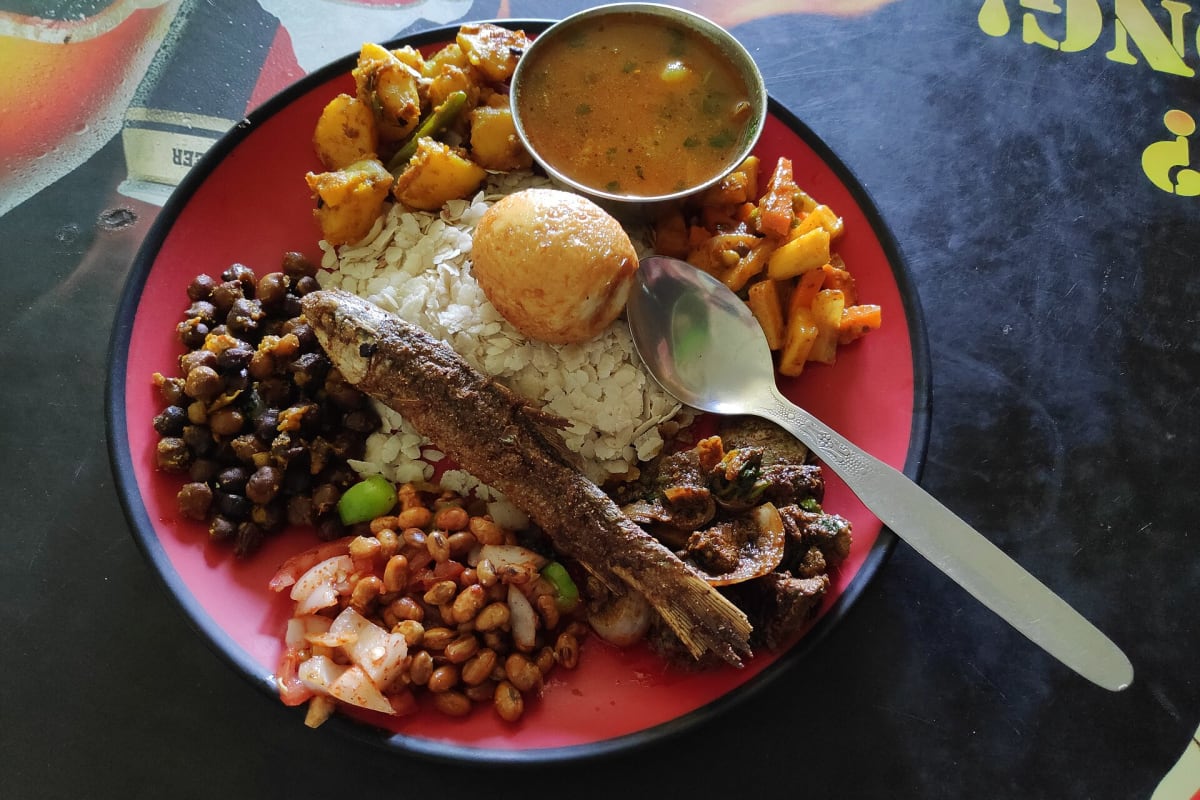
A typical tika plate is a mound of beaten rice ringed with small heaps of each. You eat with your right hand, mixing as you go.
The Newar Feast
The Newars of the Kathmandu valley have the most elaborate food culture in Nepal and their festival, Mohani, shows it. The centrepiece is samay baji, a set plate of beaten rice surrounded by small portions with ritual meaning.
- Choila — buffalo meat grilled over straw, then dressed with mustard oil, chilli and fenugreek.
- Kachila — raw minced buffalo with spices and oil. Not for a traveller's first week.
- Bara — a savoury lentil pancake, also called wo.
- Boiled egg, black soybeans, ginger and garlic greens, each with its place on the plate.
- Aila — a clear, strong spirit distilled at home from rice or millet, poured from a height into small clay bowls.
- Thwon — milky rice beer.
On the eighth day families sit down to Kuchhi Bhoye, eaten off banana leaves in order of age. The easiest way for a visitor to taste this cooking is our Secret Food Tour in Kathmandu, which walks the old-city eating houses with a guide — see the food tour guide. Bhaktapur, where the festival is described in Bhaktapur during Dashain, adds juju dhau, the richest yoghurt in the country.
What Is Drunk
- Raksi — home-distilled spirit from millet or rice, clear and deceptive.
- Jaand or chhyang — thick, lightly fermented rice or millet beer, served in bowls.
- Tongba — in eastern households, fermented millet in a wooden pot, topped up with hot water and drunk through a straw.
- Tea, constantly, sweet and milky.
Home-made alcohol varies in strength and quality. Accept a little, drink slowly, and remember that altitude and alcohol are a bad pairing if you are about to start a trek.
Where a Visitor Can Eat It
| Where | What you get |
|---|---|
| A family tika | The whole feast, home-cooked. The real thing |
| A village homestay | The same, with the family — Sirubari, Ghalegaun |
| Newari restaurants in Patan, Kirtipur and Bhaktapur | Samay baji, choila, bara and aila year-round — Patan and Bhaktapur day tours pass them |
| Nepali thali restaurants in Thamel and Lakeside | Goat curry, sel roti and pickles as a set meal |
| Trekking lodges | Dal bhat as usual; in Hindu villages, goat curry on the tenth day |
| Street stalls in Ason before the festival | Sel roti fresh from the oil, sweets, fried snacks |
Many small local restaurants close for the main days — see what is open and closed during Dashain — so the tourist districts and your hotel are the fallback.
For Vegetarians and Vegans
Nepal is an easy country for vegetarians at any other time, and Dashain is the one fortnight when the default flips. It is still manageable. A good share of Nepalis are vegetarian themselves, by caste, belief or preference, and every household knows how to cook for one.
- Tell your hosts in advance. You will be given paneer, mushroom or potato curry, lentils, greens, pickles and all the bread and sweets.
- Beaten rice, sel roti, aloo ko achar and most pickles are vegetarian. Sweets and yoghurt are not vegan.
- Vegans should mention ghee and yoghurt specifically; both are in a lot of festival cooking.
- On the trail nothing changes: dal bhat is vegetarian by default. See food on the trail in Nepal.
Eating Safely
Clinics in Nepal see a predictable rise in stomach illness after Dashain, among locals and visitors alike. The causes are simple: a great deal of meat, kept for several days without refrigeration in warm October weather, reheated repeatedly; raw dishes; and more alcohol than usual.
- Eat meat that is freshly cooked and hot. Be cautious from about the third day after the slaughter.
- Leave the raw dishes — kachila in particular — unless you have a seasoned stomach.
- Wash or sanitise your hands before eating; you will be eating with them.
- Drink treated water, not what is in the jug. See drinking water in Nepal.
- If you are starting a trek within two days, eat lightly. A stomach bug on the first day of a trek is a poor trade for a third helping.
If it happens anyway, our guide to stomach illness covers what to take and when to see a doctor.