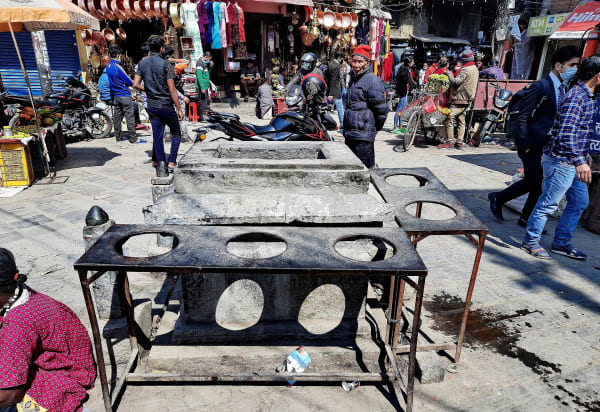
A walking food tour through the old city that goes to the places locals eat rather than the ones with English menus. Over three to four hours on foot you work through the lanes between Ason and Indra Chowk — the oldest bazaar quarter in Kathmandu — stopping at eight or nine family-run stalls and shops that have in many cases been doing one thing for three generations.
The route covers Newar food specifically, which is distinct from what most restaurants serve: chatamari, bara, choila, samay baji, buffalo momo, sweet lakhamari, spiced lassi and the local rice beer.
Your guide explains what you are eating and orders in Newari, which changes both the food and the price.
The Tour at a Glance
| Duration | 3 to 4 hours, on foot |
| Where | Ason to Indra Chowk, old Kathmandu |
| Stops | 8 to 9 family-run stalls and shops |
| Difficulty | Easy — walking on uneven lanes, no stairs of consequence |
| Best season | October to April |
| Included | All tasting portions, drinks, and one rice beer |
| Group | Private departure, up to 16 |
| Price | From USD 60 per person |
We run it as a private walking food tour. It goes well after a day on the Kathmandu valley tour, when you have seen the monuments and want the city itself.
What You Eat
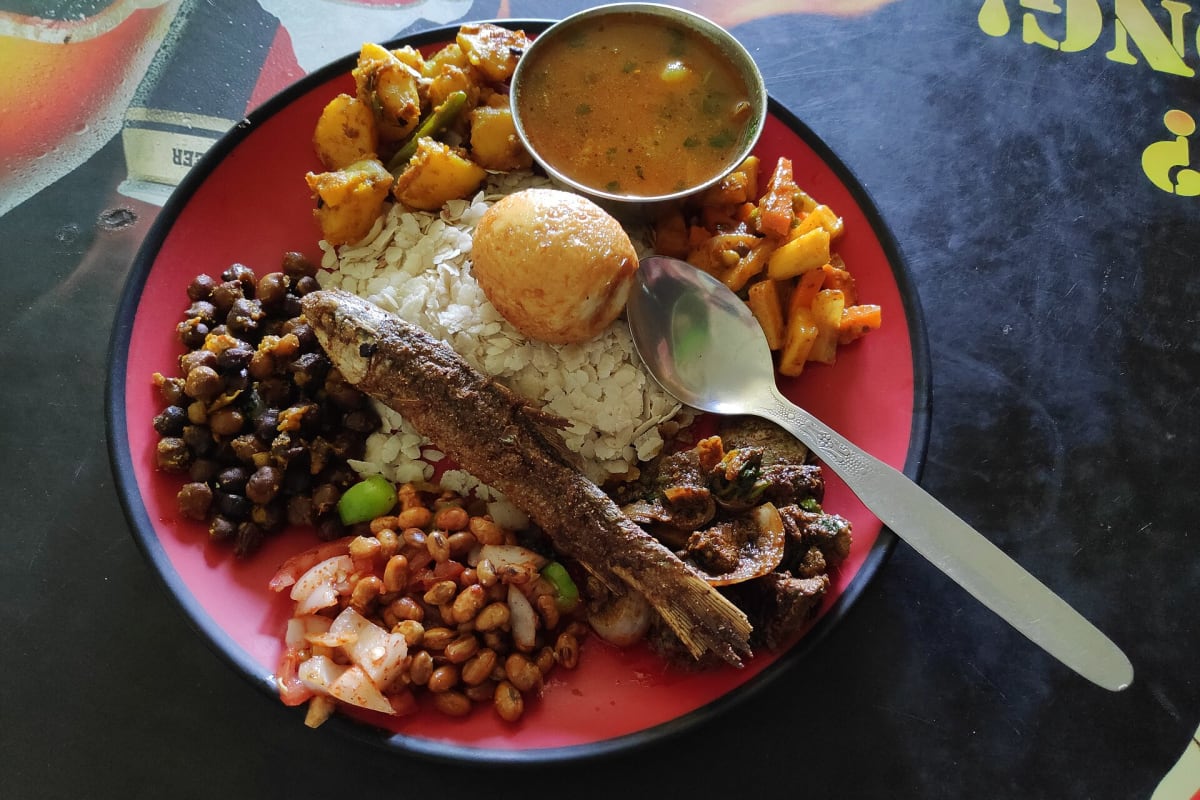
Newar cuisine is the food of the Kathmandu valley's indigenous population, and it is substantially different from the dal bhat that dominates Nepali restaurant menus. The tasting route covers the core of it:
| Dish | What it is |
|---|---|
| Chatamari | A thin rice-flour crêpe, often topped with egg and minced buffalo. Frequently called Newari pizza, which undersells it. |
| Bara | A fried lentil patty, savoury and dense, eaten alone or with egg. |
| Choila | Spiced grilled buffalo, smoky and hot, and the dish most people remember. |
| Samay baji | The ceremonial platter — beaten rice, soybean, ginger, egg, choila and more, eaten together. |
| Buffalo momo | Steamed dumplings from a stall that makes nothing else. |
| Lakhamari | A hard sweet bread, made for weddings and festivals. |
| Lassi and aila | Spiced yoghurt drink, and the local rice beer. |
Portions are tasting size but there are eight or nine of them. Come hungry and do not plan dinner.
Why the Guide Matters Here
More than on any other tour we run, the guide is the product. The stalls on this route have no English signage, no menus, and in several cases no name.
- Ordering in Newari gets you what the family actually makes rather than what they think a foreigner wants.
- Knowing the families means the tour goes to the back room and the good batch.
- Explaining the food — what is in it, when it is eaten, which festival it belongs to — is most of the value.
- A written list of everything you tasted is included, so you can find it again on your own for the rest of your stay.

What It Costs
| Group size | Price per person |
|---|---|
| 1 traveller | USD 85 |
| 2 to 4 | USD 75 |
| 5 to 7 | USD 70 |
| 8 to 10 | USD 65 |
| 11 to 14 | USD 60 |
| 15 and over | USD 60 |
What Is Included
- Private vehicle for hotel pickup and drop-off within central Kathmandu — the tour itself is on foot.
- Eight to nine tasting portions across the route, plus drinks.
- Bottled water throughout.
- A local food guide who speaks Newari and knows the families running the stalls.
- A written list of everything you tasted, so you can find it again on your own.
- All government taxes and service charges.
What Is Not Included
- Travel insurance covering medical treatment and emergency evacuation.
- Additional dishes or drinks ordered beyond the tasting menu.
- Alcoholic drinks beyond the single rice beer tasting.
- Luxury vehicle upgrade — private transport is included as standard.
- Personal expenses such as laundry, phone calls and souvenirs.
- Tips for the guide and driver.
- Any additional cost caused by roadblocks, weather or other circumstances beyond our control.
If you want to buy spices or sweets to take home — and Ason is the right place for both — that is on you, but your guide will make sure you pay the local price.
Practicalities
- Dietary requirements — vegetarian versions of most of the route exist and we can plan around them. Tell us at booking rather than on the day, since several stalls make one thing only.
- Spice level is real, particularly in the choila. Say so and it can be moderated.
- Wear shoes you can walk in — the lanes are uneven and crowded.
- Late afternoon is the best slot, when the bazaar is busiest and the snack stalls are at their freshest.
- Food safety — these are stalls with high turnover, which is the main thing that matters. We use places we eat at ourselves.
For more on eating in Nepal generally, including on the trail, see our food guide.