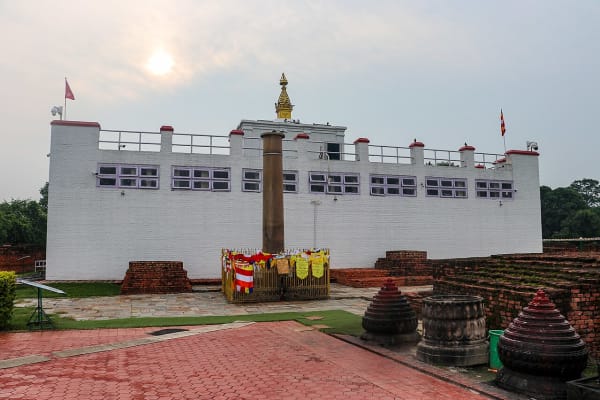
Nepal holds the first of the four great Buddhist pilgrimage sites: Lumbini, where the Buddha was born in 623 BCE, marked by the Ashokan pillar and the Maya Devi temple built over the exact spot.
This eight-day route covers Lumbini and the archaeological remains of Kapilvastu where he grew up, then returns to the Kathmandu valley for the living tradition. In the valley it takes in Boudhanath, the largest stupa in Nepal and the heart of its Tibetan community; Swayambhunath, older still and set on its hill above the city; and Namobuddha, where the Buddha in a previous life is said to have given his body to a starving tigress.
It is a route about origins and continuity rather than monuments, and it is paced for practice rather than sightseeing — including a meditation session with monks at Lumbini, arranged in advance.

The Tour at a Glance
| Duration | 8 days, 7 nights |
| Route | Kathmandu — Lumbini — Kapilvastu — Kathmandu — Namobuddha |
| Highest point | Namobuddha, 1,750 m |
| Difficulty | Easy — vehicle-based with short walks |
| Best season | October to March |
| Meals | Vegetarian breakfast and dinner throughout |
| Group | Private departure, up to 16 |
| Price | From USD 985 per person |
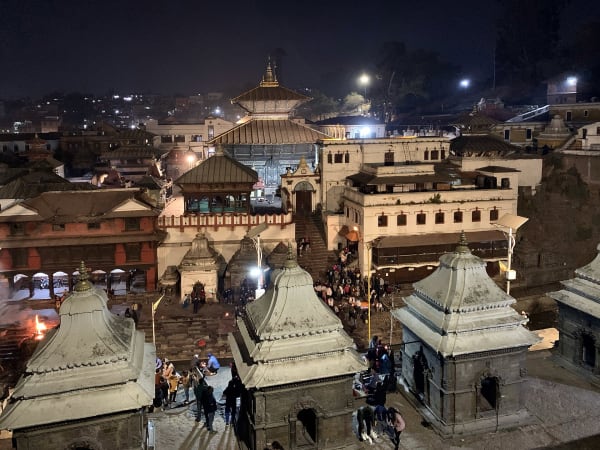
We run it as an 8-day pilgrimage. For the Hindu equivalent, see the Hindu Pilgrimage tour; for Lumbini alone, the Lumbini tour.
The Itinerary
Kathmandu valley (days 1–2)
An evening at Boudhanath on arrival, walking the kora as the butter lamps are lit, which is the right introduction to the trip. The following day covers Swayambhunath and the valley monasteries — the Tibetan Buddhist institutions at Boudhanath and Kopan among them.
Lumbini (days 3–4)
A flight to Bhairahawa and a short drive to Lumbini. A full day in the monastic zone: the Maya Devi temple, the marker stone, the Ashokan pillar of 249 BCE, the sacred pond, and the monasteries built by Buddhist nations from across Asia in their own architectural traditions. The day includes a meditation session with the monks, arranged before you arrive.
Kapilvastu and Tilaurakot (day 5)
West to the archaeological site at Tilaurakot, widely identified as the Shakya capital where the Buddha spent his first twenty-nine years — foundations, gateways and a moat rather than standing buildings, and quieter for it. Also the Ramagrama stupa, the only one of the original relic stupas never opened.

Namobuddha and Panauti (days 6–7)
Fly back to Kathmandu and drive to Namobuddha (1,750 m), one of the three great Buddhist sites of the valley, with the Thrangu Tashi Yangtse monastery and the stupa marking the tigress story. The kora around the hill and the old Newar town of Panauti fill the following day.
What It Costs
| Group size | Price per person |
|---|---|
| 1 traveller | USD 1,380 |
| 2 to 4 | USD 1,220 |
| 5 to 7 | USD 1,125 |
| 8 to 10 | USD 1,065 |
| 11 to 14 | USD 1,025 |
| 15 and over | USD 985 |
What Is Included
- Airport pickup and drop-off in Kathmandu.
- Kathmandu–Bhairahawa flight for the Lumbini leg.
- Private transportation throughout — a vehicle and driver reserved for your party alone, including the Kapilvastu and Namobuddha excursions.
- Seven nights in hotels and monastery guesthouses along the route, with breakfast.
- Vegetarian breakfast and dinner throughout.
- Lumbini Development Trust, Tilaurakot, Boudhanath, Swayambhunath and Namobuddha entry fees.
- A guide familiar with Buddhist practice and the archaeology of the Terai sites.
- A meditation session with monks at Lumbini, arranged in advance.
- All government taxes and service charges.
What Is Not Included
- International flights and the Nepal entry visa fee.
- Travel insurance covering medical treatment and emergency evacuation.
- Meals not specified in the itinerary, and lunches on travelling days.
- Offerings, butter lamps and monastery donations, which are personal and left to you.
- Luxury vehicle upgrade — private transport is included as standard.
- Drinks, snacks, laundry, phone calls and souvenirs.
- Tips for the guide and driver.
- Any additional cost caused by flight delays, roadblocks, weather or other circumstances beyond our control.
Your guide will show you where to buy lamps and offerings at the proper price and advise what is customary, which saves both money and awkwardness.
Etiquette and Practicalities
- Dress modestly — shoulders and knees covered, and shoes that come off easily, since you will remove them at every shrine.
- Walk clockwise around stupas, chortens and mani walls.
- Photography is generally fine in courtyards and grounds, generally not in inner shrine rooms. Signs are not always in English, so follow your guide, and ask individuals before photographing them.
- Meals are vegetarian throughout; satvik food without onion or garlic can be arranged if you tell us at booking.
- Festivals transform the sites they belong to — Buddha Jayanti at Lumbini above all. Tell us the festival rather than a date, since the lunar calendar moves.
Our festival calendar covers the dates, and the Lumbini guide goes deeper on the monastic zone.