Most Nepal itineraries make you choose: mountains or jungle, culture or wildlife, Kathmandu or Pokhara. This one does not. Ten days covers the medieval cities of the Kathmandu valley, the Himalaya from the valley rim and from Pokhara, the jungle at Chitwan, and Lumbini, the birthplace of the Buddha.
It is the fullest circuit that can be done comfortably without trekking. The route runs Kathmandu — Nagarkot — Pokhara — Lumbini — Chitwan — Kathmandu, with a domestic flight at one end to keep the driving reasonable.
The thing that makes it work is the pacing: each stop gets two nights rather than one, which is the difference between visiting a place and passing through it, and there are free afternoons in both Pokhara and Chitwan.

The Tour at a Glance
| Duration | 10 days, 9 nights |
| Route | Kathmandu — Nagarkot — Pokhara — Lumbini — Chitwan — Kathmandu |
| Highest point | Nagarkot, 2,175 m |
| Difficulty | Easy — vehicle-based with short walks |
| Best season | October to March |
| Group | Private departure, up to 16 |
| Transport | Private air-conditioned vehicle throughout, plus one domestic flight |
| Price | From USD 1,250 per person |
We run it as a 10-day private tour. For a shorter version covering the two cities only, see the Kathmandu and Pokhara tour.
The Itinerary
Kathmandu and Nagarkot (days 1–3)
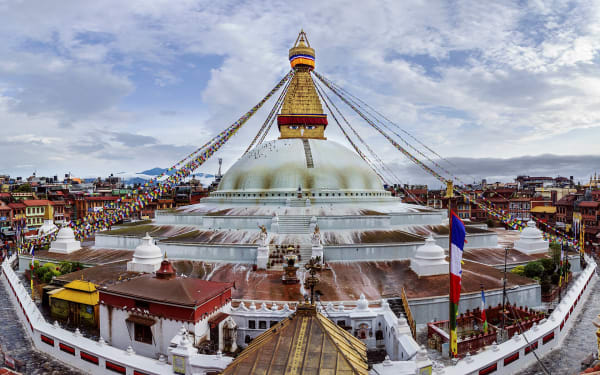
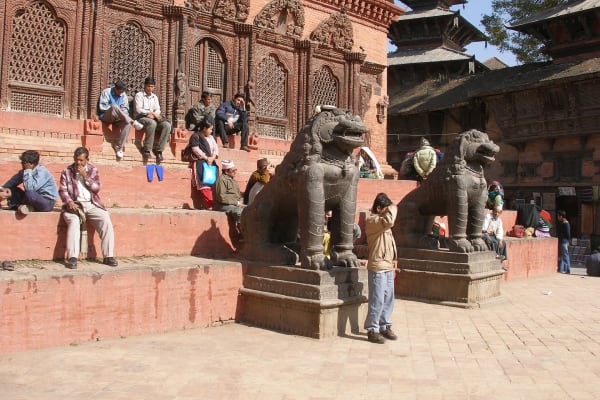
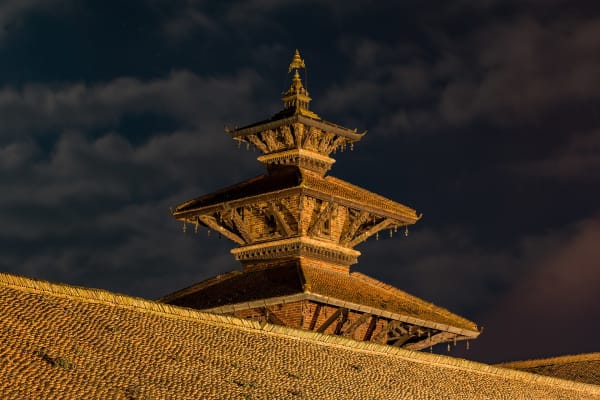
Two full days in the valley: Swayambhunath, Kathmandu Durbar Square, Pashupatinath and Boudhanath on the first, then Patan and Bhaktapur on the second before driving up to Nagarkot (2,175 m) on the valley rim for the Himalayan sunrise.
Pokhara (days 4–5)
Down from Nagarkot and west across the country on the Prithvi Highway along the Trishuli. A dawn start at Sarangkot for the Annapurnas, then the Pokhara valley — Phewa Lake by rowing boat to the Tal Barahi temple, the Davis Falls, the Gupteshwor cave, and an afternoon free.
Lumbini (day 6–7)
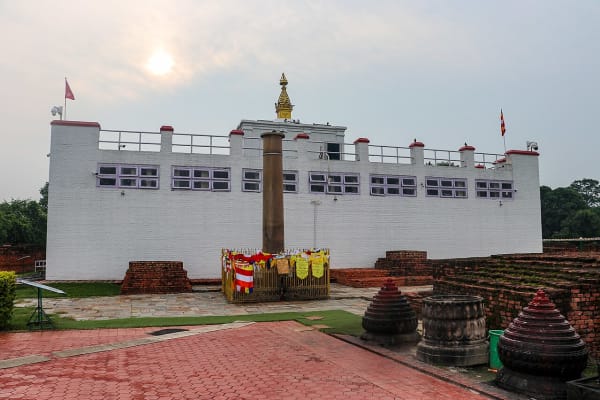
South to Lumbini and the monastic zone: the Maya Devi temple built over the birthplace, the Ashokan pillar, and the monasteries built by Buddhist nations from across Asia. It is a large, quiet, oddly moving site best walked slowly.

Chitwan (days 7–9)
East to Chitwan National Park for a full safari day — jeep safari, dugout canoe on the Rapti, and a guided jungle walk — plus a morning bird walk before the drive back to Kathmandu. Chitwan holds the greater one-horned rhinoceros, and sightings are common rather than lucky.
What It Costs
Pricing drops sharply with group size on the tours, much more so than on treks, because the vehicle, guide and driver are shared across the party.
| Group size | Price per person |
|---|---|
| 1 traveller | USD 1,750 |
| 2 to 4 | USD 1,550 |
| 5 to 7 | USD 1,425 |
| 8 to 10 | USD 1,350 |
| 11 to 14 | USD 1,300 |
| 15 and over | USD 1,250 |
What Is Included
- Airport pickup and drop-off in Kathmandu.
- Bhairahawa–Kathmandu domestic flight at the end of the circuit.
- Private transportation throughout — an air-conditioned vehicle and driver reserved for your party alone, never a shared or public service.
- Nine nights in hotels, a jungle lodge and a Lumbini guesthouse, all with breakfast.
- Full board at the Chitwan jungle lodge for the duration of the stay.
- All monument, national park and site entry fees, including the seven UNESCO sites, Lumbini and Chitwan.
- A government-licensed English-speaking guide throughout.
- Jeep safari, dugout canoe trip and guided jungle walk in Chitwan.
- Rowing boat on Phewa Lake.
- All government taxes and service charges.
What Is Not Included
- International flights and the Nepal entry visa fee.
- Travel insurance covering medical treatment and emergency evacuation.
- Lunch and dinner in Kathmandu and Pokhara, where the choice is better left to you.
- Monument photography fees and offerings.
- Optional adventure activities and upgrades.
- Luxury vehicle upgrade — private transport is included as standard; the luxury vehicle is an optional add-on.
- Drinks, snacks, laundry, phone calls and souvenirs.
- Tips for the guide and driver.
- Any additional cost caused by flight delays, roadblocks, weather or other circumstances beyond our control.
Note that lunch and dinner are included at Chitwan, where the lodge is full board and there is nowhere else to eat.
When to Go
| Season | Conditions |
|---|---|
| October to November | The best month for mountain views from Nagarkot and Sarangkot, and comfortable everywhere else. Book early. |
| December to February | Clear and cold on the rim, warm in Chitwan and Lumbini. Morning fog in the Terai can delay the Bhairahawa flight. |
| March | Warm, still clear, and rhododendron in the hills. Good for wildlife as Chitwan's vegetation thins. |
| April to September | Hot, then wet. Mountain views from the viewpoints are unreliable and the Terai is uncomfortable. |
See our seasons guide for the full picture, and the Chitwan guide for how the wildlife changes through the year.
Customising It
These are private departures, so the itinerary is a starting point rather than a fixed product.
- Swap the Kathmandu–Pokhara drive for a flight — 25 minutes instead of five to six hours, offered as an add-on because the drive along the Trishuli is genuinely scenic.
- Upgrade the hotels. The standard is three-star and central; four- and five-star properties, boutique heritage hotels and resorts are all available.
- Add days — a Pokhara paragliding morning, an Everest mountain flight, or a few days of trekking on the end.
- Adjust the pace for children or older travellers. The sightseeing is vehicle-based with short walks and the guide adapts.
Tell us before the bookings are made and any of it is straightforward.