Most meditation asks you to stop what you are doing and sit. Walking meditation does not. It takes the thing you are already doing all day on a trek and adds one ingredient: attention. For people who cannot sit still — which is a lot of people who choose trekking holidays — it is often the first form of meditation that makes sense.
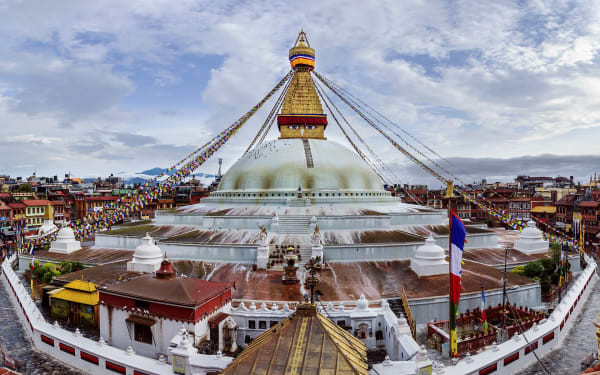
It is also native to the place. Tibetan Buddhists have practised walking as devotion for centuries, circling stupas, mountains and lakes on foot. When you walk clockwise round the stupa at Boudhanath, or pass a mani wall on the correct side in the Khumbu, you are doing a version of it whether you know it or not.
Why Trekking Is Already Halfway There
- The pace is slow. At altitude you cannot hurry, and slowness is the precondition for noticing anything.
- The movement is rhythmic. Step, breath, pole — a repeating pattern the mind can rest on.
- The task is simple. There is only one thing to do, and you are doing it.
- Distraction is scarce. No signal for most of the day on most routes.
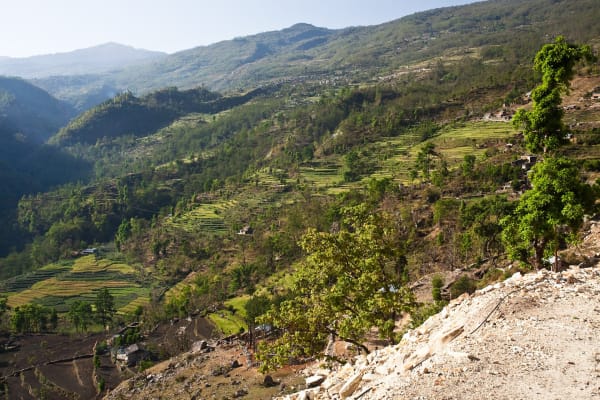
- The surroundings reward attention. Birdsong in rhododendron forest, river noise, the changing smell of the air as you climb through juniper.
What usually stops trekking from being meditative is not the trek. It is the running commentary: how far to lunch, whether the knee will hold, what the email said, what the altitude is now. Walking meditation is simply the practice of noticing that commentary and returning to the step.
The Basic Technique
- Choose a stretch. Ten to twenty minutes on a clear, safe section of trail. The first stretch of the morning is best.
- Fall silent. Tell your companions and your guide, drop back a few metres, and put the phone away.
- Feel the feet. Notice the heel landing, the weight rolling forward, the push off the toes. Left, right.
- Add the breath. Let it fall into time with your steps without forcing a pattern.
- When the mind wanders, come back. It will wander within seconds. Notice where it went, and return to the feet. No scolding.
- Widen out. After a few minutes, let in sound, then the feel of air on your face, then sight — without naming or judging what you see.
- End deliberately. Stop, take three breaths, and rejoin the group.
That is all of it. There is nothing to achieve and no special state to reach. Ten minutes in which you came back to your steps fifty times is a good session.
Five Variations for Different Terrain
| Terrain | Practice | How |
|---|---|---|
| Steep climb | Breath and step | One breath phase per step, or per two steps. The rhythm sets the pace; if it breaks, slow down |
| Long steady ascent | Mantra walking | Repeat a phrase silently in time with your steps — a traditional one such as Om mani padme hum, or simply here, now |
| Forest trail | Listening | Give your whole attention to sound: birds, water, wind, your own footsteps |
| Open high valley | Wide gaze | Soften your eyes and take in the whole field of view at once rather than fixing on one peak |
| Gentle descent | Counting steps | Count from one to ten and start again. When you find yourself at thirty-seven, begin again at one |
On stone staircases — Nepal's lower trails are full of them — use the count. On the high, open ground of the upper valleys, use the wide gaze. The breath-and-step version is described in more detail in our guide to breathing at altitude.
The Buddhist Context: Kora, Mani Walls and Prayer Wheels
In the Buddhist regions of Nepal, walking with attention is built into the landscape. Understanding a few customs makes the trail itself part of the practice — and keeps you from giving offence.
- Kora. Circumambulation: walking clockwise around a sacred object, such as a stupa, monastery, lake or mountain. The great public kora in Nepal is at Boudhanath in Kathmandu, busiest at dawn and dusk.
- Mani walls. Long walls of stones carved with mantras, found at the entrance to villages across the Khumbu, Langtang, Manang, Tsum and Mustang. Always pass with the wall on your right, so that you walk clockwise around it.
- Chortens and stupas. The same rule: keep them on your right.
- Prayer wheels. Spin them clockwise with your right hand as you pass. Each turn is held to release the mantras written inside.
- Prayer flags. The five colours stand for the elements. Do not step over flags lying on the ground.
- The mantra. Om mani padme hum is the six-syllable mantra of Chenrezig, the bodhisattva of compassion. You will see it carved, painted and printed everywhere, and hear it muttered by elderly walkers on every kora.

You do not need to be Buddhist to walk a kora. Join the flow, go clockwise, and let the pace of the people around you set yours. More background is in our guide to Tengboche and Sherpa culture.
Walking in Silence in a Group
A trek is sociable, and that is one of its pleasures. Walking meditation does not mean a silent trek; it means agreeing a silent part of the day.
- The silent first half hour. The simplest arrangement: nobody talks from leaving the lodge until the first rest stop. Most groups find they like it.
- Tell your guide. A guide who knows you want quiet stretches will choose them well — a forest section, not a road walk — and will keep an eye on you from a distance.
- Spread out. Leave ten or twenty metres between walkers, within sight of each other.
- No headphones. Music is a distraction of its own, and you need to hear mule bells behind you.
- Make it optional. In a mixed group, anyone who wants to chat can walk at the back with the assistant guide.
The Best Treks for Mindful Walking
Any trail will do, but some routes lend themselves to it: quieter paths, long forest sections, and Buddhist culture along the way.
- Mardi Himal. A forested ridge with far fewer walkers than Annapurna Base Camp, and long stretches through moss-hung rhododendron and oak.
- Langtang Valley. Forest, then an open glacial valley lined with mani walls, ending at a monastery.
- Tsum Valley. A restricted valley of monasteries and nunneries where non-violence is local custom. The quietest of all.
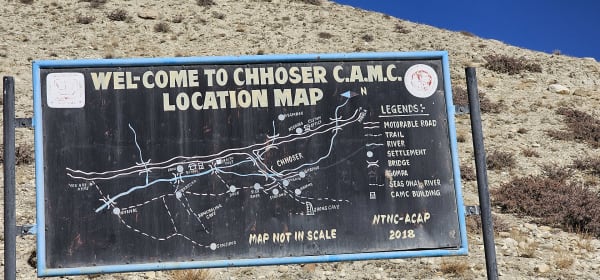
- Upper Mustang. Vast, dry, silent landscapes and the walled city of Lo Manthang.
- Pikey Peak. Low, uncrowded Sherpa country with monasteries along the route.
- Khopra Danda. A community trail above the Poon Hill crowds.
- Serang Gompa. A walk to a retreat monastery that almost no trekkers visit.
Timing helps as much as route. On the busy trails, starting half an hour before the main wave leaves the lodges gives you the path to yourself.
When Not to Turn Inward
Mindfulness on a mountain trail means attention to where you are, and sometimes where you are demands all of it. Drop the practice and pay full outward attention:
- When mules, horses or yaks approach. Stand on the uphill side of the trail and let them pass. Never the drop side.
- On exposed or narrow sections, landslide zones and river crossings.
- On suspension bridges when animals or porters are crossing.
- On steep descents over loose rock or wet stone steps.
- On roads shared with jeeps and motorbikes.
- If you feel unwell. Dizziness, a headache or unsteadiness at altitude is something to report, not observe.
Walking in silence should never mean walking alone and out of sight. Stay within view of your guide or group.
We Provide This Service: Mindful Trekking with Meditation Before and After
Green Compass Treks runs treks for people who want room for practice as well as for those who simply want to reach a base camp. If you tell us you would like to walk mindfully, we plan for it rather than leaving it to chance.
- A pre-trek session in Kathmandu or Pokhara to learn walking meditation and breathing with a teacher, with a dawn kora at Boudhanath if your schedule allows.
- A briefed guide who builds a silent stretch into each morning, picks the right sections for it, and explains the mani walls, chortens and monasteries you pass.
- An unhurried itinerary — an extra day here and there so the walking is never a race against the light.
- Monastery visits timed for prayers.
- A post-trek session of restorative yoga and meditation once you are down.
We can do this on any route and for any size of group, including private departures on the quieter trails listed above. Tell us what kind of trek you are looking for and we will suggest a route and pace to match.