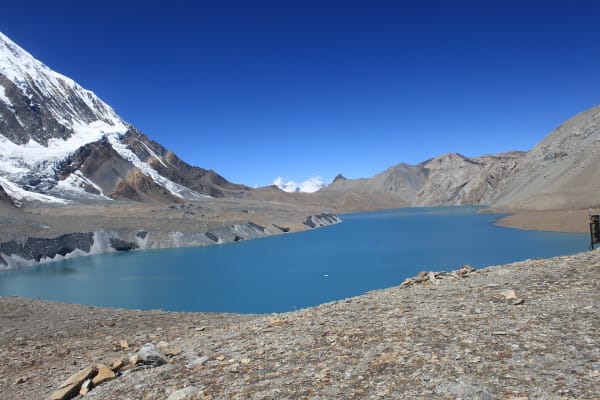
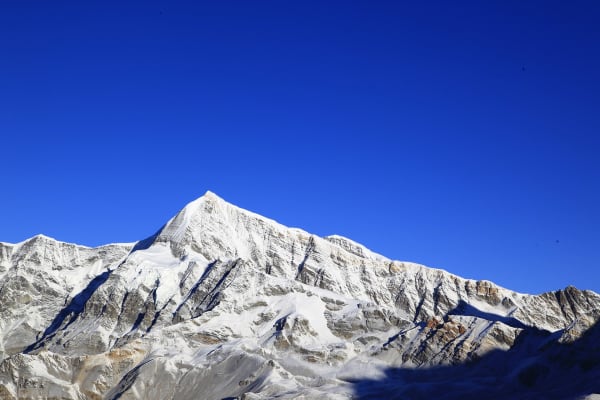
Tilicho Peak (7,134 m) stands at the western end of the Annapurna massif above Tilicho Lake, one of the highest lakes of its size in the world.
It was first climbed in 1978 by a French team, and it is climbed rarely enough that a season may pass with no ascent at all — the permit is a Department of Tourism royalty, the approach is long, and the mountain has a reputation for wind that is entirely deserved.
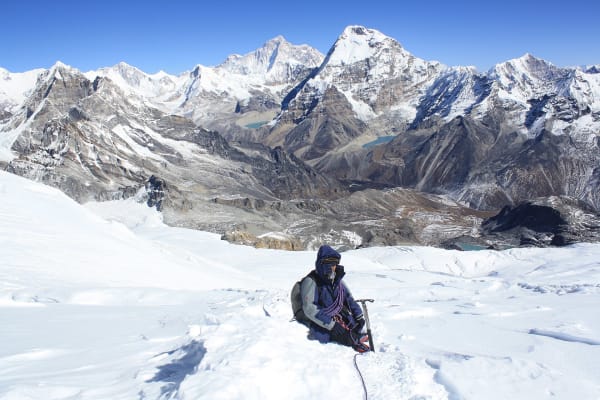
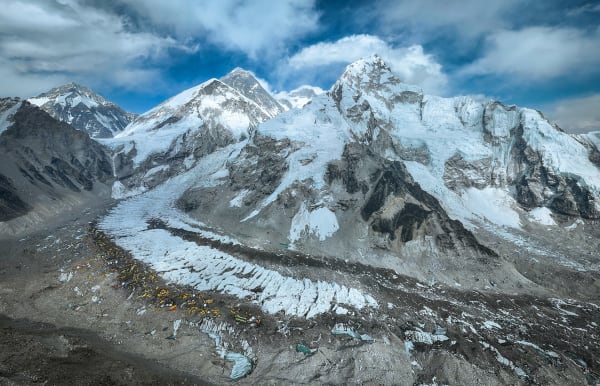
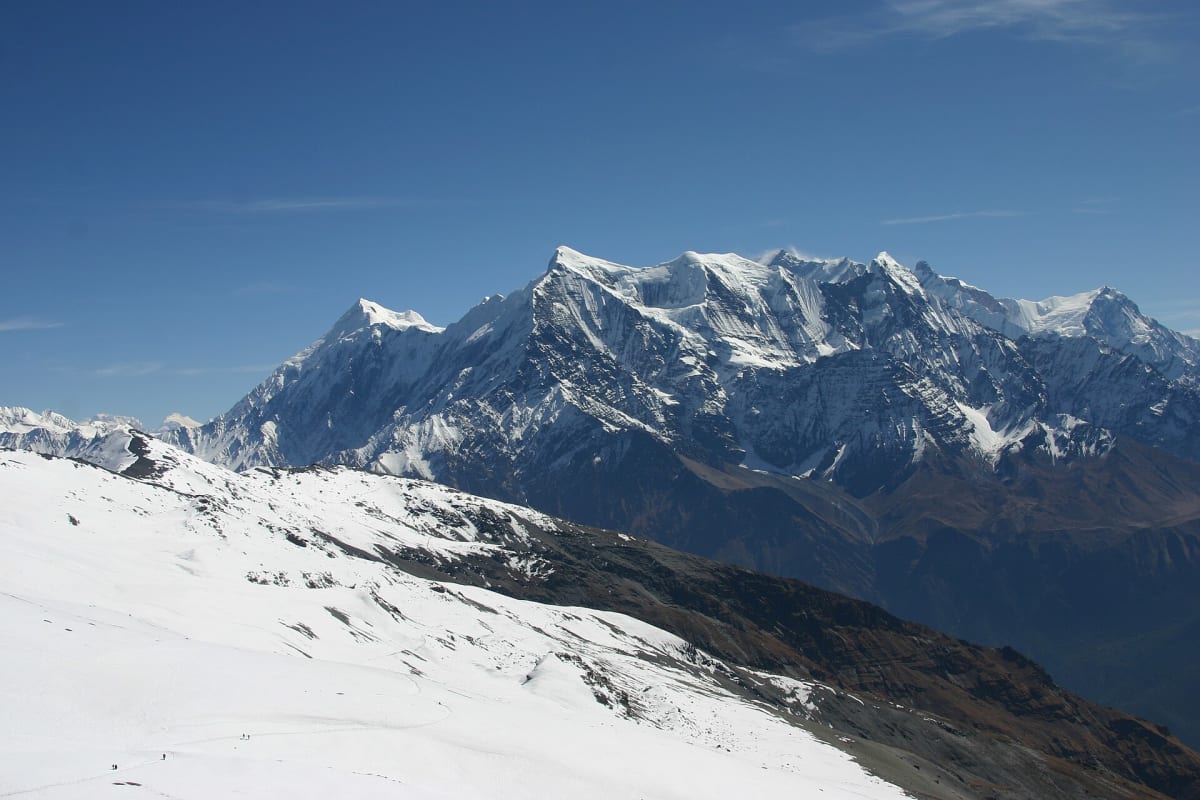
The climbing is a sustained AD+ on snow and ice, with a long summit ridge that runs above 6,800 m for hours and is fully exposed to whatever is coming across the Tibetan plateau. What makes the expedition special is the setting: a base camp beside a frozen turquoise lake at 4,919 m, with the whole north side of the Annapurnas on one flank and the Kali Gandaki dropping away to Dhaulagiri on the other.

The Expedition at a Glance
| Summit | 7,134 m |
| Grade | AD+ — sustained snow and ice, long exposed summit ridge above 6,800 m |
| Duration | 30 days Kathmandu to Kathmandu |
| Camps | Base camp 5,000 m, Camp 1 5,700 m, high camp 6,300 m |
| Best seasons | April to May, October to November |
| Permit | Department of Tourism royalty peak |
| First ascent | 1978, French team |
| Price | From USD 19,500 per person |
We run it as a 30-day expedition. If the peak is beyond you but the setting is not, the Tilicho Lake trek reaches the same lake with no climbing permit.
The Route
The northern Annapurna Circuit (1,860 m to 3,540 m)
Jeep up the Marsyangdi to Dharapani, then Chame, Upper Pisang and the Ghyaru high route to Ngawal, with acclimatisation days at Ngawal and Manang. This is the best approach walk of any expedition in Nepal and it does the acclimatisation work properly.
West to the lake (3,750 m to 5,000 m)
Through Khangsar to the Tilicho base camp at 4,150 m, then up past Tilicho Lake (4,919 m) to the expedition base camp at 5,000 m. A puja, a technical assessment and training day, and an acclimatisation day.
Rotation and summit (5,700 m to 7,134 m)
One full rotation to Camp 1 (5,700 m) and back to base, then rest days, then the summit push through Camp 1 to a high camp at 6,300 m. The summit day runs the long ridge above 6,800 m for hours.
The Wind Problem
Wind is not a footnote on this mountain; it is the reason it is rarely climbed.
The gap between Annapurna and Dhaulagiri funnels a westerly airflow off the Tibetan plateau, and Tilicho's summit ridge sits directly in it. On the wrong day the ridge is simply not climbable, and because it runs above 6,800 m for hours there is nowhere to shelter and wait.
- Base camp at 5,000 m is very exposed, with no shelter and the full westerly. Tents are guyed properly and weighted with rock.
- Summit windows are short and the expedition is built with reserve days to wait for one.
- The turn-around decision is made on the ridge and it is the guide's alone.
- No supplementary oxygen is used for climbing; emergency oxygen with masks and regulators is held at high camp and base camp for medical use.
How It Compares with Baruntse
| Tilicho Peak | Baruntse | |
|---|---|---|
| Summit | 7,134 m | 7,129 m |
| Grade | AD+ | Comparable |
| Summit ridge | Long and fully exposed above 6,800 m | Shorter |
| Wind | Considerably worse | Serious but less relentless |
| As 8,000 m preparation | Good, but idiosyncratic | The better standard preparation |
Five metres separate their summits, but they are not equivalent objectives. Baruntse is the better preparation for an 8,000 m peak because its structure is more typical; Tilicho is the harder mountain to actually get up, mostly because of the wind. Read the 8,000 m peaks guide for where both fit.
What It Costs
| Group size | Price per person |
|---|---|
| 1 climber | USD 23,790 |
| 2 to 4 | USD 22,030 |
| 5 to 7 | USD 20,870 |
| 8 to 10 | USD 20,280 |
| 11 to 14 | USD 19,790 |
| 15 and over | USD 19,500 |
What Is Included
- Airport transfers, a climbing briefing, permit and equipment-check day in Kathmandu.
- Private jeep transport to Dharapani and back from the end of the trek.
- Hotel accommodation in Kathmandu, and teahouses on the Circuit approach.
- Full expedition camps — base camp at 5,000 m, Camp 1 at 5,700 m and high camp at 6,300 m — with mess, kitchen and toilet tents and a cook and kitchen crew.
- All meals throughout the expedition.
- Department of Tourism royalty permit, ACAP, TIMS and liaison arrangements.
- Climbing guide, climbing Sherpas and high-altitude staff, with equipment, wages and insurance.
- Group climbing equipment and all fixed rope on the route and the summit ridge.
- Emergency oxygen with masks and regulators at high camp and base camp.
- A puja ceremony, technical assessment and training day, an acclimatisation rotation and reserve days.
- Garbage deposit, summit certificate and all government taxes and service charges.
What Is Not Included
- International flights and the Nepal entry visa fee.
- Expedition insurance valid to 7,200 m with helicopter evacuation and repatriation.
- Personal climbing equipment and high-altitude clothing, including double boots and a bag rated to -30 °C.
- Personal porter services.
- Meals in Kathmandu beyond breakfast.
- Snacks, bottled water, hot showers, Wi-Fi, charging and drinks.
- Laundry, phone calls, souvenirs and personal expenses.
- Summit bonus and tips for the climbing Sherpas and high-altitude staff.
- Extra accommodation or transport caused by weather, an aborted summit window or an early descent.