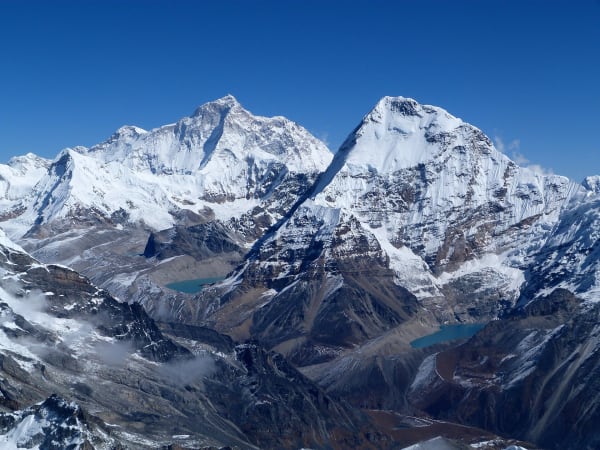
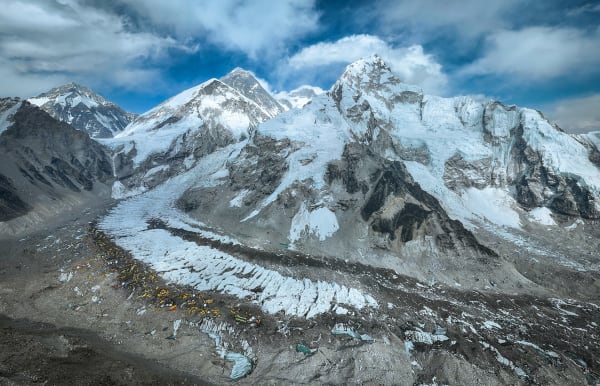
Baruntse (7,129 m) stands at the head of the Hongu valley between Everest and Makalu, and it is the mountain most often recommended as the step between a 6,000 m peak and an 8,000 m one.
It was first climbed in 1954 by Colin Todd and Geoff Harrow on Hillary's New Zealand expedition, by the south-east ridge, and that is still the route.
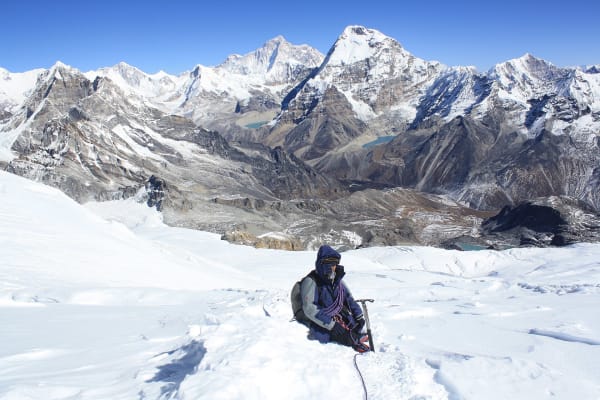
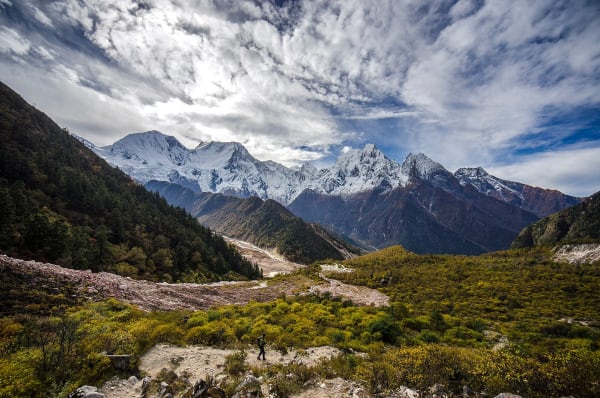
What makes it the right 7,000 m objective is the balance. The climbing is graded AD+ — a steep but manageable ice slope to the col, then a long snow ridge with a corniced section near the top — hard enough to matter and not so hard that altitude and technique compound. The approach is the other half: the Zatrwa La into the Hinku, over the Mera La into the uninhabited Hongu, and a base camp at 5,400 m in a valley with no villages, no lodges and almost nobody else in it.
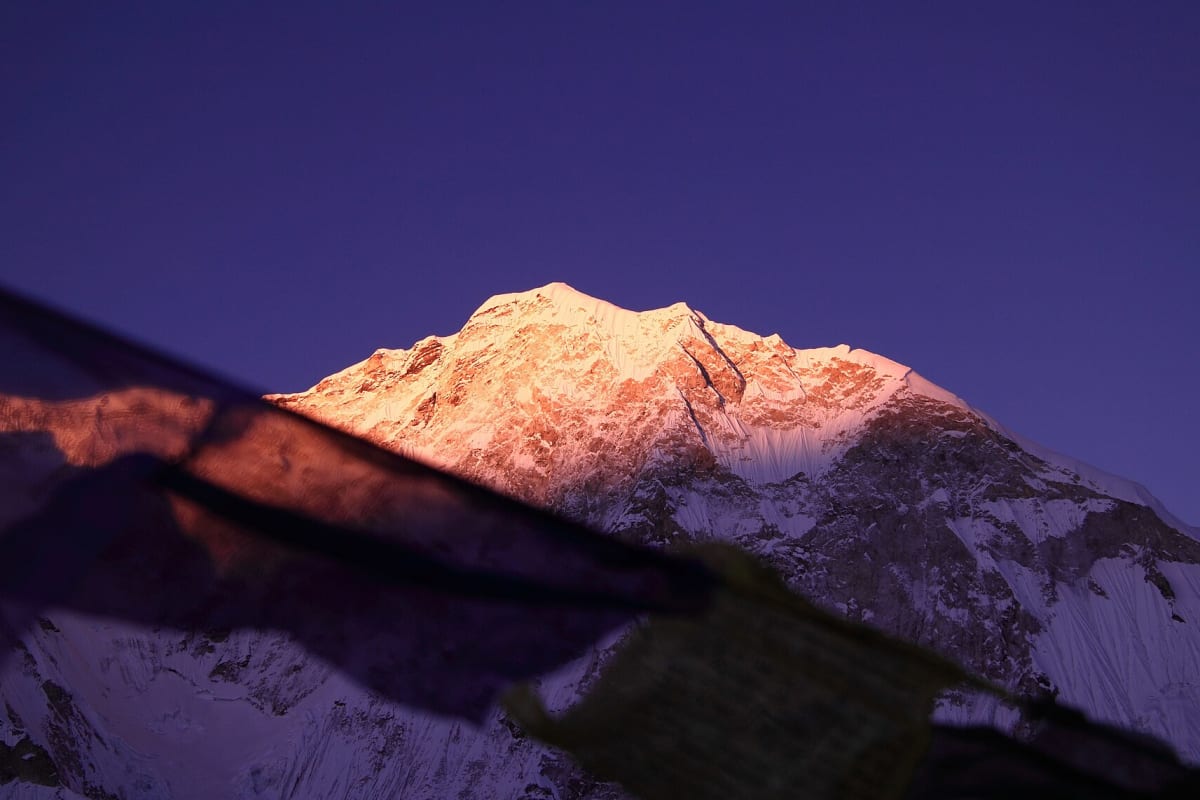
The Expedition at a Glance
| Summit | 7,129 m |
| Route | South-east ridge — ice slope to the col, then a long corniced snow ridge |
| Grade | AD+ |
| Duration | 34 days Kathmandu to Kathmandu |
| Camps | Base camp 5,400 m, Camp 1 6,100 m, high camp 6,400 m |
| Summit success rate | Around 50 to 65 percent |
| Oxygen | Not used for climbing; emergency supply carried |
| Price | From USD 15,500 per person |
We run it as a 34-day expedition, and as a combined trip with Mera Peak. Himlung Himal is the other standard 7,000 m proving ground.
Why It Is the Best 8,000 m Preparation in Nepal
Baruntse is what we recommend before Manaslu, Himlung or Everest, and the reasons are structural.
- It teaches the rhythm of an expedition — base camp, rotations, a weather window, a summit push — on a mountain where the climbing itself is not the limiting factor.
- An AD+ route with no crux that compounds with altitude: a steep ice slope to the col, then a long snow ridge.
- A genuinely remote base camp, which teaches the self-sufficiency an 8,000 m peak demands.
- No supplementary oxygen, so you learn what 7,000 m feels like on your own lungs.
- A long exposed summit ridge, which is the specific skill most 8,000 m summit days require.
See our 8,000 m peaks guide for what comes after.
The Route
Lukla to Khare (2,840 m to 5,045 m)
Fly to Lukla and walk to Chutanga with an acclimatisation day, then over the Zatrwa La (4,610 m) into the Hinku valley — Thuli Kharka, Kothe, Thagnak with an acclimatisation day at Sabai Tsho, and Khare (5,045 m) with a training and acclimatisation day.
Over the Mera La into the Hongu (5,415 m to 5,400 m)
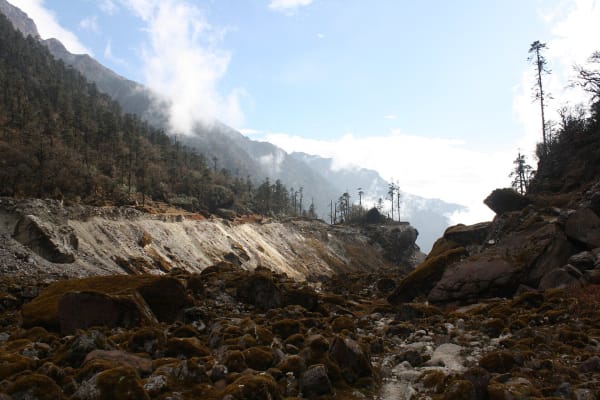
Across the Mera La (5,415 m) — below the Mera summit, not over it — to Kongme Dingma and Seto Pokhari, and into the Hongu: an uninhabited valley with no signal, no resupply and no lodge to retreat to. Base camp at 5,400 m.
Rotation and summit (6,100 m to 7,129 m)
A puja and rest day, a technical assessment and training day, an acclimatisation day, then a full rotation to Camp 1 (6,100 m) and back. The summit push runs base camp to Camp 1 to a high camp at 6,400 m on the ridge, and then the summit day.

Wind on the summit ridge is the commonest reason for turning back — it is long and exposed and there is nowhere to shelter along it.
What It Costs
| Group size | Price per person |
|---|---|
| 1 climber | USD 18,910 |
| 2 to 4 | USD 17,520 |
| 5 to 7 | USD 16,590 |
| 8 to 10 | USD 16,120 |
| 11 to 14 | USD 15,730 |
| 15 and over | USD 15,500 |
What Is Included
- Airport transfers, a climbing briefing, permits and an equipment check in Kathmandu.
- Kathmandu–Lukla return flights and the full Hinku and Hongu approach.
- Teahouse accommodation where it exists, and full camping support from the Mera La onward.
- Base camp (5,400 m), Camp 1 (6,100 m) and a high camp (6,400 m), with mess, kitchen and toilet tents.
- A cook and kitchen crew, and three hot meals a day throughout — supplies carried in and topped up at Khare.
- Baruntse climbing royalty and permits, the Makalu Barun and Sagarmatha permits and liaison arrangements.
- An expedition leader, climbing Sherpas and high-altitude staff.
- Group climbing equipment and progressive rope fixing on the ice slope and the ridge.
- A puja, a technical assessment and training day, an acclimatisation rotation and reserve days.
- Emergency oxygen with masks and regulators, garbage deposit, summit certificate and all taxes.
What Is Not Included
- International flights and the Nepal entry visa fee.
- Expedition insurance valid to 7,200 m with helicopter evacuation and repatriation.
- Personal climbing equipment, double boots and a bag rated to -30 °C.
- Personal porter services.
- Meals in Kathmandu beyond breakfast.
- Snacks, bottled water, hot showers, Wi-Fi, charging and drinks.
- Laundry, phone calls, souvenirs and personal expenses.
- Summit bonus and tips for the climbing Sherpas and high-altitude staff.
- Extra accommodation or transport caused by a cancelled Lukla flight, weather or an early descent.
- The Mera Peak summit, which is a separate itinerary rather than an add-on.