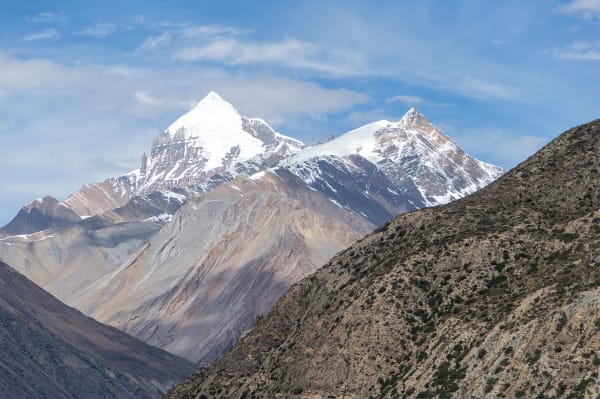
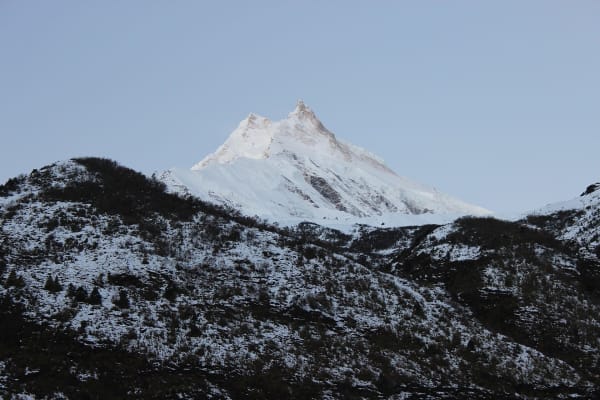
Himlung Himal (7,126 m) is the 7,000 m peak most climbers use as the step to an 8,000 m one, and there are good reasons for that.
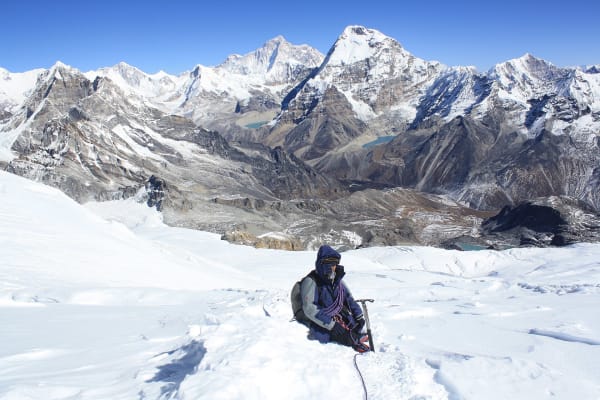
The route is graded AD — a glacier, a long snow slope and a broad summit ridge, with fixed rope on the steeper ground and nothing technical enough to be a problem in itself. It was first climbed in 1992 by a Japanese team, and it has become the standard 7,000 m proving ground in Nepal.
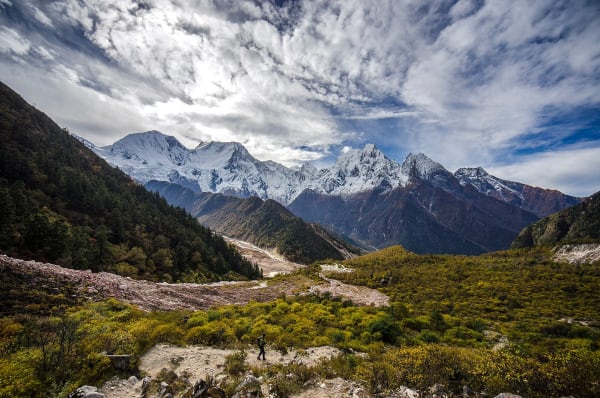
The other reason is the approach. Himlung sits at the head of the Nar Phu valleys, a restricted area closed to outsiders until 2002, and the walk in goes through a gorge, past cave dwellings and eroded pillars, to the medieval Tibetan village of Phu. It is one of the strangest and least-visited approaches in Nepal.

The Expedition at a Glance
| Summit | 7,126 m |
| Grade | AD — glacier, long snow slope, broad summit ridge, no crux |
| Duration | 29 days Kathmandu to Kathmandu — no flight |
| Camps | Base camp 4,900 m, Camp 1 5,450 m, Camp 2 6,000 m, high camp 6,350 m |
| Summit success rate | Around 70 to 80 percent — high for a 7,000 m peak |
| Permits | Nar Phu restricted area, royalty and conservation permits |
| Oxygen | Not used for climbing; emergency supply carried |
| Price | From USD 18,500 per person |
We run it as a 29-day expedition. Baruntse is the other standard preparation peak, and the Nar Phu Valley trek covers the approach alone.
Why It Is the Standard Preparation Peak
Because it teaches the right things without adding difficulties that get in the way.
- The route is AD with no crux, so the lesson is expedition rhythm rather than technique under pressure.
- The acclimatisation profile is generous — four days of walking to base camp, then a rotation.
- The expedition structure is standard: base camp, camps, a rotation, a weather window, a summit push.
- No supplementary oxygen, so you find out what 7,000 m feels like on your own lungs.
- A 70 to 80 percent success rate, which is high for a 7,000 m peak and means most climbers get the experience they came for.
| Himlung Himal | Baruntse | |
|---|---|---|
| Summit | 7,126 m | 7,129 m |
| Grade | AD | AD+ |
| Summit ridge | Broad | Long and exposed |
| Approach | Nar Phu — strange and restricted | Two passes into the uninhabited Hongu |
| Success rate | 70–80% | 50–65% |
The Route
Koto to Phu (2,600 m to 4,080 m)
Drive to Dharapani and Koto on the Annapurna Circuit, then four days up the Nar Phu gorge through Meta and Kyang — abandoned winter settlements, ruined forts, cave dwellings and erosion pillars — to Phu (4,080 m), a fortified Tibetan village on a rock spur, with an acclimatisation day.
Base camp and rotation (4,900 m to 5,450 m)
Base camp at 4,900 m, a puja, a training and assessment day, an acclimatisation day, and a full rotation to Camp 1 (5,450 m) and back with rest days.
The summit push (5,450 m to 7,126 m)
Base camp to Camp 1, Camp 1 to Camp 2 (6,000 m), Camp 2 to a high camp at 6,350 m, and then the summit day on the glacier, the long snow slope and the broad summit ridge, with the Sherpas having fixed the steeper ground ahead.

What It Costs
| Group size | Price per person |
|---|---|
| 1 climber | USD 22,570 |
| 2 to 4 | USD 20,900 |
| 5 to 7 | USD 19,800 |
| 8 to 10 | USD 19,240 |
| 11 to 14 | USD 18,780 |
| 15 and over | USD 18,500 |
What Is Included
- Airport transfers, a briefing, permits, a Ministry briefing and cargo dispatch in Kathmandu.
- Private transport Kathmandu to Dharapani and Koto, and back at the end — no flight.
- Hotel accommodation in Kathmandu with breakfast, and teahouses in Nar Phu.
- Base camp (4,900 m), Camp 1, Camp 2 and a high camp, with mess, kitchen and toilet tents.
- A cook and kitchen crew, and all meals throughout the expedition.
- Himlung royalty permit, the Nar Phu restricted-area permit and the Annapurna Conservation Area Permit.
- An expedition leader, climbing Sherpas and high-altitude staff.
- Group climbing equipment and progressive rope fixing of the steeper ground.
- A puja, a training and assessment day, an acclimatisation rotation and reserve days.
- Emergency oxygen with masks and regulators, garbage deposit, summit certificate and all taxes.
What Is Not Included
- International flights and the Nepal entry visa fee.
- Expedition insurance valid to 7,200 m with helicopter evacuation and repatriation.
- Personal climbing equipment, double boots and a bag rated to -30 °C.
- Personal porter services.
- Meals in Kathmandu beyond breakfast.
- Snacks, bottled water, hot showers, Wi-Fi, charging and drinks.
- Laundry, phone calls, souvenirs and personal expenses.
- Summit bonus and tips for the climbing Sherpas and high-altitude staff.
- Adding Nar village and the Kang La, which is two extra days and quoted separately.
- Extra accommodation or transport caused by weather, road conditions or an early descent.