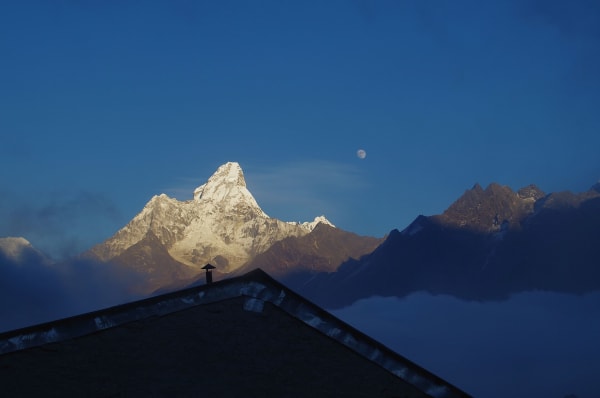
Pumori (7,161 m) is the elegant pyramid standing directly over Everest Base Camp, and it was named by George Mallory — Pumori, mountain daughter, for his own.
Every trekker who walks up Kala Patthar photographs it without knowing what it is, and every climber who has been on it knows exactly what it is: a steep, serious, avalanche-prone mountain that is a great deal harder than its neighbours suggest.
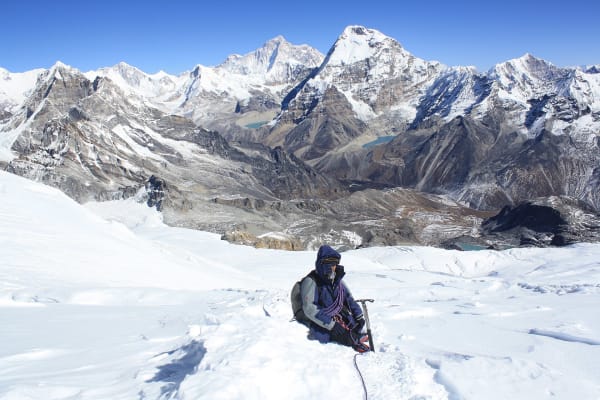
First climbed in 1962 by Gerhard Lenser, it gives sustained climbing on snow and ice at grade D, with a summit ridge that is corniced and narrow and a route genuinely exposed to serac and avalanche hazard on the lower face. It is the natural objective for a climber who has done Ama Dablam and wants a 7,000 m peak before committing to an 8,000 m one — and it is a harder climb than either Manaslu or Himlung, whatever the numbers say.

The Expedition at a Glance
| Summit | 7,161 m |
| Grade | D — sustained steep snow and ice, corniced narrow summit ridge |
| Duration | 36 days Kathmandu to Kathmandu |
| Camps | Base camp 5,300 m, Camp 1 5,800 m, Camp 2 6,400 m, high camp 6,700 m |
| Summit success rate | Around 40 to 55 percent |
| Main hazard | Serac and avalanche on the lower and middle face |
| Season | April to May, September to October |
| Price | From USD 16,500 per person |
We run it as a 36-day expedition. Ama Dablam is the usual step before it, and Baruntse the gentler 7,000 m alternative.
The Avalanche Hazard
It is the defining hazard of the route and it is why the mountain has the reputation it does. Parts of the lower and middle face lie beneath serac and avalanche ground and cannot be avoided — only crossed at the right hour and never lingered in.
The consequence is that attempts abandoned for avalanche conditions account for more turn-backs than the climbing does. A season can be perfectly good technically and still not offer a window in which the face is safe to be on.
Around 40 to 55 percent of our departures summit, which is honest for a grade D peak with this hazard profile.
The Route
Lukla to base camp (2,840 m to 5,300 m)
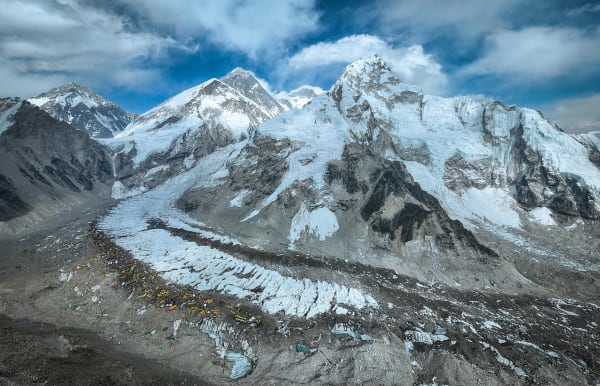
You effectively walk the entire Everest Base Camp trail — Phakding, Namche, Tengboche, Dingboche with a Nangkartshang day, and Lobuche with another acclimatisation day — to base camp at 5,300 m on the moraine near Gorak Shep, within sight of Everest Base Camp across the Khumbu glacier.
Kala Patthar and the rotation
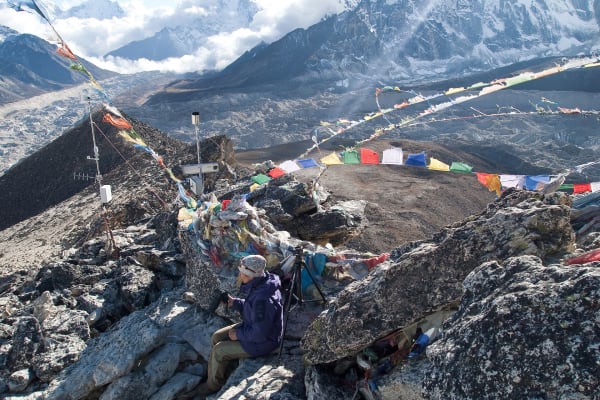
A puja, an assessment and training day, and an acclimatisation day climbing Kala Patthar (5,545 m) — which sits on Pumori's own lower southern ridge, takes a couple of hours from base camp, and gives the best view of Everest anywhere. Then a rotation through Camp 1 (5,800 m) and Camp 2 (6,400 m).
The summit push (6,700 m to 7,161 m)
A small high camp at around 6,700 m, then the summit day on sustained steep snow and ice to a corniced, narrow crest.

What It Costs
| Group size | Price per person |
|---|---|
| 1 climber | USD 20,130 |
| 2 to 4 | USD 18,650 |
| 5 to 7 | USD 17,660 |
| 8 to 10 | USD 17,160 |
| 11 to 14 | USD 16,750 |
| 15 and over | USD 16,500 |
What Is Included
- Airport transfers, an expedition briefing, equipment inspection, Ministry briefing and permits in Kathmandu.
- Kathmandu–Lukla return flights and the full Everest Base Camp trail approach.
- Teahouse accommodation on the approach, and a full expedition base camp at 5,300 m plus Camps 1, 2 and a high camp.
- A cook and kitchen crew, and all meals throughout the expedition.
- Pumori royalty and permits, Sagarmatha National Park entry, the Khumbu municipality fee and liaison arrangements.
- An expedition leader, climbing Sherpas and high-altitude staff.
- Group climbing equipment and progressive rope fixing on the face and the ridge.
- A puja, an assessment and training day, a Kala Patthar acclimatisation day, a rotation and reserve days.
- Two emergency oxygen bottles per rope at high camp, with masks and regulators.
- Garbage deposit, summit certificate and all government taxes.
What Is Not Included
- International flights and the Nepal entry visa fee.
- Expedition insurance valid to 7,200 m with helicopter evacuation and repatriation.
- Personal climbing equipment, double boots and a bag rated to -30 °C.
- Personal porter services.
- Meals in Kathmandu beyond breakfast.
- Snacks, bottled water, hot showers, Wi-Fi, charging and drinks.
- Laundry, phone calls, souvenirs and personal expenses.
- Summit bonus and tips for the climbing Sherpas and high-altitude staff.
- Extra costs arising from an attempt abandoned for avalanche conditions, a cancelled Lukla flight, or an early descent.