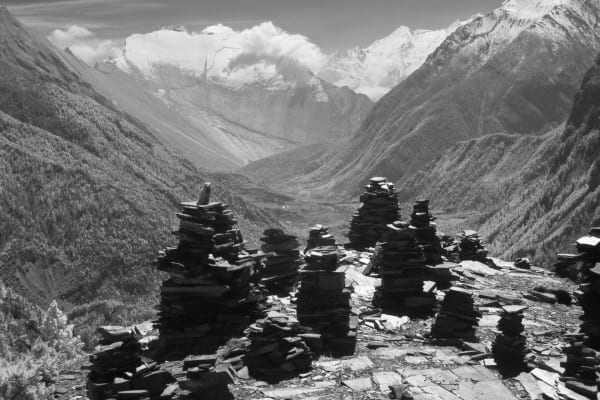
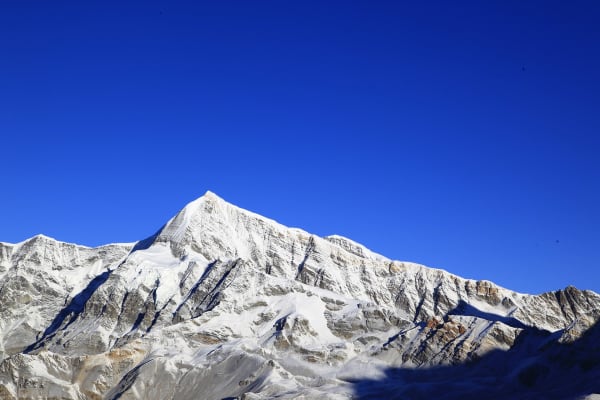
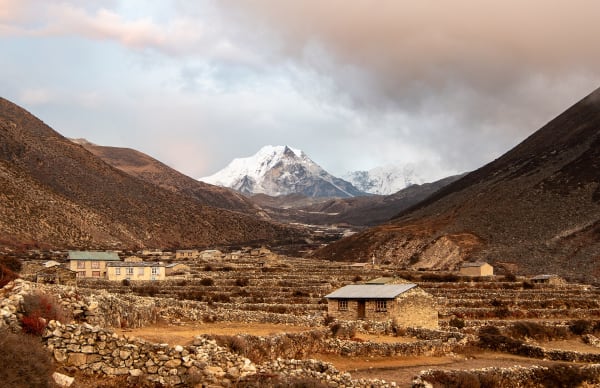
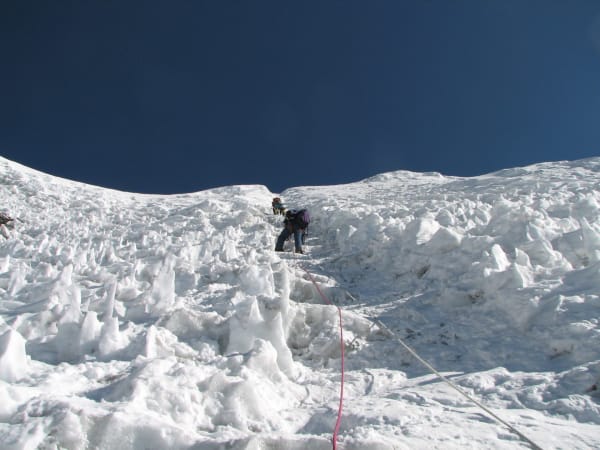
Pisang Peak (6,091 m) rises straight out of the village it is named after, a clean pyramid of snow above the Marsyangdi that every trekker on the Annapurna Circuit walks beneath.
It looks simple from the trail and it is not: the upper section is a steep snow and ice slope at 45 to 50 degrees that narrows to a short exposed ridge, and it turns back more parties than its modest height suggests. That combination — an easy approach and a genuinely steep finish — makes it an unusually good peak.
You reach base camp on the second day of walking, the whole climb is done inside a week of leaving the road, and the summit day is a real one. The itinerary then goes on to walk the best part of the Annapurna Circuit, over the Thorong La to Muktinath and Jomsom, so the climb sits inside one of the classic treks in Nepal rather than replacing it.

The Climb at a Glance
| Summit | 6,091 m |
| The climbing | A ridge and slope throughout — no glacier, no crevasse risk |
| The crux | The upper 300 m at 45–50°, narrowing to an exposed ridge |
| Duration | 18 days Kathmandu to Kathmandu |
| Base camp / high camp | 4,380 m / 5,400 m |
| Summit success rate | Around 65 to 75 percent on our departures |
| Permits | NMA climbing permit, ACAP and TIMS — all included |
| Price | From USD 2,950 per person |
We run it as an 18-day expedition. It pairs well with the Chulu group for a two-peak trip off one acclimatisation.
The Route
Dharapani to base camp (1,860 m to 4,380 m)
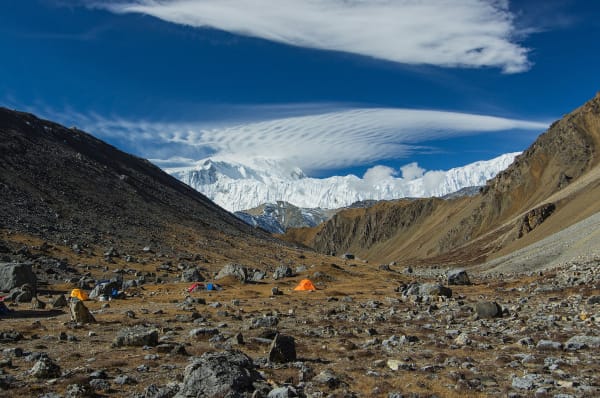
Jeep to Dharapani, then Chame and Upper Pisang — only two walking days before you turn off the Circuit and climb four hours to base camp on the kharka directly above Pisang village. That speed is the trip's great convenience and its main weakness.
Acclimatisation and training (4,380 m)
Two nights at base camp with a full training day: crampons, ice axe, self-arrest, fixed-line ascent, abseil and rope-team technique. Self-arrest matters more here than on most peaks — a 50 degree slope is where it counts.
High camp and the summit (5,400 m to 6,091 m)
High camp at 5,400 m, then a pre-dawn start. The lower two-thirds are a walk in crampons. The last 300 m are 45 to 50 degrees on fixed rope, narrowing to a short exposed ridge fixed by the climbing Sherpas ahead of the push.
There is no glacier on this route, which is one of its attractions — a ridge and a slope throughout, with no crevasse risk and no roped glacier travel.

The Circuit and the Thorong La
Down to Manang with a rest and acclimatisation day, then Yak Kharka, Thorong Phedi and over the Thorong La (5,416 m) to Muktinath and Jomsom, with a flight to Pokhara.
The Acclimatisation Question
We are upfront about this: the fast approach is the weakest part of the itinerary. You reach 4,380 m on the fourth day of walking, which is quicker than ideal.
What we build in to manage it:
- Two nights at base camp at 4,380 m rather than one.
- A full acclimatisation and training day there, which doubles as a climb-high, sleep-low day.
- A reserve day at base camp after the summit push.
- The Thorong La afterwards rather than before — crossing the pass first would help acclimatisation but would add a week and reverse the trip's logic.
If you are at all prone to altitude problems, the Chulu peaks have a materially better profile. Read our altitude guide first.
What It Costs
| Group size | Price per person |
|---|---|
| 1 climber | USD 3,600 |
| 2 to 4 | USD 3,330 |
| 5 to 7 | USD 3,160 |
| 8 to 10 | USD 3,070 |
| 11 to 14 | USD 2,990 |
| 15 and over | USD 2,950 |
What Is Included
- Airport transfers in Kathmandu, plus a climbing briefing, permit and equipment-check day.
- Private jeep Kathmandu to Dharapani, the Jomsom–Pokhara flight (jeep as the alternative), and Pokhara to Kathmandu.
- Two nights in Kathmandu and one in Pokhara with breakfast; teahouses on the approach and walk out.
- Tented base camp (4,380 m) and high camp (5,400 m) with mess, kitchen and toilet tents, and a cook and kitchen crew.
- Three meals a day throughout.
- NMA climbing permit for Pisang Peak, ACAP and TIMS.
- A government-licensed climbing guide and one climbing Sherpa per two climbers above base camp.
- Group climbing equipment, and fixing of the upper slope and summit ridge ahead of the summit push.
- A full training day covering crampons, ice axe, self-arrest, fixed-line ascent, abseil and rope-team technique.
- Porter and pack-animal transport from Pisang to base camp, NMA garbage deposit, summit certificate and all taxes.
What Is Not Included
- International flights and the Nepal entry visa fee.
- Travel insurance covering mountaineering to 6,091 m, with helicopter evacuation and repatriation.
- Personal climbing equipment — harness, crampons, ice axe, ascender, descender, helmet and carabiners. Available to rent.
- Personal trekking equipment and clothing, including boots and a sleeping bag.
- Porter services for your personal duffel.
- Lunch and dinner in Kathmandu and Pokhara.
- Snacks, bottled water, hot showers, Wi-Fi, charging and drinks.
- Laundry, phone calls, souvenirs and personal expenses.
- Tips for the guide, climbing Sherpas, porters and support staff.
- Extra accommodation or transport caused by weather, flight delays or an early descent.