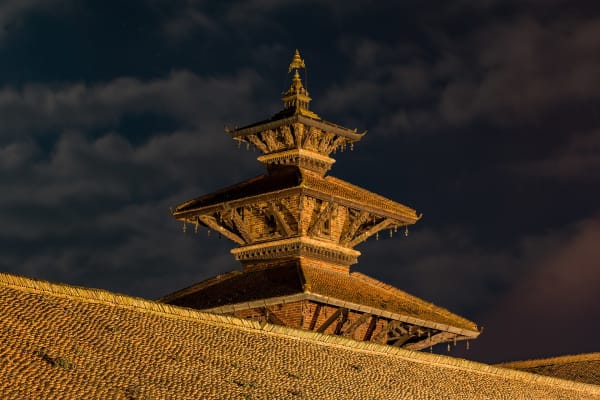
Patan — properly Lalitpur, the city of beauty — sits immediately south of Kathmandu across the Bagmati, and it is the valley's most undervalued destination. It was the third of the Newar kingdoms, it has the finest Durbar Square of the three, it holds the best museum in Nepal, and it remains a working craft city whose bronze casters and metalworkers supply monasteries across the Himalaya.
It is twenty minutes from Thamel. Most visitors on a tight schedule skip it for Bhaktapur, which is a mistake — ideally you see both.
Durbar Square
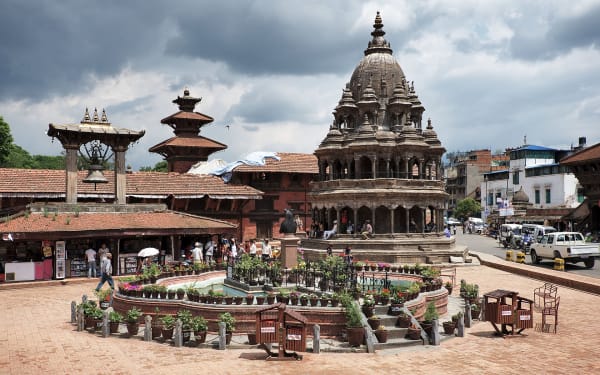
Patan's square is the most architecturally coherent in the valley — a long paved space with the royal palace on one side and a row of temples on the other, rather than the sprawl of Kathmandu's.
- Krishna Mandir (1637) — a stone shikhara temple in 21 sections, carved with scenes from the Mahabharata and Ramayana. It is the outstanding piece of stone architecture in Nepal and it survived 2015 intact.
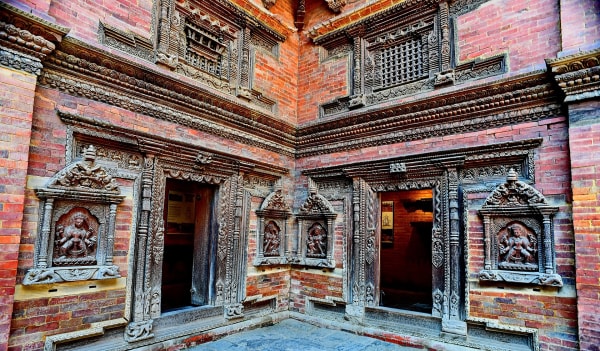
- The Royal Palace — three connected courtyards. Sundari Chowk holds the Tusha Hiti, a sunken royal bath ringed with stone deities, which is the single most beautiful object in the valley. Mul Chowk and Mani Keshab Narayan Chowk complete the set.
- The Patan Museum — in the restored palace, and genuinely the best museum in Nepal. Its collection of Hindu and Buddhist bronzes is superb and, unusually for South Asia, it is beautifully interpreted. Allow 90 minutes.
- Bhimsen, Vishwanath and Taleju temples along the eastern row, with the Manga Hiti water spout still in daily use.
If you visit one monument zone in the Kathmandu Valley and want architecture rather than atmosphere, this is it.
The Craft Quarters
Patan's distinction is that it is still a manufacturing city. The Newar metalworking tradition here goes back well over a thousand years — Araniko, the 13th-century architect who built for the Yuan court in Beijing, came from Patan — and it has never stopped.
- Bronze and copper casting in the alleys around Oku Bahal and Nag Bahal. Lost-wax casting of statues for monasteries across Nepal, Tibet, Bhutan and beyond, done in small family workshops you can look into.
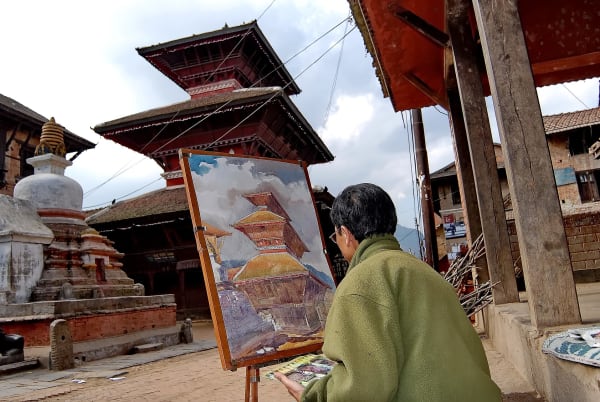
- Thangka painting — studios throughout the city, with wide variation in quality. Ask to see work in progress rather than the gallery wall.
- Wood carving and stone work, supplying temple restoration across the valley.
- Mahaboudha — the terracotta temple of a thousand Buddhas, every brick carrying a Buddha image, tucked in a courtyard off the main streets.
- Hiranya Varna Mahavihar, the Golden Temple — a working Buddhist monastery off the main square with a gilded facade, resident monks and a tortoise or two in the courtyard. Easy to miss and one of the valley's best interiors.
Buying here: prices in Patan workshops are lower than in Thamel and the quality is higher, because you are closer to the maker. Ask what the piece is made of and how it was cast, and expect a straight answer.
Beyond the Centre
- Kumbeshwar temple — a five-storey Shiva temple with two sacred ponds said to be fed from Gosaikunda, and a focus of the Janai Purnima festival in August.
- Jawalakhel — the Tibetan refugee settlement and carpet-weaving centre, where you can watch hand-knotting and buy direct.
- The Central Zoo — Nepal's only zoo, modest and mainly of interest if you are travelling with children.
- Godavari and Phulchowki — the botanical garden and the valley's highest rim hill at 2,782 m, both half an hour south and both excellent for birds. See our valley bird watching day.
- Bungamati and Khokana — two traditional villages south of Patan, known for wood carving and mustard-oil pressing, badly hit in 2015 and well worth a visit. A village tour covers them.
Practical Notes
- Getting there: 20 to 30 minutes by taxi from Thamel. Our Patan day tour includes transfer, entry and a guide.
- Entry: a ticket for the Durbar Square monument zone, with the Patan Museum charged separately or in combination depending on the current arrangement.
- Time needed: two to three hours for the square and museum, half a day with the craft quarters, a full day with Bungamati and Khokana.
- Timing: early morning for the square, because it is a working public space and the morning puja is the best thing in it.
- Festivals: Rato Machhindranath Jatra in April and May is Patan's great festival — a chariot pulled through the city over several weeks, and the longest festival in Nepal.
- Combine it: Patan in the morning and Kathmandu Durbar Square in the afternoon works well, as does Patan plus Bungamati and Khokana as a full cultural day.
Our valley UNESCO guide covers how Patan fits with the other six sites, and the Bhaktapur guide covers its chief rival — if you have two days, do one each.