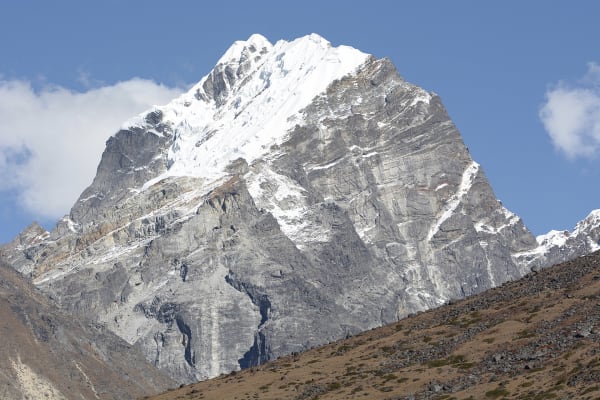
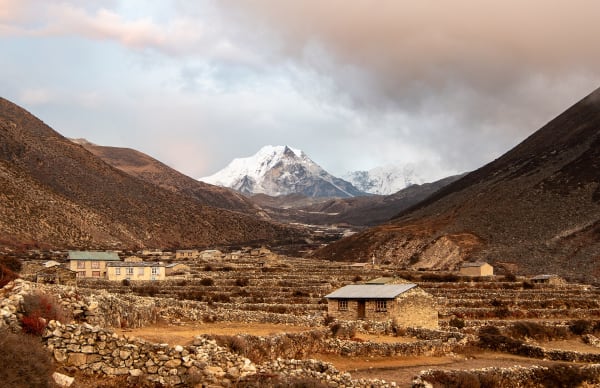
Nirekha Peak (6,159 m) sits immediately above the Cho La, the pass that links the Khumbu valley to Gokyo, and it is one of the least-known permitted peaks in Nepal. It was opened to climbing only in 2002 and still receives a handful of parties a year, most of whom find they have the mountain, the glacier and the whole cirque entirely to themselves.
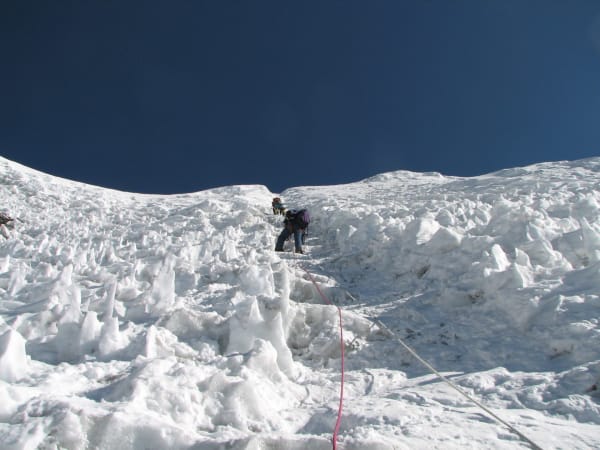
The route is a proper alpine line without being a desperate one: a crevassed glacier approach, snow and ice slopes of 45 to 55 degrees fixed on the steep sections, and a corniced summit ridge with the Cho La glacier falling away on one side and the Ngozumpa on the other.
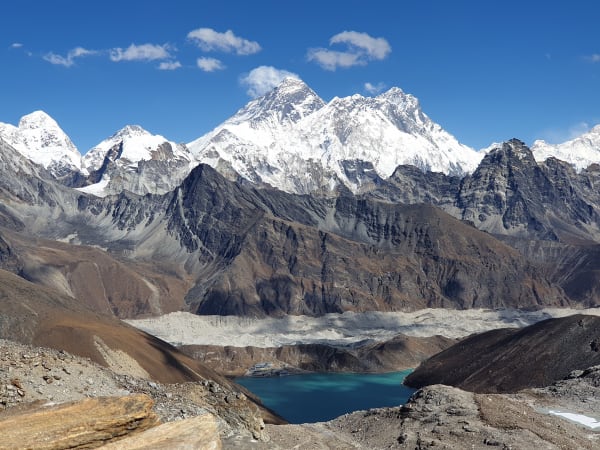
Graded AD-, it asks for competence rather than brilliance, and it rewards it with a summit view of Cholatse, Taboche, Ama Dablam, Everest and Cho Oyu from a top almost nobody has stood on.

The Climb at a Glance
| Summit | 6,159 m |
| Grade | AD- — crevassed glacier, 45–55° ice, corniced summit ridge |
| Duration | 19 days Kathmandu to Kathmandu |
| Base camp / high camp | 5,000 m / 5,500 m |
| Summit success rate | Around 60 to 70 percent |
| Best seasons | April to May, October to November |
| Opened to climbing | 2002 |
| Price | From USD 3,250 per person |
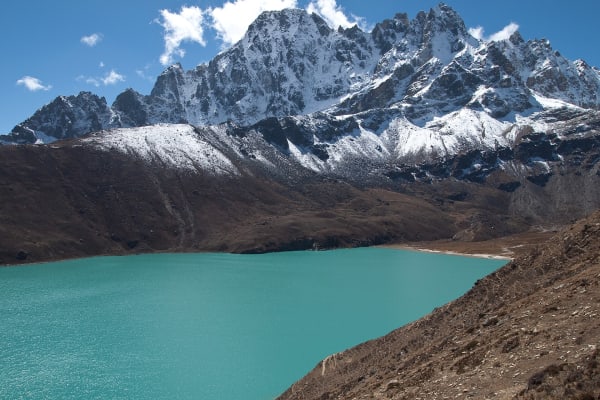
We run it as a 19-day expedition. Lobuche East is its closest match in grade, and the Gokyo lakes can be added on the far side of the Cho La.
The Route
Lukla to Dzongla (2,840 m to 4,830 m)
The standard Khumbu approach — Phakding, Namche with an acclimatisation day, Tengboche, Dingboche with a second acclimatisation day on Nangkartshang at 5,083 m — then up to Dzongla (4,830 m) below the Cho La.
Base camp and training (5,000 m)
A short day into the cirque below the pass to base camp at 5,000 m, then a training and acclimatisation day. The glacier work is the focus: rope-team travel, crevasse rescue basics and fixed-line technique.
High camp and the summit (5,500 m to 6,159 m)
Three to four hours to high camp at 5,500 m on the moraine at the edge of the glacier — exposed, and -15 °C to -20 °C overnight. Summit day starts in the dark: the crevassed approach on a line the Sherpas mark and check the day before, the fixed 45 to 55 degree slopes, and the corniced crest.
There is nowhere to bail out on summit day, which is worth knowing in advance. Once the group is on the fixed slopes the options are up or a full abseil descent, and there is no sheltered ground between.

Why So Few People Climb It
Obscurity more than difficulty. Nirekha has no famous first ascent, it is not on the standard list of trekking peaks that operators market, and it was only opened in 2002. Anyone comfortable on Lobuche East or Island Peak could climb it.
The practical consequence is that you get an entire Khumbu cirque to yourself, which on a mountain two days from Everest Base Camp is genuinely unusual.
| Nirekha | Lobuche East | |
|---|---|---|
| Summit | 6,159 m | 6,119 m |
| Grade | AD- | AD- to AD |
| Character | More glacier travel, longer sustained ice | The notch and false-summit problem |
| Traffic | A handful of parties a year | Steady |
| Success rate | 60–70% | Comparable |
What It Costs
| Group size | Price per person |
|---|---|
| 1 climber | USD 3,970 |
| 2 to 4 | USD 3,670 |
| 5 to 7 | USD 3,480 |
| 8 to 10 | USD 3,380 |
| 11 to 14 | USD 3,300 |
| 15 and over | USD 3,250 |
What Is Included
- Airport transfers, a climbing briefing, permit and equipment-check day in Kathmandu.
- Kathmandu–Lukla return flights.
- Hotel accommodation in Kathmandu with breakfast, and teahouses on the approach and walk out.
- Tented base camp (5,000 m) and high camp (5,500 m) with mess, kitchen and toilet tents, and a cook and kitchen crew.
- Three meals a day throughout.
- NMA climbing permit for Nirekha, Sagarmatha National Park entry and the Khumbu municipality fee.
- A government-licensed climbing guide and climbing Sherpas above base camp.
- Group climbing equipment, and marking and fixing of the glacier line and the steep slopes.
- A training and acclimatisation day at base camp, plus a reserve day.
- Porter transport of group equipment, NMA garbage deposit, summit certificate and all taxes.
What Is Not Included
- International flights and the Nepal entry visa fee.
- Travel insurance covering mountaineering to 6,159 m, with helicopter evacuation and repatriation.
- Personal climbing equipment — harness, crampons, ice axe, ascender, descender, helmet and carabiners. Available to rent.
- Personal trekking equipment and clothing, including double boots and a bag rated to -20 °C.
- Porter services for your personal duffel.
- Lunch and dinner in Kathmandu.
- Snacks, bottled water, hot showers, Wi-Fi, charging and drinks.
- Laundry, phone calls, souvenirs and personal expenses.
- Tips for the guide, climbing Sherpas, porters and support staff.
- Extra accommodation or transport caused by a cancelled Lukla flight, weather or an early descent.
- Adding Gokyo or Everest Base Camp to the itinerary, which is straightforward but extends the trip.