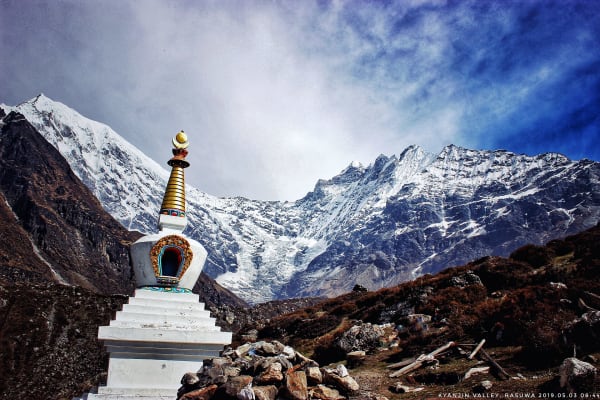
The Mundum trail — named after the Mundhum, the oral scripture of the Kirat Rai people — runs through the middle hills of Khotang and Bhojpur in eastern Nepal. It was developed in the last decade as a community homestay route, and it is one of the few genuinely new trekking products in Nepal that is about culture rather than mountains.
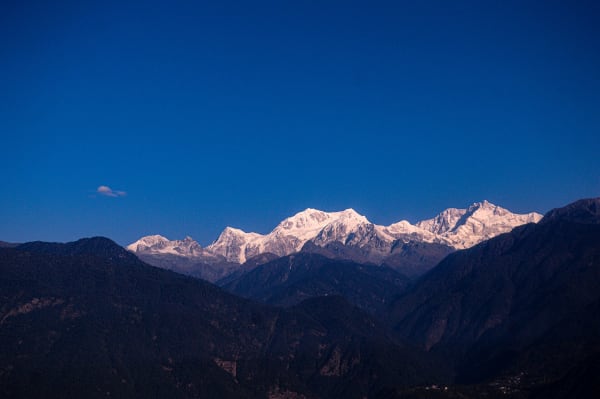
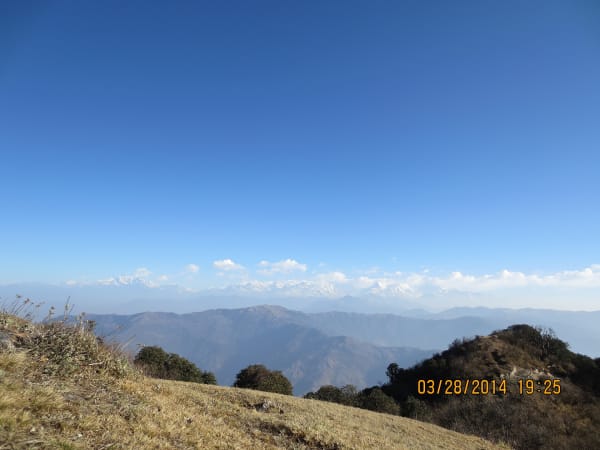
That said, the mountains are there. From Tyamke Danda and Silichung at around 3,400 m the view runs from Everest and Makalu east to Kanchenjunga, and you will be the only group on the ridge.
The Trek at a Glance
| Duration | 13 days from Kathmandu |
| Highest point | About 3,426 m at Silichung or Tyamke Danda |
| Difficulty | Moderate — hill ridge walking, long days, basic homestays |
| Access | Flight to Tumlingtar or Biratnagar, then road into Khotang or Bhojpur |
| Permits | Trekking registration; no national park or restricted permit |
| Best seasons | October to December, March to May |
| Accommodation | Community homestays throughout |
We run it as a 13-day Mundum trek.
Kirat Rai Culture and the Mundhum
The Rai and Limbu peoples of eastern Nepal are collectively called Kirat, and their religious tradition — Kirat Mundhum — predates both Hinduism and Buddhism in the region. It is transmitted orally by mangpa and bijuwa, ritual specialists who recite genealogies and creation narratives that can run for hours.
- Nature worship is central — ancestral spirits, rivers, stones, and in particular the hearth, which is the focus of household ritual.
- The Sakela dance, performed twice a year at Ubhauli in spring and Udhauli in autumn, imitates agricultural work and bird movement, and is the main public expression of Kirat practice.
- Sacred sites on the trail include Tyamke and Silichung, both of which are pilgrimage destinations in their own right.
- Language — several distinct Rai languages, not mutually intelligible, alongside Nepali.
- Homestays mean you eat at the hearth with the family, which is where most of this becomes visible rather than theoretical.
This is the main reason to walk the trail, and it rewards asking questions. A guide from the region — which is who we send — makes an enormous difference, because much of this is not written down anywhere you could read it.
The Route
- In from Tumlingtar or Biratnagar by road to Diktel or Bhojpur, the district centres, both of which are working bazaar towns rather than trekking hubs.
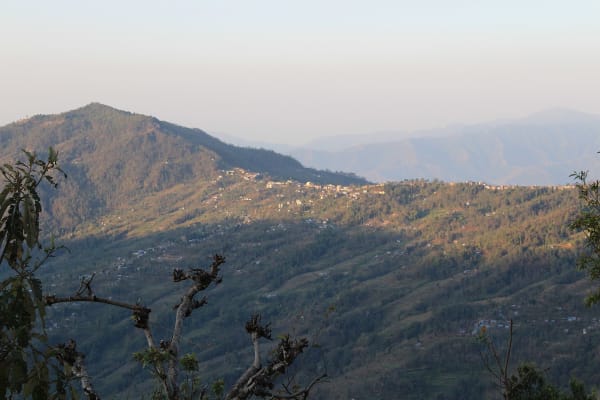
- Through the Khotang and Bhojpur hills — terraced farmland, sal and oak forest, Rai villages with stone houses and hearth shrines, and homestays in villages that have organised themselves into the trail committee.
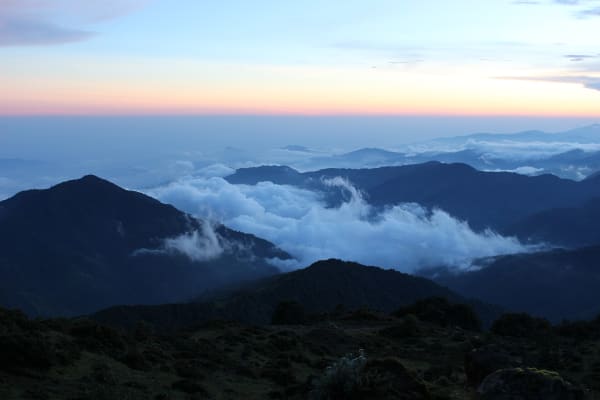
- Tyamke Danda (about 3,010 m) — a ridge with the first full Himalayan panorama and a sacred site at the top.
- Silichung (about 3,426 m) — the high point, another pilgrimage ridge, with Everest, Lhotse, Makalu, Chamlang and Kanchenjunga visible on a clear morning.
- Down through Bhojpur — a town known for its blacksmiths and the khukuri knives made there for generations.
- Out via Tumlingtar or the road to Biratnagar.
Route variants run in both directions and between different village clusters, because the trail is a network rather than a single line. We build it around the homestays that are active in your season.
What to Expect from the Homestays
This is homestay trekking rather than lodge trekking, and the difference matters.
- You stay in family houses — a room, or sometimes a shared room, with bedding provided. Bring a sleeping bag.
- Meals are eaten with the household, usually dal bhat, dhido, local greens, and seasonal vegetables. Chicken and local pork appear at festivals and on request.
- Facilities are basic — shared outside toilet, bucket wash, occasional solar shower.
- Payment goes through the village committee at a set rate, which is how the income is distributed rather than concentrated.
- Millet liquor, tongba and raksi will be offered. Tongba — hot water poured over fermented millet and drunk through a straw — is the eastern hills speciality and worth trying.
- You will be the event. Foreign trekkers are still unusual enough here that arrival is a small occasion.
Etiquette: shoes off, do not step over the hearth, accept what is offered, and ask before photographing inside a house or at a shrine. Our responsible trekking guide covers the rest.
Who It Suits
- Trekkers who have done the classics and want something entirely different.
- Anyone interested in Nepali culture beyond the Buddhist Himalaya. Kirat Mundhum is one of the least documented living religious traditions in South Asia.
- Trekkers who prefer villages to base camps. There is no glacier and no pass here.
- Low-altitude walkers. Nothing above 3,426 m, so no altitude risk.
- Winter and shoulder-season travellers — the hills are warm and workable from October through to May.
Who should look elsewhere: anyone whose priority is high mountains, anyone who needs lodge comfort, and first-time visitors to Nepal, for whom a route with more infrastructure is a better introduction. For other quiet options, see our off-the-beaten-path guide, and the Red Panda Trail in neighbouring Ilam is the closest comparable trek.