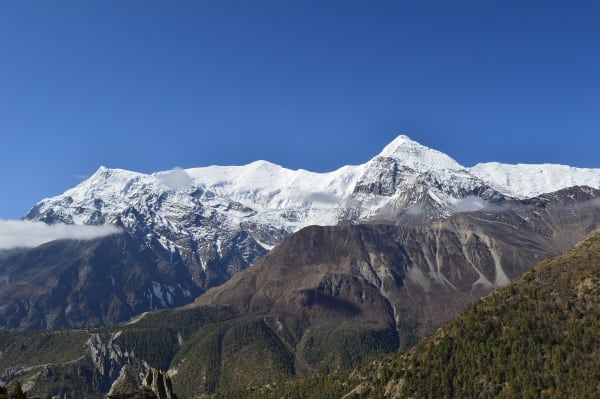
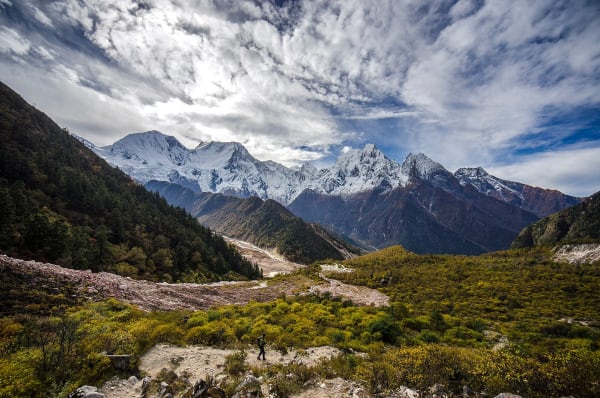
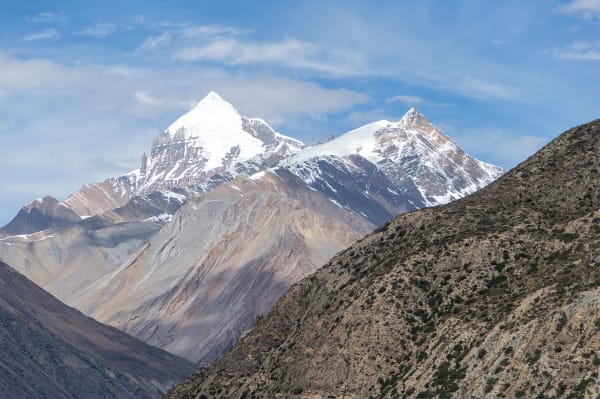
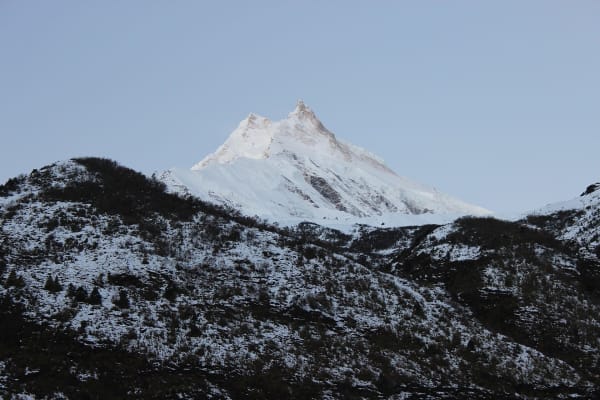
Kang Guru (6,981 m) stands above the village of Nar in the restricted Nar Phu valleys, and it is one of the least-climbed permitted peaks in Nepal.
It was first ascended in 1955 by a Japanese team, and it is best known for the worst reason: in October 2005 an avalanche destroyed the base camp of a French expedition, killing eighteen people — seven climbers and eleven Nepali staff. Very few teams have attempted it since.
We include it because it is a fine mountain and because the people who want to climb it deserve an operator who will discuss its history openly rather than omit it from the brochure. The route is graded D — a crevassed glacier, sustained ice and a corniced summit ridge — and the base camp siting, the timing of the season and the willingness to abandon an attempt matter more here than on any other 7,000 m peak we run.

2005, and How We Manage the Risk Now
What happened: an unseasonal October storm dropped heavy snow, and the avalanche that followed destroyed the base camp of a French expedition, killing eighteen people — seven climbers and eleven Nepali staff. It remains one of the worst single incidents in Nepali mountaineering.
How we manage it now — three ways, none of which eliminates the hazard:
- Base camp is sited out of avalanche run-out rather than in the most convenient spot, which costs walking time every day of the expedition.
- We do not run departures at the shoulders of the season, when unseasonal storms are likeliest.
- We abandon attempts readily, and the leader's judgement is not subject to a summit bonus.
Should the peak be climbed at all? That is a fair question and we do not think there is one answer. It is a fine mountain with a hazard that can be managed but not removed, and the people most exposed to it are the Nepali staff who carry the loads. We think that is a conversation to have openly with anyone who books.
The Expedition at a Glance
| Summit | 6,981 m |
| Grade | D — crevassed glacier, sustained ice, corniced summit ridge |
| Duration | 28 days Kathmandu to Kathmandu — no flight |
| Camps | Base camp 4,600 m, Camp 1 5,400 m, Camp 2 6,100 m, high camp 6,500 m |
| Attempts since 2005 | A handful in two decades |
| Permits | Nar Phu restricted area, royalty and conservation permits |
| Season | April to May, October to November — core season only |
| Price | From USD 17,500 per person |
We run it as a 28-day expedition. Himlung Himal is the far more frequented peak from the same valley system.
The Route
Koto to Nar (2,600 m to 4,110 m)
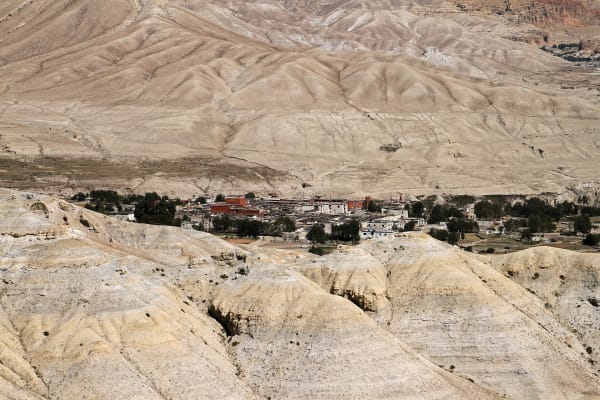
Drive to Dharapani and Koto, then up the Nar Phu gorge through Meta to Nar (4,110 m) with an acclimatisation day. Nar is a walled Tibetan village with four gompas, stacked stone houses and a chorten gate, on a shelf above the gorge — one of the more remarkable settlements in Nepal, and worth the trip on its own.
Base camp and rotation (4,600 m to 5,400 m)
Base camp at 4,600 m, sited clear of run-out. A puja, a technical assessment and training day, an acclimatisation day, and a full rotation to Camp 1 (5,400 m) and back with two rest days.
The summit push (5,400 m to 6,981 m)
Base camp to Camp 1, Camp 1 to Camp 2 (6,100 m), Camp 2 to a high camp at 6,500 m, then the summit day on the crevassed glacier, the sustained ice and the corniced crest, with the Sherpas fixing in stages.

Kang Guru or Himlung?
| Himlung Himal | Kang Guru | |
|---|---|---|
| Summit | 7,126 m | 6,981 m |
| Grade | AD | D |
| Traffic | Several teams a season | A handful of attempts in two decades |
| Fixed rope from others | Usually | Never |
| Success rate | 70–80% | Very low sample |
| From | USD 18,500 | USD 17,500 |
Harder and considerably less frequented. Himlung is an AD snow route with a high success rate and several teams a season; Kang Guru is a grade D ice route with a corniced ridge, no fixed rope from anyone else, and a history that shapes every decision on it.
What It Costs
| Group size | Price per person |
|---|---|
| 1 climber | USD 21,350 |
| 2 to 4 | USD 19,770 |
| 5 to 7 | USD 18,730 |
| 8 to 10 | USD 18,200 |
| 11 to 14 | USD 17,760 |
| 15 and over | USD 17,500 |
What Is Included
- Airport transfers, a briefing, permits, a Ministry briefing and cargo dispatch in Kathmandu.
- Private transport Kathmandu to Dharapani and Koto, and back at the end — no flight.
- Hotel accommodation in Kathmandu with breakfast, and teahouses in Nar Phu.
- Base camp (4,600 m) sited clear of avalanche run-out, plus Camp 1, Camp 2 and a high camp.
- A cook and kitchen crew, and all meals throughout the expedition.
- Kang Guru royalty permit, the Nar Phu restricted-area permit and the Annapurna Conservation Area Permit.
- An expedition leader, climbing Sherpas and high-altitude staff, with equipment, wages and insurance.
- Progressive rope fixing of the whole route by our own Sherpa team.
- A puja, a technical assessment and training day, an acclimatisation rotation and reserve days.
- Emergency oxygen with masks and regulators, garbage deposit, summit certificate and all taxes.
What Is Not Included
- International flights and the Nepal entry visa fee.
- Expedition insurance valid to 7,000 m with helicopter evacuation and repatriation.
- Personal climbing equipment, double boots and a bag rated to -30 °C.
- Personal porter services.
- Meals in Kathmandu beyond breakfast.
- Snacks, bottled water, hot showers, Wi-Fi, charging and drinks.
- Laundry, phone calls, souvenirs and personal expenses.
- Summit bonus and tips for the climbing Sherpas and high-altitude staff.
- Extra costs arising from an abandoned attempt, weather or an early descent.