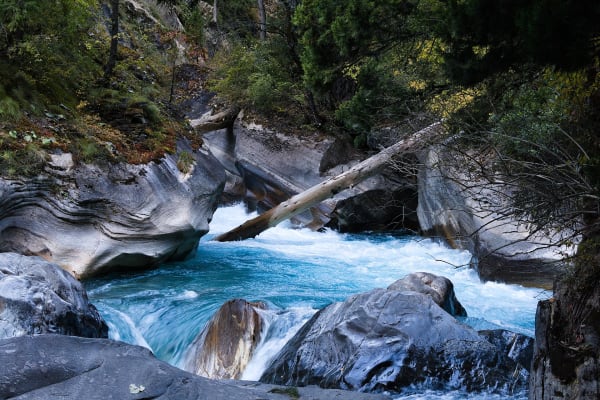
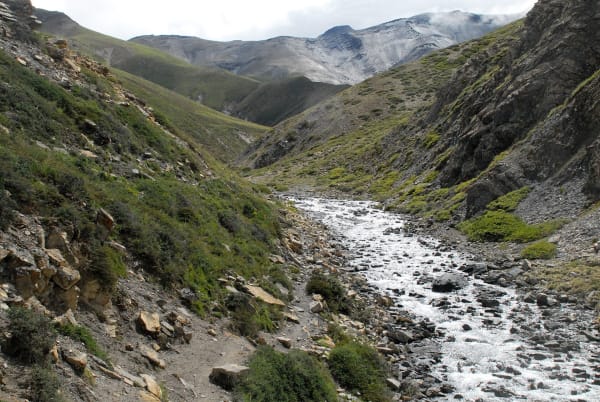
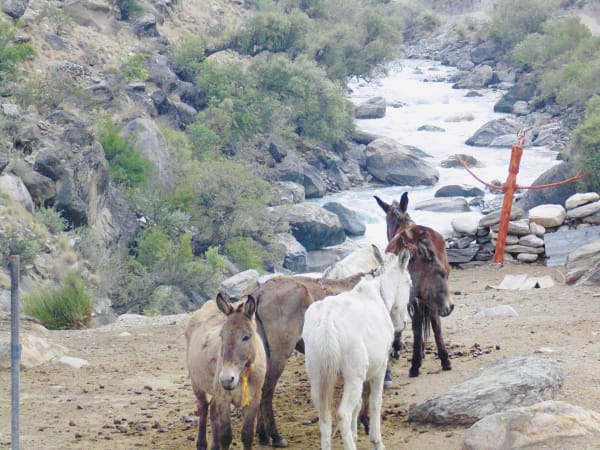
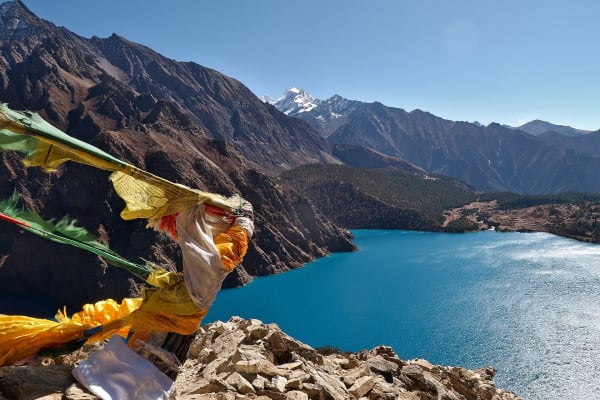
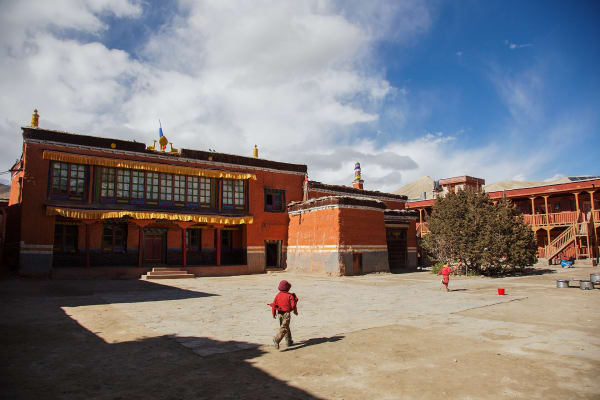
This is the big one. From Jomsom in the Kali Gandaki the route climbs out of Mustang over the Sangda La (5,560 m) into Dolpo proper, then follows the old salt-trade line west through Charka Bhot and over the Numa La (5,309 m) and Baga La (5,190 m) to the Bon and Buddhist villages of Dho Tarap, finishing at the turquoise water of Phoksundo (3,640 m).
Five passes, three above 5,000 m, and two weeks above the treeline in the driest, highest inhabited country in Nepal. About two thirds of the trekking days are spent above 4,000 m, and that sustained exposure — rather than any single pass — is what makes the trek hard.
This is the country Peter Matthiessen and George Schaller walked in The Snow Leopard, and very little about it has changed since.

The Trek at a Glance
| Duration | 22 days Kathmandu to Kathmandu, including a contingency day |
| Highest point | Sangda La, 5,560 m |
| Passes above 5,000 m | Niwar La, Sangda La, Mola La, Numa La, Baga La |
| Difficulty | Difficult — sustained altitude, fully camped, five passes |
| Best seasons | May to July, September to October |
| Accommodation | Tents and pack animals throughout the plateau |
| Permits | Upper and Lower Dolpo restricted permits, Shey Phoksundo, ACAP |
| Price | From USD 3,950 per person |
We run it as a 22-day traverse. If the full crossing is too much, the Upper Dolpo trek and the Shey Phoksundo trek reach the western half on shorter itineraries.
The Route
Jomsom to Sangda (2,720 m to 3,770 m)
Fly Pokhara to Jomsom, walk to Kagbeni, and then leave the Kali Gandaki behind. Through Phalyak to Sangda Phedi at 4,300 m, and then the first big day: the Niwar La (5,152 m) and the Sangda La (5,560 m) in a single crossing, the highest point of the whole trek, and a 1,800 m descent to Sangda on the far side.
Sangda to Charka Bhot (3,770 m to 4,300 m)
Two days east across empty, dry, folded country to Charka Bhot, a Tibetan village of around sixty flat-roofed houses at 4,300 m. The people are Bon and Buddhist, speak a Tibetan dialect, and still trade salt and wool across the border. An acclimatisation day here is built in and earns its place.
Charka Bhot to Dho Tarap (4,300 m to 4,090 m)
Over the Mola La (5,030 m) via a high camp at Norbulung, down to Tokyu and into the Tarap valley — a broad, cultivated, startlingly green trough at 4,000 m after days of stone and dust. Dho Tarap has both Bon and Buddhist monasteries and a rest day on the itinerary.

The Numa La, Baga La and Phoksundo (5,309 m to 3,640 m)
The last two passes in consecutive days, both over 5,000 m, and then the descent to Ringmo and Phoksundo Lake — the turquoise water that appears on every photograph of Dolpo and is, for once, better in person. Two days down the Phoksundo Khola through Chhepka to the airstrip at Juphal, then flights via Nepalgunj to Kathmandu.
Difficulty: It Is the Altitude, Sustained
No single day on this trek is technically hard. What makes it difficult is that you spend roughly two thirds of the trekking days above 4,000 m, sleeping between 3,700 m and 4,800 m, for the better part of three weeks.
- Five passes, three of them above 5,000 m, with the Sangda La at 5,560 m the highest.
- Camping throughout the plateau — no lodges, no resupply, and pack animals carrying everything.
- -15 °C and lower at the camps above 4,500 m, with no wood for a fire above the treeline.
- Two weeks with no mobile signal and no realistic road evacuation.
- Long approach and exit days, several running eight hours or more.
You need previous experience above 5,000 m and a genuinely tolerant schedule. Read our altitude guide and difficulty grades before booking.
Why It Costs What It Costs
At USD 3,950 this is the most expensive trek we run that is not a climbing expedition, and the reasons are structural rather than discretionary.
- The Upper Dolpo restricted-area permit fee, which is substantial and set by the government.
- Everything is camped and carried for three weeks, with a full crew and pack animals. There are no teahouses to subsidise the logistics.
- Four domestic flights — Pokhara to Jomsom, and Juphal to Nepalgunj to Kathmandu.
| Group size | Price per person |
|---|---|
| 1 trekker | USD 4,075 |
| 2 to 4 | USD 4,050 |
| 5 to 7 | USD 4,025 |
| 8 to 10 | USD 4,000 |
| 11 to 14 | USD 3,975 |
| 15 and over | USD 3,950 |
What Is Included
- Airport pickup and drop-off in Kathmandu.
- Pokhara–Jomsom and Juphal–Nepalgunj–Kathmandu flights with airport transfers.
- Private transport Kathmandu to Pokhara.
- Hotel accommodation in Kathmandu, Pokhara and Nepalgunj with breakfast.
- Two-person tents, mess tent, toilet tent and all group camping equipment, plus lodge nights where they exist.
- A cook and kitchen crew, and pack animals for the plateau section.
- Three meals a day during the trek.
- Upper and Lower Dolpo restricted-area permits, Shey Phoksundo National Park entry and the Annapurna Conservation Area Permit.
- A licensed English-speaking guide, group map, first aid kit, and all government taxes and service charges.
What Is Not Included
- International flights and the Nepal entry visa fee.
- Travel insurance including emergency helicopter evacuation above 5,500 m.
- Personal trekking equipment and clothing, including a bag rated to -20 °C and an insulated mat.
- Porter services for personal kit, available at additional cost.
- Lunch and dinner in Kathmandu, Pokhara and Nepalgunj.
- Snacks, bottled water, hot showers, Wi-Fi, charging and drinks.
- Laundry, phone calls, souvenirs and personal expenses.
- Tips for guides, crew and drivers — the crew here is large and the trek is long.
- Extra accommodation or rescheduled flights caused by weather at Jomsom or Juphal, or anything else outside the itinerary.
Pokhara to Jomsom flies in the morning and is cancelled by wind after about ten o'clock. Juphal to Nepalgunj is a small aircraft into a hill strip and day-long delays are routine. The itinerary carries a contingency day for exactly this.