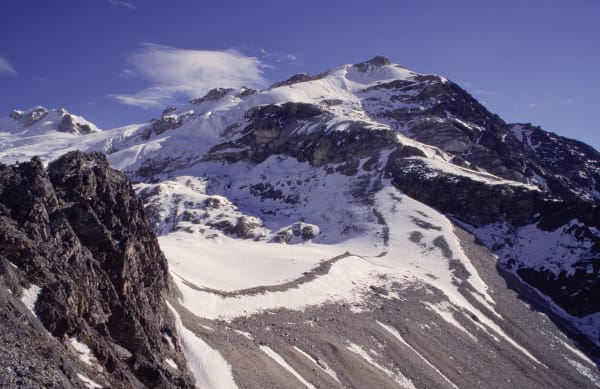
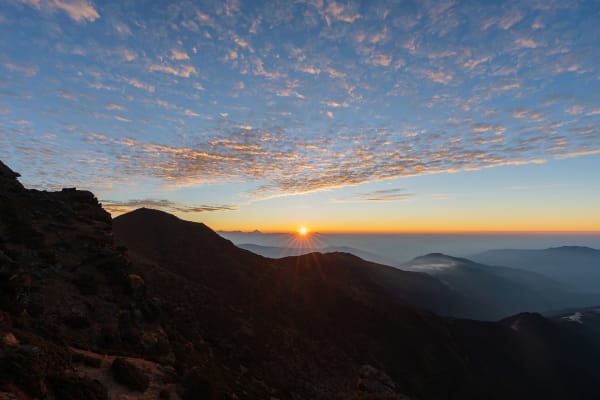
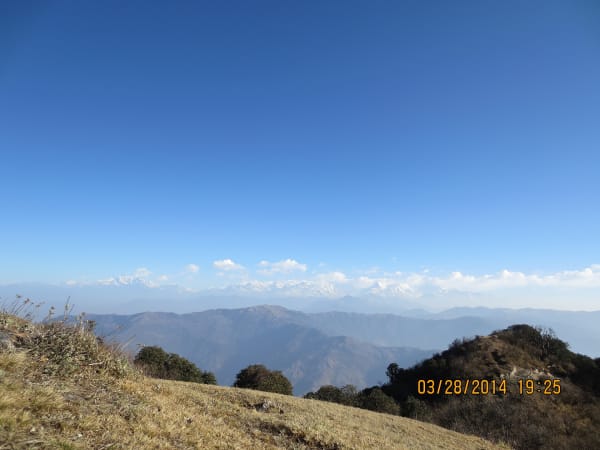
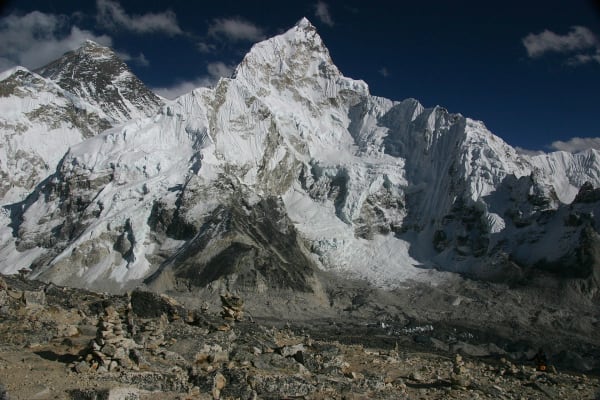
Rolwaling is a beyul — one of the hidden valleys of Tibetan Buddhist tradition, sanctuaries said to have been concealed by Guru Rinpoche for times of trouble. It was settled comparatively recently and kept closed to outsiders, which is part of why it still feels like nowhere else, wedged between the Everest region and the Tibetan border.
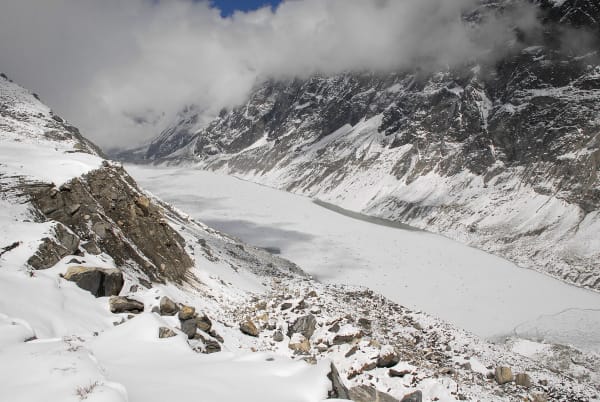
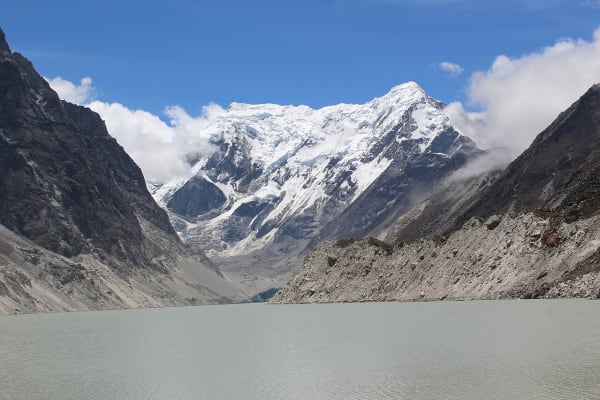
The trek follows it to Tsho Rolpa (4,580 m), the largest glacial lake in Nepal: three and a half kilometres of grey-green meltwater dammed behind the moraine of the Trakarding Glacier, with the wall of the Tashi Lapcha at its head. It is one of the most closely monitored lakes in the Himalaya and one of the emptiest places within two days of Kathmandu.
This is the out-and-back version of the valley, without the technical pass crossing at the top of it.

The Trek at a Glance
| Duration | 12 days Kathmandu to Kathmandu, 8 of them walking |
| Highest point | Tsho Rolpa, 4,580 m |
| Highest night | Na, 4,180 m |
| Difficulty | Moderate — steep climbs, no technical ground |
| Best seasons | March to May, October to November |
| Accommodation | Teahouses throughout |
| Access | Jeep from Kathmandu to Gongar via Singati — no flight |
| Permits | Gaurishankar Conservation Area Permit and trekking registration |
| Price | From USD 1,150 per person |
We run it as a 12-day trek. The Tashi Lapcha Pass trek continues over the glaciated pass at the head of the valley into the Khumbu, and the Rolwaling Valley trek covers the wider region.
The Route
Kathmandu to Simigaon (1,400 m to 2,000 m)
A jeep to Singati and on to the roadhead at Gongar, roughly eight to nine hours on a road paved for the first half and rough for the second. Then a hard climb to Simigaon, a Sherpa village with an old monastery on a shelf above the river.
Simigaon to Beding (2,000 m to 3,690 m)
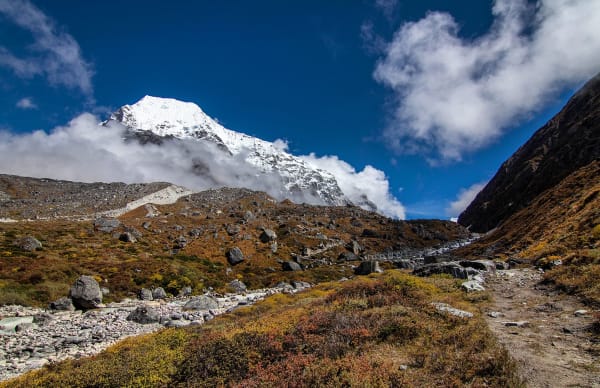
East into the Rolwaling gorge — waterfalls, rhododendron forest and a trail that clings to the valley side. Beding at 3,690 m is a single street of stone houses under Gaurishankar (7,134 m), and it gets a full acclimatisation day.
Beding to Na and the lake (3,690 m to 4,580 m)
A short day up to Na (4,180 m), the summer settlement, and then the day hike to the lake. The moraine walk to Tsho Rolpa opens onto the full length of the water with the Trakarding Glacier feeding it and the Tashi Lapcha wall at the head — an extraordinary and slightly unnerving place, given what is holding the lake back.

The descent
Back down the valley through Dongang to Simigaon and Gongar in two days, then the long jeep to Kathmandu. Many groups take a second night at Na to walk further along the moraine or up towards Yalung Ri base camp for the view back down the valley — tell us at booking and we build the day in.
Why Tsho Rolpa Is Monitored
Tsho Rolpa is one of the fastest-growing glacial lakes in Nepal, held back by a loose moraine dam rather than rock. Studies flagged the risk of a glacial lake outburst flood — a sudden dam failure sending water down the Rolwaling and Tama Koshi valleys — and a partial drainage channel and an early warning system were installed as a result.
Your guide will explain the works at the lake. It is a rare and legible piece of climate infrastructure, and it makes the place more interesting rather than less: you are standing at the sharp end of Himalayan glacial retreat, looking at the engineering response to it.
Difficulty and Conditions
Graded moderate. There is no technical ground on this version of the route, but the climbs are steep and the valley is a long way from a road.
- Eight walking days, five to seven hours each.
- Steep climbs — the Gongar to Simigaon day and the Dongang to Beding day are both hard.
- An acclimatisation day at Beding, with the highest night at Na at 4,180 m.
- Around -10 °C at Na in the main seasons and lower in late autumn. Lodges are unheated apart from the kitchen.
- No flight — a long jeep day at each end, which is part of why the valley stays quiet.
A bag rated to -10 °C with a liner, a down jacket for the evenings, and a hot water bottle from the kitchen make the nights comfortable.
What It Costs
| Group size | Price per person |
|---|---|
| 1 trekker | USD 1,275 |
| 2 to 4 | USD 1,250 |
| 5 to 7 | USD 1,225 |
| 8 to 10 | USD 1,200 |
| 11 to 14 | USD 1,175 |
| 15 and over | USD 1,150 |
There are no ATMs after Kathmandu. Draw all the rupees you need before departure in small denominations, and budget for drinks, snacks, charging, the occasional bucket of hot water, and tips.
What Is Included
- Airport pickup and drop-off in Kathmandu.
- Private jeep transport Kathmandu to Gongar and back.
- Hotel accommodation in Kathmandu with breakfast.
- Teahouse accommodation throughout the trek.
- Three meals a day during the trek.
- Gaurishankar Conservation Area Permit and trekking registration.
- A licensed English-speaking trekking guide.
- Group trekking map, first aid kit carried by the guide, and all government taxes, permit fees and service charges.
What Is Not Included
- International flights and the Nepal entry visa fee.
- Travel insurance including emergency helicopter evacuation.
- Personal trekking equipment and clothing, including a bag rated to -10 °C and a liner.
- Porter services, available at additional cost.
- Lunch and dinner in Kathmandu.
- Snacks, bottled water, hot showers, Wi-Fi, charging and drinks.
- Laundry, phone calls, souvenirs and personal expenses.
- Tips for guides, drivers and support staff.
- Extra accommodation or transport caused by weather, road conditions or anything outside the itinerary.
The road to Gongar is the variable here rather than a flight — it degrades in the shoulder seasons and after heavy rain.