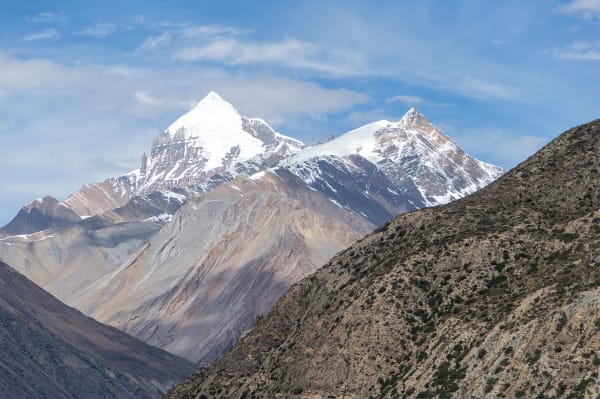
The Teri La (5,595 m) is the other way between Upper Mustang and the Nar Phu valleys — the old high route east from Tange over a snow and scree col into the Damodar Himal, and down to the Tibetan villages of Phu and Nar.
It links two restricted areas in one walk, and it does it without the roped glacier travel that the Saribung La next door demands. That makes it the route for strong trekkers who want the crossing without needing a mountaineering background.
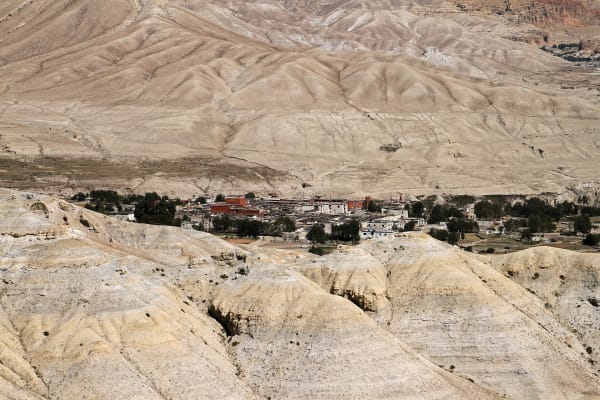
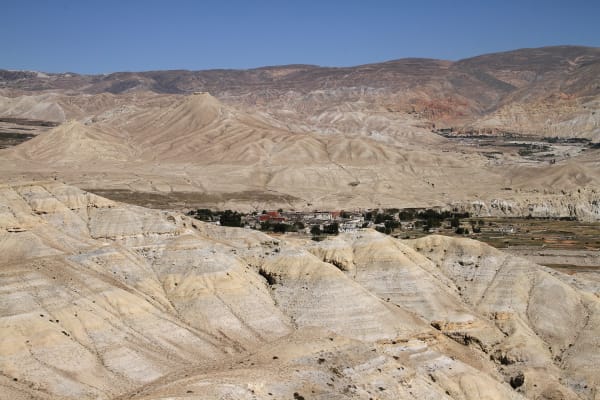
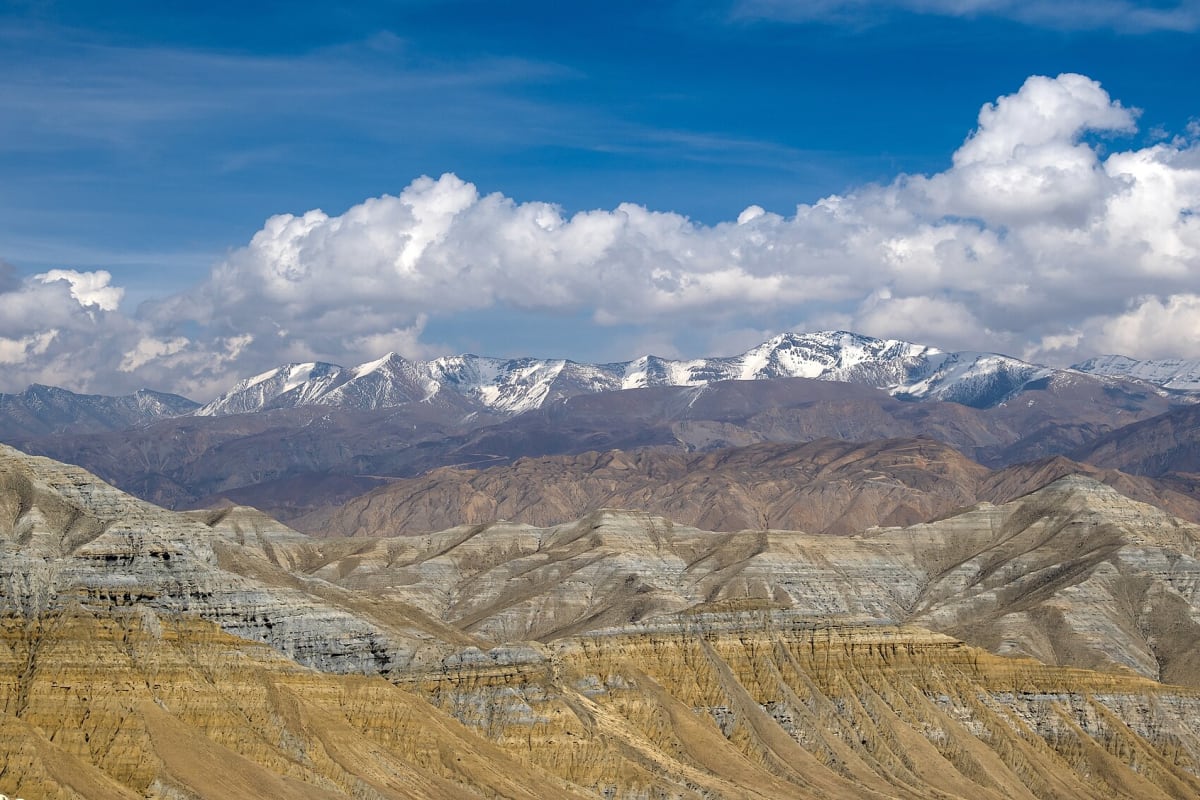
The approach is classic Upper Mustang — the canyons above Kagbeni, the red cliffs at Dhakmar, the cave gompas, and a full day inside the walls of Lo Manthang. Beyond Yara and Tange you leave every other trekking party behind for a week of high desert camps. The descent into the Phu gorge, past the fortress village on its rock spur and out through Nar to the Annapurna Circuit at Koto, is one of the most dramatic finishes in Nepal.
The Trek at a Glance
| Duration | 20 days Kathmandu to Kathmandu, including a contingency day |
| Highest point | Teri La, 5,595 m |
| Highest night | Teri La Base Camp, 5,000 m |
| Difficulty | Difficult — high, long and remote, but no technical ground |
| Best seasons | May to June, September to October |
| Accommodation | Teahouses in Mustang and Nar Phu, tents in between |
| Access | Fly Pokhara to Jomsom, out by jeep from Koto |
| Permits | Upper Mustang and Nar Phu restricted permits, plus ACAP |
| Price | From USD 3,200 per person |
We run it as a 20-day trek. The Saribung Pass trek is the glaciated alternative; the Nar Phu Valley trek reaches the eastern villages without the crossing.
The Route
Jomsom to Lo Manthang (2,720 m to 3,840 m)
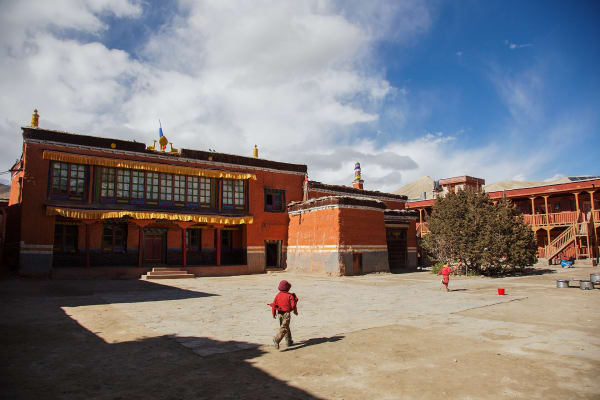
Fly to Jomsom, walk to Kagbeni, and four days north through Chele, Ghami and Charang into Upper Mustang — eroded canyons, chortens, the red cliffs above Dhakmar, and villages built of mud brick against the wind. A full exploration day inside the walls of Lo Manthang for the palace and the Jampa, Thubchen and Chodey monasteries.
Lo Manthang to Tange (3,840 m to 3,240 m)
East to Yara, then south-east to Tange, a small village in a side canyon that is the last settlement before the crossing. From here east, you will not see another trekking group.
Tange to the Teri La (3,240 m to 5,595 m)
A long climb to the base camp at 5,000 m and then the pass. The Teri La is snow and scree with no technical ground in normal conditions — but at 5,595 m, after a 1,800 m climb from Tange, it is a serious day regardless. The descent leads to Dhalung (4,600 m) on the Nar Phu side.

Phu, Nar and out (4,080 m to 2,600 m)
Down to Phu with a rest day — a fortified village on a rock spur below a ruined fortress at the head of its valley — then Nar, a walled village of about eighty houses on a plateau with four chortens at its entrance. Both were closed to outsiders until 2002 and both speak a Tibetan dialect. Then the long descent to Koto on the Annapurna Circuit, and two days out by road.
Teri La or Saribung La?
Both link Mustang and Nar Phu, and choosing between them comes down to whether you have glacier experience.
| Teri La | Saribung La | |
|---|---|---|
| Height | 5,595 m | 6,042 m |
| Ground | Snow and scree, no technical ground in normal conditions | Glaciated, roped, crampons and fixed line |
| Experience needed | Strong trekker, previous high-altitude days | Previous experience above 5,000 m, glacier competence |
| Days | 20 | 21 |
| From | USD 3,200 | USD 3,500 |
If you are a strong trekker without a mountaineering background, the Teri La is the one. If you want the 6,000 m crossing and have the skills, read the Saribung Pass guide.
Conditions on the Plateau
- -15 °C at the camps above 4,500 m in the main seasons, with no shelter beyond your tent and no wood for a fire. A bag rated to -20 °C and an insulated mat are essential.
- Water bottles and batteries go inside the sleeping bag overnight, without exception.
- The wind funnels up the Kali Gandaki from mid-morning every day of the year, carrying dust. Walking days are planned to get exposed sections done early, and a buff and proper sunglasses are not optional.
- No mobile signal between Lo Manthang and Phu — roughly a week. Charging is available for a fee in the villages and not at all on the plateau.
- Horses can be hired in most Mustang villages for a stage. Above Tange the ground is unsuitable and loads move on yaks or porters.
What It Costs
| Group size | Price per person |
|---|---|
| 1 trekker | USD 3,325 |
| 2 to 4 | USD 3,300 |
| 5 to 7 | USD 3,275 |
| 8 to 10 | USD 3,250 |
| 11 to 14 | USD 3,225 |
| 15 and over | USD 3,200 |
As with Saribung, the Upper Mustang restricted permit fee is the largest single line item and is set by the government.
What Is Included
- Airport pickup and drop-off in Kathmandu.
- Pokhara to Jomsom flight, private transport Kathmandu to Pokhara, and jeep Koto to Besisahar to Kathmandu.
- Hotel accommodation in Kathmandu and Pokhara with breakfast, plus teahouses on the trek.
- Two-person tents, mess tent, toilet tent and all group camping equipment.
- A cook and kitchen crew for the camping section.
- Three meals a day during the trek.
- Upper Mustang and Nar Phu Restricted Area Permits and the Annapurna Conservation Area Permit.
- A licensed English-speaking trekking guide.
- Group trekking map, first aid kit carried by the guide, and all government taxes and service charges.
What Is Not Included
- International flights and the Nepal entry visa fee.
- Travel insurance including emergency helicopter evacuation above 5,600 m.
- Personal trekking equipment and clothing, including a bag rated to -20 °C and an insulated mat.
- Porter services for your personal duffel, available at additional cost.
- Lunch and dinner in Kathmandu and Pokhara.
- Snacks, bottled water, hot showers, Wi-Fi, charging and drinks.
- Laundry, phone calls, souvenirs and personal expenses.
- Tips for guides, crew and drivers.
- Extra accommodation, transport or rescheduled flights caused by weather at Jomsom or a turned-back crossing, or anything else outside the itinerary.