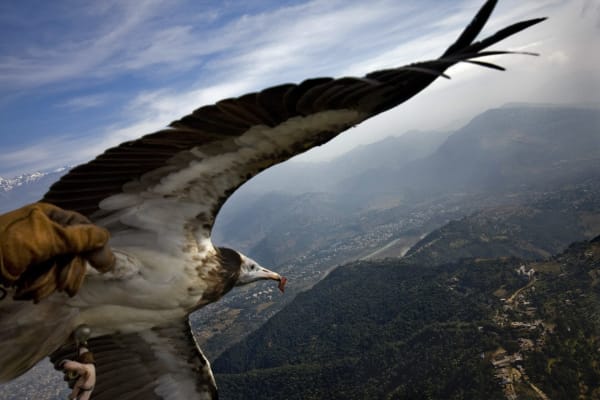
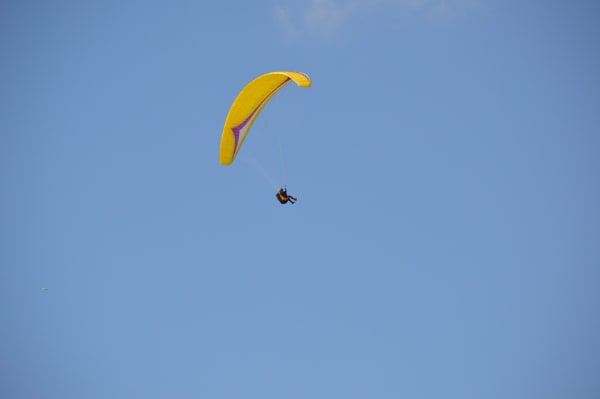
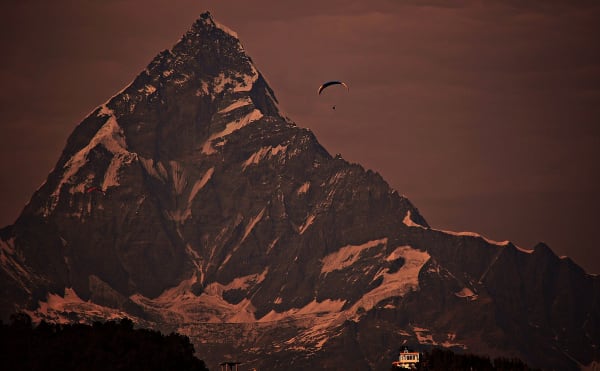
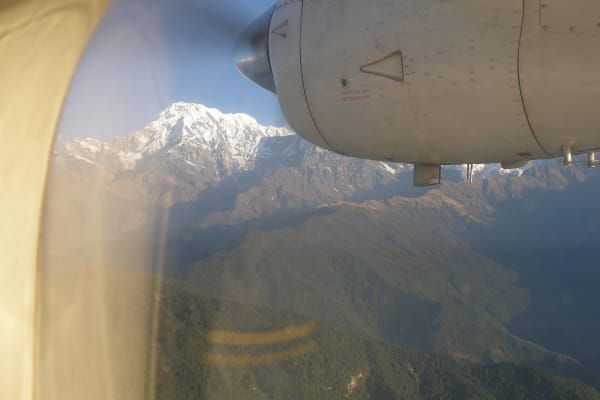
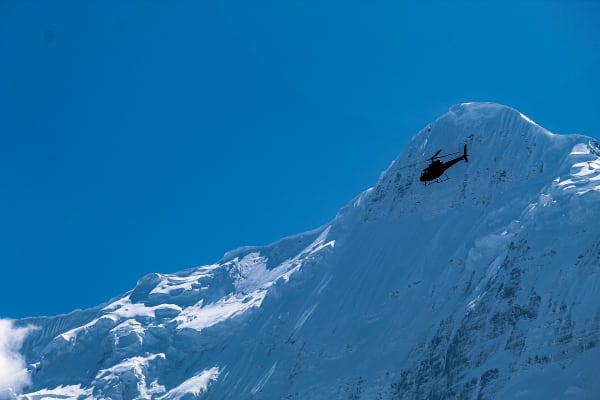
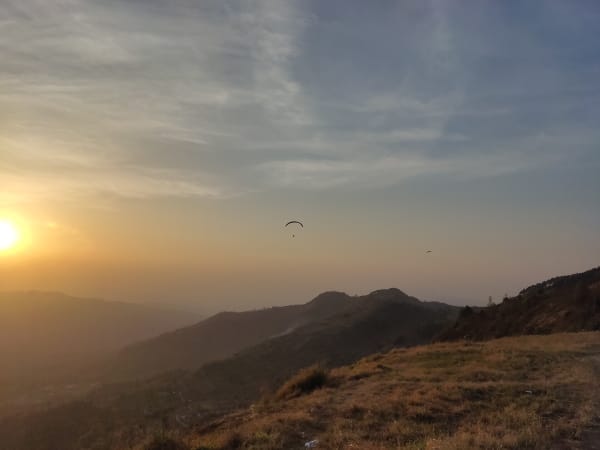
Parahawking is a tandem paraglide flown alongside a trained bird of prey, and Pokhara is where it was invented and effectively the only place in the world it is offered.
An Egyptian vulture or black kite launches with you, finds the thermals faster than any instrument can, and leads the wing into the lift — then comes to your gloved hand in mid-air for a scrap of meat before peeling off to find the next climb.
It began as a conservation project. Nepal's vulture population collapsed by more than ninety-nine per cent after the veterinary drug diclofenac entered the food chain, and parahawking was set up to fund vulture conservation and to change how people see a bird most of the region regards as vermin. A share of every flight goes to that work, and the birds are all rescues that could not be returned to the wild.

The Flight at a Glance
| What it is | A tandem paraglide flown with a trained bird of prey |
| Launch | Sarangkot, 1,592 m |
| Maximum height | Around 2,000 m |
| Duration | A morning, with the flight itself around 30 minutes |
| Difficulty | Easy — no experience required |
| Best season | November to March |
| The birds | Rescued Egyptian vultures and black kites |
| Price | From USD 245 per person |
We run it as a half-day activity from Pokhara. For a standard tandem without the birds, see paragliding in Pokhara or the cross-country flight.
How It Works
You launch from Sarangkot in a tandem harness in front of the pilot, exactly as on any tandem paraglide. What changes is what happens after.
- The bird launches with you and flies alongside the wing.
- It finds the thermal. A vulture reads rising air better than a variometer, and the pilot follows the bird into the lift rather than hunting for it.
- You put your gloved hand out and the bird lands on it, in mid-air, for a scrap of meat.
- It peels off to find the next climb, and the cycle repeats.
- You land by the lake, and the bird comes down to its handler.
The in-flight feed is the moment everyone remembers, and it is also the training mechanism — the birds fly with the wing because that is where the food is, which is how falconry has always worked.
The Conservation Story
This is not a decorative claim attached to an adventure activity. Parahawking exists because of the vulture collapse, and the economics run the other way round from most 'eco' add-ons.
- Diclofenac, a veterinary anti-inflammatory given to cattle, is lethal to vultures that feed on the carcasses. South Asian vulture populations fell by over ninety-nine per cent.
- Vultures are a public health service — without them, carcasses rot and feral dog populations rise, which raises rabies exposure.
- A share of every flight funds vulture conservation work in Nepal.
- The birds are rescues that could not be released back to the wild, not birds taken for the purpose.
- The point is perception. Most people in the region regard vultures as vermin; a bird that lands on a tourist's hand at 2,000 m is a different kind of argument.

When to Go
The season is narrower than for standard paragliding, because the birds fly only in certain months and conditions.
| Season | Conditions |
|---|---|
| November to March | The parahawking season. Stable air, clear mountain views, and the birds flying. |
| April to May | Paragliding continues but parahawking generally does not. Check with us before booking. |
| June to September | Monsoon. No flying. |
| October | Paragliding restarts; parahawking typically begins later in the season. |
Flights are morning activities. Thermals build through the morning and become rough by afternoon, and the mountain views are best early.
What It Costs
| Group size | Price per person |
|---|---|
| 1 traveller | USD 345 |
| 2 to 4 | USD 305 |
| 5 to 7 | USD 280 |
| 8 to 10 | USD 265 |
| 11 to 14 | USD 255 |
| 15 and over | USD 245 |
It costs more than a standard tandem, and the difference goes to the bird handling and the conservation programme rather than to a longer flight.
What Is Included
- Hotel pickup in Pokhara, transfer up to the Sarangkot launch and return from the landing site.
- Sarangkot launch site fee and paragliding association registration.
- A tandem pilot trained in parahawking, working with a qualified falconer and the bird's handler.
- All flight equipment: wing, tandem harness, helmet, reserve parachute and radio.
- The falconry glove and the bird's food for the in-flight feeds.
- A contribution from every flight to vulture conservation in Nepal.
- All government taxes and service charges.
What Is Not Included
- Travel insurance covering adventure activities — paragliding is excluded from most standard policies.
- All meals.
- The photo and video package shot by the pilot's mounted camera.
- Drinks, snacks, laundry, phone calls and souvenirs.
- Tips for the pilot, handler and driver.
- Any additional cost caused by weather, roadblocks or circumstances beyond our control.
The video is worth buying on this one. You cannot hold a camera and a falconry glove at the same time, and the hand-landing is the shot.