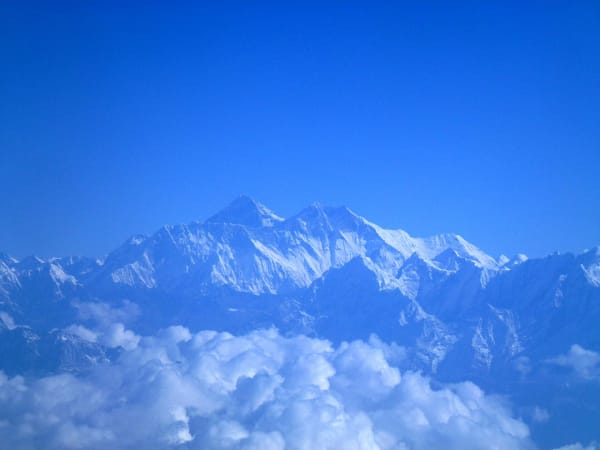
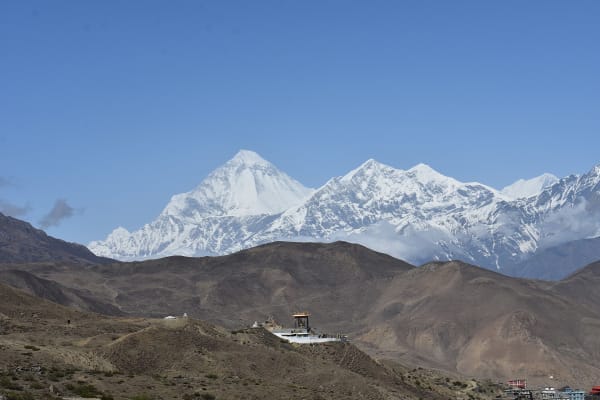
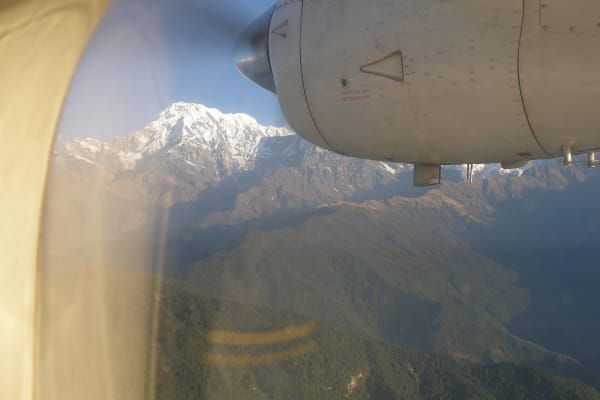
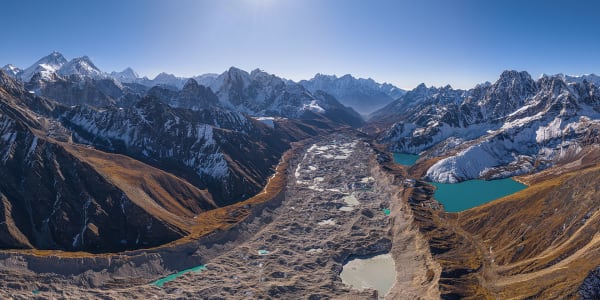
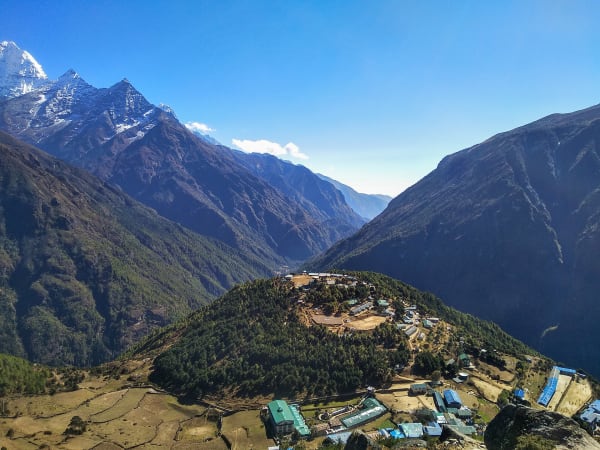
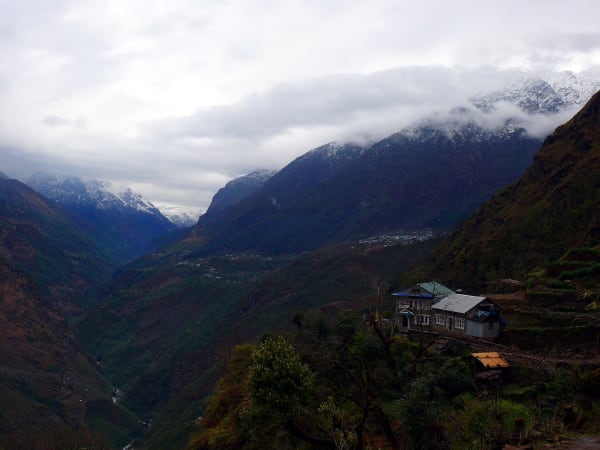
A mountain flight is the least expensive way to see the high Himalaya properly. A fixed-wing aircraft takes off from Kathmandu or Pokhara, climbs to cruising altitude, flies east or west along the range for half an hour, turns and comes back — an hour door to door with eight of the world's fourteen eight-thousanders visible on a clear morning.
Every passenger gets a window seat because the aircraft are configured for it, and crews rotate passengers to the cockpit for a forward view. It is not a substitute for a trek, and it is a remarkably good hour.
The Two Flights
| Everest mountain flight | Pokhara mountain flight | |
|---|---|---|
| Departs | Kathmandu | Pokhara |
| Duration | About 1 hour | About 1 hour |
| Range flown | East along the Khumbu and Rolwaling | The Annapurna and Dhaulagiri massifs |
| Main peaks | Everest, Lhotse, Makalu, Cho Oyu, Gaurishankar, Ama Dablam | Annapurna I–IV, Dhaulagiri, Machhapuchhre, Manaslu, Nilgiri |
| Departure time | 6.30–7.30 a.m. | 6.30–8.00 a.m. |
| Window seats | Every passenger | Every passenger |
| Cockpit visit | Usually, rotated | Usually, rotated |
| Best season | October to March | October to April |
The Everest flight is the more famous; the Pokhara flight brings you closer to the peaks, because Annapurna and Dhaulagiri sit only 30 km from the city. If you are in Pokhara with a clear morning, that is the better hour.
What You Actually See
The flight cruises at around 25,000 to 27,000 feet — roughly 7,600 to 8,200 m — which puts you level with the summits rather than looking up at them. On the Everest flight, going east from Kathmandu:
- Gaurishankar (7,134 m) and the Rolwaling peaks first, with Tsho Rolpa visible below.
- Melungtse across the Tibetan border.
- Cho Oyu (8,188 m), the sixth highest.
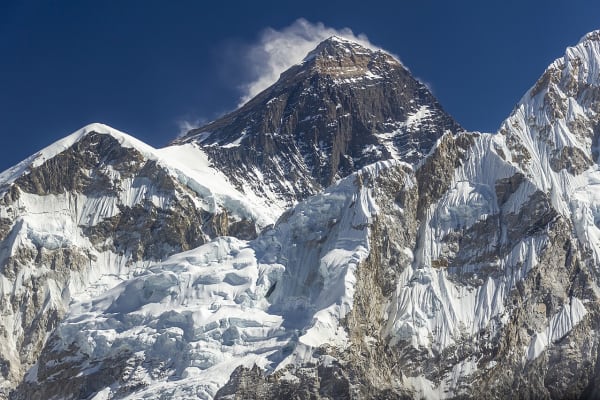
- Everest (8,848 m), usually with its summit plume, alongside Lhotse (8,516 m) and Nuptse.
- Ama Dablam, unmistakable, and the Khumbu glacier below.
- Makalu (8,485 m), the fifth highest, as the aircraft turns.
- On a very clear day, Kanchenjunga far to the east.
The cabin crew name the peaks as they pass and bring passengers forward to the cockpit two at a time. It is worth moving around the cabin — the view changes substantially between the outbound and return legs, because the aircraft flies the range in both directions with the mountains on alternate sides.
Mountain Flight, Helicopter Tour, or Trek?
| Mountain flight | Helicopter tour | Trek | |
|---|---|---|---|
| Duration | 1 hour | 4–5 hours | 14 days |
| Cost | Lowest | High | Moderate |
| Altitude experienced | None — pressurised cabin | 5,300–5,545 m landing | Up to 5,545 m on foot |
| You touch the ground | No | Yes | Yes |
| Physical demand | None | Minimal | Substantial |
| What you get | The scale of the whole range | Standing at a viewpoint in a morning | The valley, the culture, the achievement |
| Who it suits | Anyone, including young children and the elderly | Limited time or mobility | Anyone with two weeks and fitness |
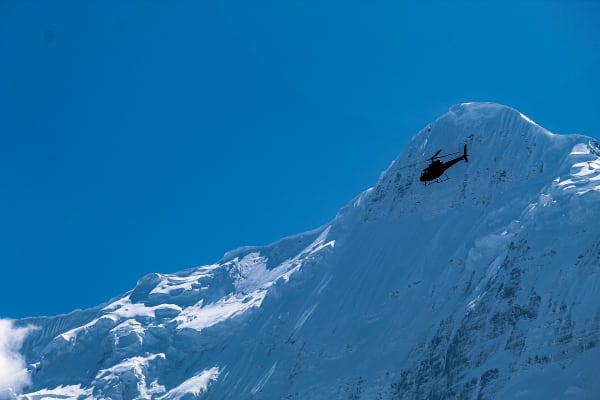
They are not really alternatives. The mountain flight is an hour that costs little and shows you the scale of the Himalaya in a way nothing on the ground does; many trekkers take one as well. Our helicopter tours guide covers the middle option and the short Everest treks guide the ground-based alternatives.
Practical Notes
- Go early. Flights operate in the first hours of daylight because haze and cloud build through the morning. A 6.30 a.m. departure means a 5.30 hotel pickup.
- Season. October to March from Kathmandu and October to April from Pokhara, with the clearest air from November to February. Flights are suspended or unreliable in the monsoon.
- Cancellation. Poor visibility cancels flights, and rebooking is to the next clear morning. Do not schedule one for your departure day.
- Seating. Every seat is a window seat on these aircraft, and on most operators the seats are unassigned — board early if you want a particular side, though the aircraft flies the range in both directions so both sides get a view.
- Photography. Shoot through the window with the lens close to the glass to reduce reflection, turn off image stabilisation if your lens hunts, and use a fast shutter speed. A polarising filter is counterproductive through aircraft windows.
- Motion sickness. Unlikely, but the aircraft banks steadily along the range. Take something if you are prone.
- Children and older passengers. Entirely fine — the cabin is pressurised and there is no altitude exposure at all, which is the key difference from a helicopter landing.
A final recommendation: if you are spending days in Kathmandu waiting for a Lukla flight, a mountain flight is a genuinely good use of a clear morning — and a preview of the valley you are about to walk into. See our Lukla flight guide for the context.