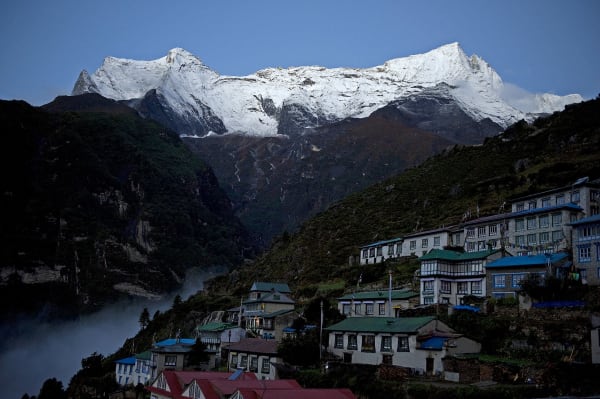
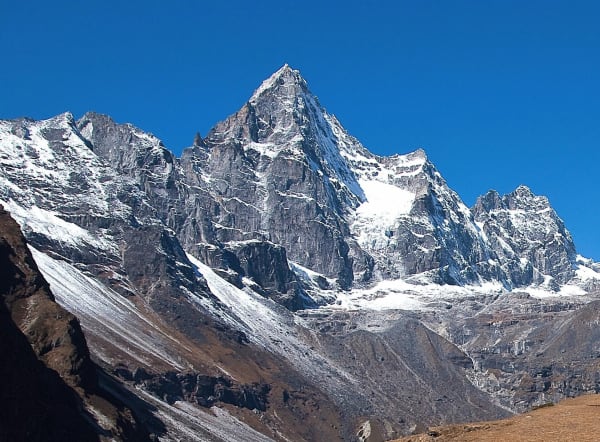
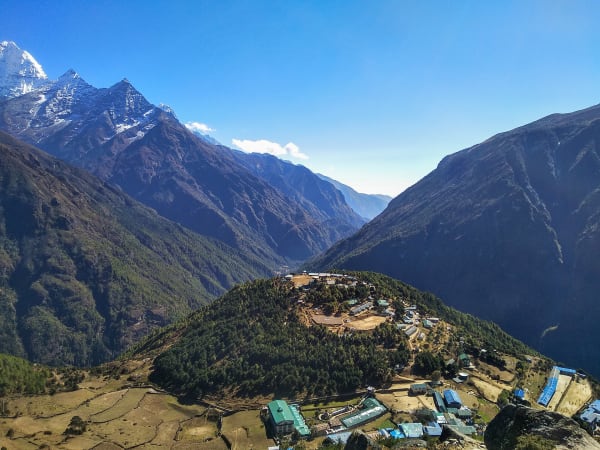
Kwangde Ri (6,011 m) is the wall everyone in Namche looks at and almost nobody climbs. It forms the entire southern skyline of the Sherpa capital, and its north face — climbed by Jeff Lowe and David Breashears in 1982 in a two-day push that is still discussed — is one of the hardest pieces of ice in the Khumbu.
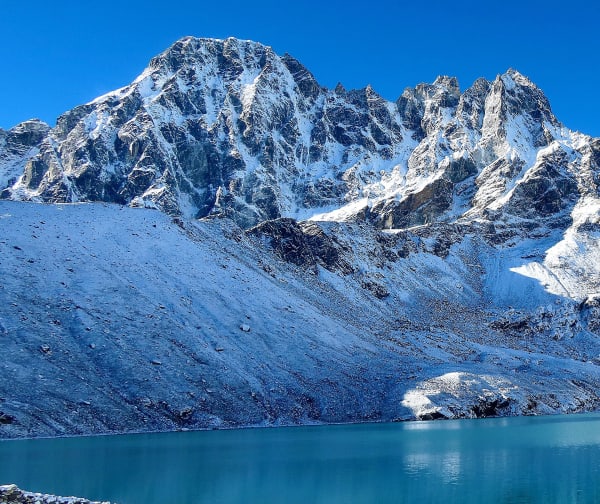
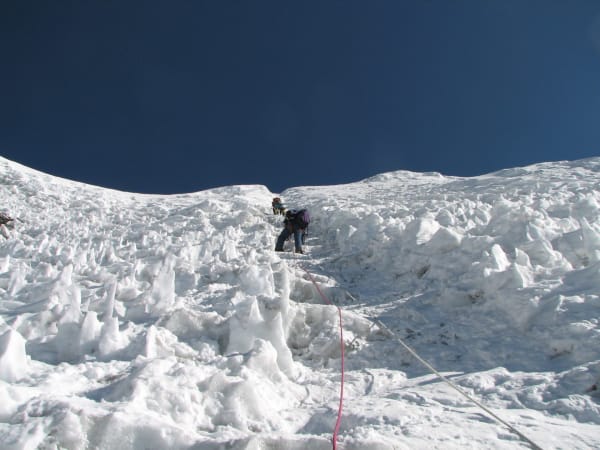
That face is not what we climb. The route on this itinerary is the south-west ridge, reached from a base camp in a side valley below Thame, and it is a serious but attainable AD+: mixed rock and ice, fixed rope on the steep bands, and a long summit ridge with real exposure.
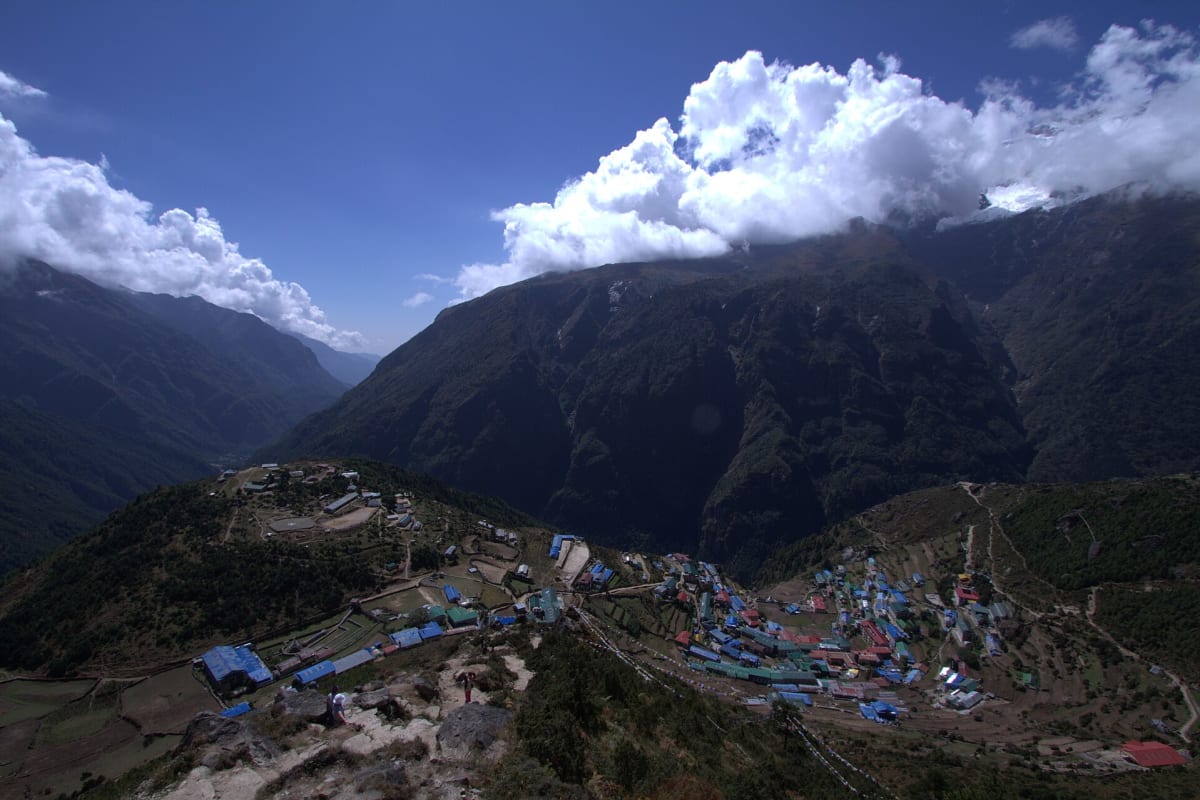
What makes Kwangde special is not difficulty for its own sake but position. You climb a mountain you have been staring at since your second day in the Khumbu, and from the top you look straight down onto the roofs of Namche 2,500 m below.

The Climb at a Glance
| Summit | 6,011 m |
| Route | South-west ridge — mixed rock and ice, fixed on the steep bands |
| Grade | AD+ |
| Duration | 16 days Kathmandu to Kathmandu |
| Base camp / high camp | 4,700 m / 5,400 m |
| Summit success rate | Around 50 to 60 percent |
| Traffic | A handful of parties in a normal season |
| Price | From USD 3,450 per person |
We run it as a 16-day expedition. Kyajo Ri is its closest match in grade, from the neighbouring valley.
The Route
Lukla to Thame (2,840 m to 3,800 m)
Phakding, Namche Bazaar with an acclimatisation day, then west to Thame on the old salt route to Tibet. Every day of this approach has Kwangde in front of you, which is either motivating or unnerving depending on the day.
Approach camp and base camp (4,300 m to 4,700 m)
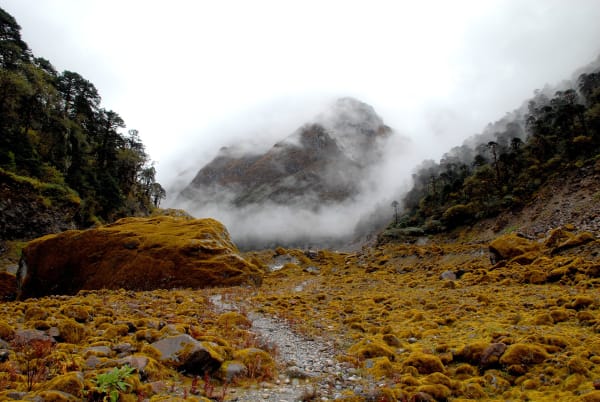
Into a side valley south of Thame — an approach camp at 4,300 m, then base camp at 4,700 m on moraine below the ridge. A training and skills day follows.
High camp and the summit (5,400 m to 6,011 m)
One high camp at around 5,400 m on the shoulder, and a single long summit day from it. Some expeditions have used a second bivouac higher on the ridge; for a guided ascent one high camp and an early start is the better structure.
The summit ridge is very exposed — it drops away steeply on both sides for most of its length and is climbed one at a time on fixed line or short rope. If exposure is something you struggle with, this is not the peak.
About That North Face
It is worth being clear, because the confusion is common. The north face climbed by Lowe and Breashears in 1982 is a hard technical ice route that is not guided commercially by anyone. It remains a serious objective for strong independent alpinists.
What we climb is the south-west ridge, which is a different mountain in practice: mixed ground at AD+, fixed on the steep bands, with a long exposed crest. It is a real climb, and it is not the face on the photographs.
Kwangde or Kyajo Ri?
| Kwangde Ri | Kyajo Ri | |
|---|---|---|
| Summit | 6,011 m | 6,186 m |
| Grade | AD+ | AD+ |
| Character | Difficulty spread along a longer, more exposed ridge | Difficulty concentrated in a buttress and an arête |
| Success rate | 50–60% | 55–65% |
| The draw | Looking straight down onto Namche | A valley with nobody in it |
| From | USD 3,450 | USD 3,650 |
Very similar in grade; the character is what differs. If exposure is your weakness, Kyajo Ri. If sustained technical difficulty is, Kwangde.
What It Costs
| Group size | Price per person |
|---|---|
| 1 climber | USD 4,210 |
| 2 to 4 | USD 3,900 |
| 5 to 7 | USD 3,690 |
| 8 to 10 | USD 3,590 |
| 11 to 14 | USD 3,500 |
| 15 and over | USD 3,450 |
What Is Included
- Airport transfers, a climbing briefing, permit and equipment-check day in Kathmandu.
- Kathmandu–Lukla return flights.
- Hotel accommodation in Kathmandu with breakfast, and teahouses on the approach and walk out.
- Tented approach camp, base camp (4,700 m) and high camp (5,400 m) with mess, kitchen and toilet tents, and a cook and kitchen crew.
- Three meals a day throughout.
- NMA climbing permit for Kwangde, Sagarmatha National Park entry and the Khumbu municipality fee.
- A government-licensed climbing guide and climbing Sherpas above base camp.
- Group climbing equipment and fixing of the steep rock and ice bands.
- A training and skills day at base camp, plus a reserve day.
- Porter transport of group equipment, NMA garbage deposit, summit certificate and all taxes.
What Is Not Included
- International flights and the Nepal entry visa fee.
- Travel insurance covering technical mountaineering to 6,011 m, with helicopter evacuation and repatriation.
- Personal climbing equipment, including tools appropriate to mixed ground.
- Personal trekking equipment and clothing, including double boots and a bag rated to -20 °C.
- Porter services for your personal duffel.
- Lunch and dinner in Kathmandu.
- Snacks, bottled water, hot showers, Wi-Fi, charging and drinks.
- Laundry, phone calls, souvenirs and personal expenses.
- Tips for the guide, climbing Sherpas, porters and support staff.
- Extra accommodation or transport caused by a cancelled Lukla flight, weather or an early descent.