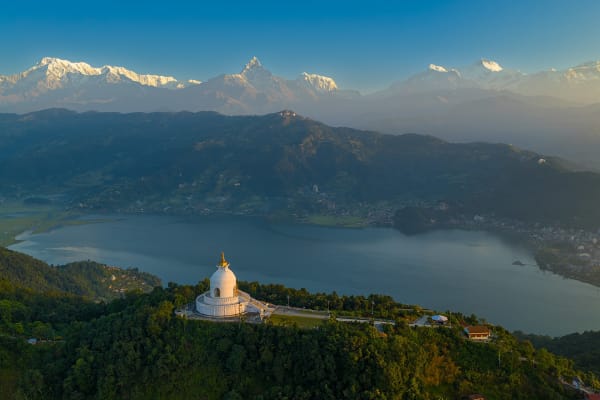
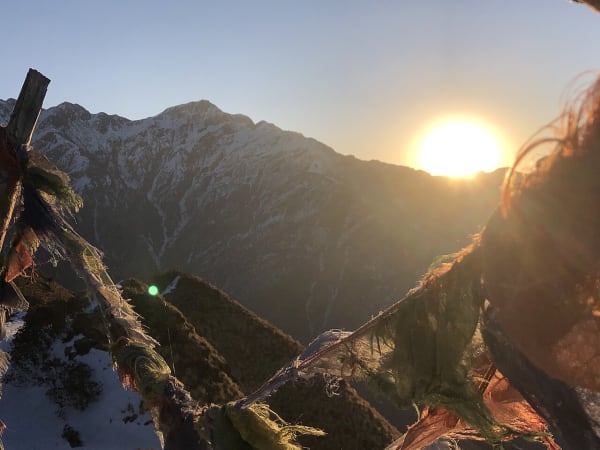
Kori Danda is a grassy ridge at 3,850 m north-east of Pokhara with an uninterrupted view of Annapurna II, Annapurna IV, Lamjung Himal and Machhapuchhre, and in most seasons you will have the sunrise entirely to yourself. It is reached in two walking days from Sikles, and the whole trip fits in ten days from Kathmandu.
The trailhead is the appeal in its own right. Sikles is one of the largest and most traditional Gurung villages in Nepal — slate-roofed stone houses stacked up a hillside above the Madi valley, reached by a rough road that keeps casual visitors away. The region has only recently been developed for trekking, so the lodges are small, family-run, and genuinely local.

The Trek at a Glance
| Duration | 10 days from Kathmandu, 4 of them walking |
| Highest point | Kori Danda, 3,850 m |
| Highest night | Kori Danda, 3,850 m |
| Difficulty | Moderate — one big climbing day, no pass and no glacier |
| Best seasons | March to May, October to December |
| Accommodation | Small family-run teahouses |
| Access | Road from Pokhara to Sikles, about three hours |
| Permits | Annapurna Conservation Area Permit and trekking registration |
| Price | From USD 625 per person |
We run it as a 10-day trip from Kathmandu and a 6-day version from Pokhara for travellers already in the city. Both walk the same four days.
The Route
Pokhara to Sikles (822 m to 1,980 m)
Around three hours north-east from Pokhara up the Madi Khola valley on a rough road, climbing through terraced farmland and small settlements with the Annapurnas appearing and disappearing behind ridges. Sikles is worth an evening: the lanes, the slate roofs, and the village going about ordinary business rather than performing for visitors.
Sikles to Tasha (1,980 m to 2,700 m)
The first walking day, about 720 m of climbing. A stone staircase out of the village, then terraces of millet, maize and buckwheat worked by hand, and finally into oak and rhododendron forest hung with moss. Tasha is a small cluster of lodges at the top edge of the trees.
Tasha to Kori Danda (2,700 m to 3,850 m)
The big day: roughly 1,150 m of sustained ascent to the highest point of the trek. The rhododendron thins into dwarf scrub and juniper, then gives out entirely onto open grassy ridge. Five to six hours, and the only genuinely hard day on the route.
Be up before dawn. Sunrise from Kori Danda — the Annapurna wall lighting up peak by peak across an empty ridge — is the best moment of the trek, and you will almost certainly have it to yourself.

The descent
Back down the same way — Kori to Tasha, then an easy final morning through the moss-hung forest into the terraces above Sikles, with views opening down the Madi valley as the trees thin. A jeep out to Pokhara the following day.
Difficulty and Who It Suits
This is one of the better first Himalayan treks in Nepal, for a specific reason: it gets you close, high mountain views without a pass, a glacier, or a night above 2,700 m other than the one at Kori itself.
- Four to six hours a day on most days.
- One hard day — Tasha to Kori, five to six hours with over 1,100 m of ascent, and the same ground in reverse the following day.
- Maximum 3,850 m, which is low enough that altitude sickness is uncommon, though the climb to it is quick.
- No technical ground at any point.
If you are choosing between the short Annapurna routes, our comparison of Mardi Himal, Poon Hill and ABC is the place to start — Kori Danda is the quieter alternative to all three.
Best Time to Go
| Season | Conditions |
|---|---|
| March to May | Rhododendron in bloom through the forest between Sikles and Tasha, and warm enough on the ridge to enjoy the evening. |
| October to December | The clearest air of the year and the sharpest mountain views from Kori. December is cold at the top but often perfectly clear. |
| January to February | Possible, with snow likely on the ridge and very cold nights at Kori. The lodges are small and heating is limited. |
| June to September | Monsoon — leeches in the forest belt and cloud on the ridge most days. |
What It Costs
At USD 625 this is among the most affordable guided treks in the Annapurna region, largely because there is no flight, the drive is short, and the trek is only four walking days.
| Group size | Price per person |
|---|---|
| 1 trekker | USD 750 |
| 2 to 4 | USD 725 |
| 5 to 7 | USD 700 |
| 8 to 10 | USD 675 |
| 11 to 14 | USD 650 |
| 15 and over | USD 625 |
On-trail extras — charging, snacks, drinks — run a few dollars a day. Carry all your rupees from Pokhara; there are no ATMs at Sikles or beyond, and everything on the trail is cash only.
What Is Included
- Airport pickup and drop-off in Kathmandu.
- Tourist bus Kathmandu to Pokhara and back.
- Private transport Pokhara to Sikles and back.
- Hotel accommodation in Kathmandu and Pokhara with breakfast.
- Teahouse accommodation throughout the trek.
- Three meals a day during the trek.
- Annapurna Conservation Area Permit and trekking registration.
- A licensed English-speaking guide who knows the Sikles region.
- Group trekking map, first aid kit carried by the guide, and all government taxes, permit fees and service charges.
What Is Not Included
- International flights and the Nepal entry visa fee.
- Travel insurance including emergency helicopter evacuation.
- Personal trekking equipment and clothing.
- Porter services, available at additional cost.
- Lunch and dinner in Kathmandu and Pokhara.
- Snacks, bottled water, hot showers, Wi-Fi, charging and drinks.
- Laundry, phone calls, souvenirs and personal expenses.
- Tips for guides, drivers and support staff.
- Extra costs caused by weather or anything else outside the itinerary.
Both hotels store anything you do not need on the trail free of charge, so you can carry only what the four walking days require.