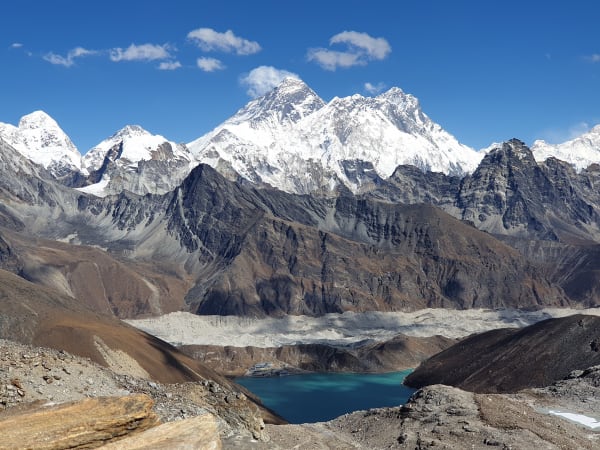
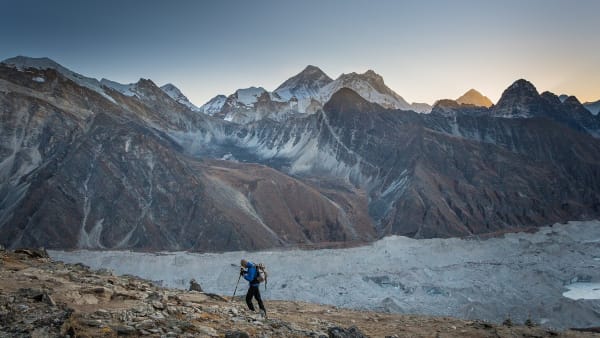
If you ask guides who work the Khumbu which trek they would do on their own time, most say the Three Passes. It links every valley in the region into one high circuit: over Kongma La into the Khumbu, up to Base Camp and Kala Patthar, over Cho La into Gokyo, then over Renjo La and down the Bhote Koshi to Namche.
It is the region's complete trek, and it is a serious undertaking — three passes above 5,300 m, 17 days, and long committed days where turning back is not a simple matter. This is a trek for people who have walked at altitude before.
The Trek at a Glance
| Duration | 17 days Kathmandu to Kathmandu, 15 days walking |
| Passes | Kongma La 5,535 m, Cho La 5,420 m, Renjo La 5,360 m |
| Also includes | Everest Base Camp 5,364 m, Kala Patthar 5,545 m, Gokyo Ri 5,357 m |
| Highest night | Gorak Shep, 5,160 m |
| Difficulty | Difficult — long days on high, sometimes snowy ground |
| Best seasons | Late September to November, April to mid May |
| Prerequisite | Previous high-altitude trekking experience |
| Accommodation | Teahouse lodges throughout |
Our 17-day Everest Three Pass Trek runs the circuit anticlockwise — Kongma La first — which gets the hardest pass done while you are freshest and builds acclimatisation progressively.
The Three Passes Compared
| Pass | Altitude | Day length | Character |
|---|---|---|---|
| Kongma La | 5,535 m | 8–10 hours | The highest and hardest. A long, relentless climb from Chhukung, then a rough descent onto the Khumbu glacier to Lobuche. |
| Cho La | 5,420 m | 7–9 hours | A glacier crossing with a steep, often icy eastern approach from Dzongla. Microspikes frequently needed. |
| Renjo La | 5,360 m | 7–8 hours | The most scenic. A steep climb from Gokyo with the best Everest view of the three, then a long descent to Marlung. |
None of the three is technical in good conditions — no rope work, no crampons beyond microspikes. All three are long, high, exposed, and capable of becoming serious after snowfall. Your guide will hold the group for a day rather than cross a loaded slope, and that flexibility is built into the itinerary.
Kongma La is the one people underestimate. It is a 1,000 m climb from Chhukung to a pass at 5,535 m with no lodges in between, followed by a descent across glacial moraine. Ten hours is normal.
How the Circuit Runs
Days 1–7: Lukla to Dingboche
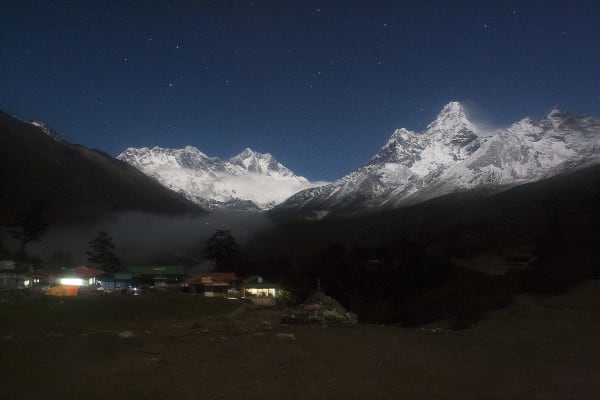
The standard Base Camp approach — Phakding, Namche with an acclimatisation day, Tengboche, Dingboche with a second acclimatisation day. This is where the trek is built: two rest days with climbs to 3,880 m and 5,080 m make the passes possible.
Days 8–10: Kongma La, Base Camp, and Kala Patthar
Over Kongma La to Lobuche, then up to Gorak Shep with Kala Patthar in the afternoon, then Base Camp in the morning and a traverse to Dzongla. Three big consecutive days above 4,900 m, and the crux of the trek.
Days 11–13: Cho La and Gokyo
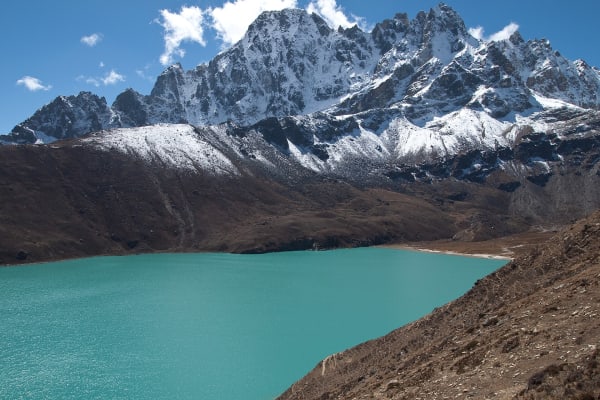
Over the Cho La glacier into the Gokyo valley, an acclimatisation and exploration day at Gokyo for Gokyo Ri and the fourth and fifth lakes, then over Renjo La to Marlung in the Bhote Koshi.
Days 14–17: Out
Down the Bhote Koshi to Thame and Namche — a quiet, beautiful valley that few Base Camp trekkers see — then Lukla and the flight to Kathmandu.
Who Should Attempt It
We ask for previous high-altitude experience on this trek, and we mean it. The specific things that matter:
- You have slept above 4,500 m before and know how your body responds. The Three Passes is not where to find out.
- You can walk nine hours on rough ground and do it again two days later. There are three such days, and they come in the middle.
- You are comfortable with committed days. Between Chhukung and Lobuche, or Dzongla and Gokyo, there is no lodge and no easy retreat.
- You can be flexible. A pass can close. The itinerary has spare capacity, but it needs you to accept a changed plan.
- Your insurance covers 6,500 m and technical trekking. Check the wording, not the headline.
If one or two of those do not apply yet, the better sequence is Everest Base Camp or Gokyo first, then come back for this. If you want both valleys without all three passes, the Base Camp with Gokyo and Cho La route takes 17 days and crosses one pass instead of three.
Gear and Conditions
- Microspikes — carry them. Cho La and Kongma La both hold ice, and your guide will say when to put them on.
- Sleeping bag to -20 °C plus a liner. Three nights above 4,800 m and one at 5,160 m.
- Gaiters and proper insulated gloves — snow on the passes is normal, not exceptional.
- Sunglasses category 4 and high-factor sunscreen. Snow glare on a pass at 5,500 m is serious.
- Trekking poles — essential on the long descents off all three passes.
- A headlamp — pass days start before dawn.
- Spare days — two buffer days in Kathmandu at the end, as for any Lukla trek.
Season matters more here than on the Base Camp trail. October to November and April to mid-May are the workable windows. In winter the passes are routinely closed, and in the monsoon they are not worth attempting.