Nepal's gorges are deep, narrow and spanned by bridges, which turns out to be exactly what bungee jumping and ziplining require. Two sites dominate: the Bhote Koshi gorge three hours east of Kathmandu, and the Kali Gandaki canyon at Kushma in Parbat, which now has one of the highest bungee jumps and one of the longest zip lines in the world in the same place.
Add the Zip Flyer at Sarangkot above Pokhara, and Nepal has a genuinely world-class set of adrenaline activities that most visitors never hear about.
The Sites
| Activity | Where | Drop or length | Access |
|---|---|---|---|
| Kushma bungee | Kali Gandaki canyon, Parbat | Around 228 m — among the highest in the world | 1.5–2 hours from Pokhara |
| Kushma zip flyer | Same canyon | Over 1.8 km, one of the world's longest | 1.5–2 hours from Pokhara |
| Bhote Koshi bungee | Bhote Koshi gorge, near the Tibet border | Around 160 m from a suspension bridge | 3 hours from Kathmandu |
| Pokhara Zip Flyer | Sarangkot to Hemja | 1.8 km, 600 m vertical drop, up to 120 km/h | 45 min from Pokhara |
| Pokhara bungee | Pokhara | A tower jump in the city | In Pokhara |
Kushma is the standout. The Kali Gandaki canyon there is spanned by several of the highest suspension bridges in Nepal, and the site has grown into a genuine adventure hub with a bungee, a zip line, a swing and a sky bridge in one place.
The Kushma Bungee
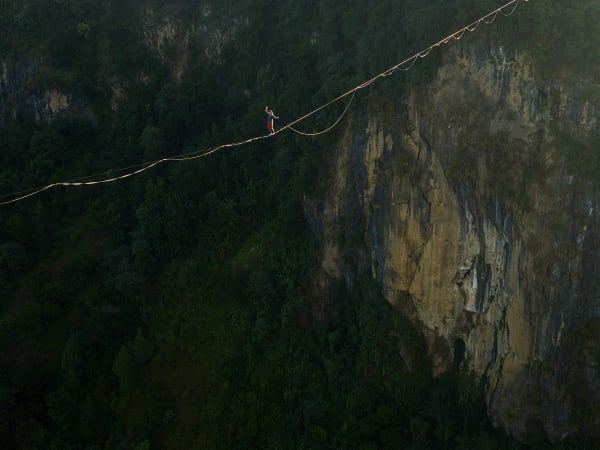
At around 228 m, the Kushma jump is one of the highest bungee jumps in the world, from a purpose-built platform over the Kali Gandaki gorge in Parbat district. The free fall lasts several seconds and the canyon walls are close on both sides, which makes it feel considerably higher than the number.
- Weight limits typically 45 to 100 kg, with age limits at both ends. Confirm before travelling if you are near either.
- Medical restrictions: heart conditions, high blood pressure, epilepsy, recent surgery, neck or back problems, and pregnancy all rule it out. Operators ask, and the questions are not a formality.
- The swing. A canyon swing at the same site — a pendulum rather than a free fall — which some people find more frightening and others far less.
- The sky bridge. A pedestrian suspension bridge across the canyon, at 567 m one of the longest in the world, which is free to walk and genuinely unnerving.
- Combining. Bungee, zip and swing packages are sold together, and the site is a full day from Pokhara.
The Zip Flyers
Pokhara Zip Flyer, Sarangkot
1.8 km of cable from Sarangkot down to Hemja, with a 600 m vertical drop and speeds reaching around 120 km/h — among the steepest, longest and fastest commercial ziplines in the world. You ride face-down in a harness, which is what produces the speed, and it lasts around 90 seconds.
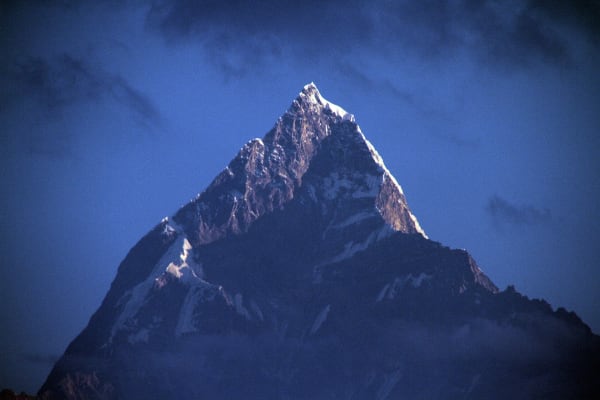
The Annapurna range is directly ahead as you launch, which almost nobody registers at the time and everybody sees on the video.
Kushma Zip Flyer
A comparable line across the Kali Gandaki canyon at Kushma, run alongside the bungee, and usually sold as part of a combination package. The canyon setting is the distinguishing feature — you cross a gorge rather than descend a hillside.
Both are considerably more accessible than the bungee in terms of medical restrictions, and both are genuinely thrilling rather than gentle.
The Bhote Koshi
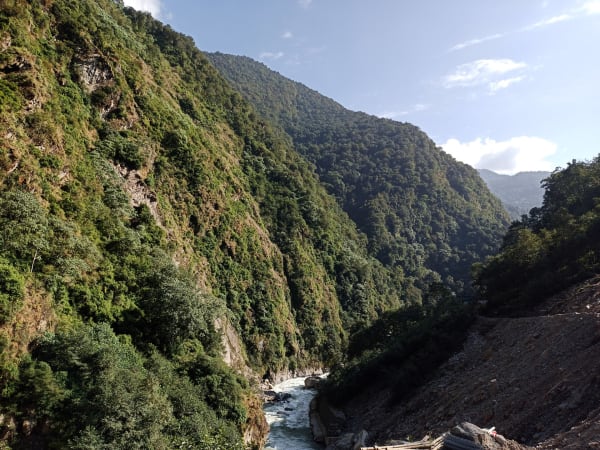
The original Nepali bungee site, opened in the 1990s on a purpose-built suspension bridge over the Bhote Koshi gorge near the Tibetan border, around three hours east of Kathmandu. The drop is about 160 m into a steep, forested gorge with the river directly below.
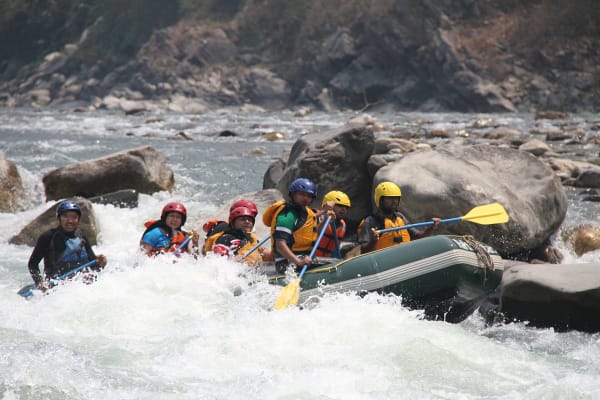
It works particularly well as a day or overnight trip from Kathmandu, and it pairs with rafting the Bhote Koshi — the steepest short whitewater run in the country — and with the canyon swing at the same site. It is closer to Kathmandu than Kushma is to Pokhara, and slightly lower.
Safety, Restrictions and Practicalities
- Ask about equipment standards. Reputable operators use certified cords and harnesses with logged inspection schedules, and will tell you about them if asked.
- Medical restrictions are real. Heart conditions, high blood pressure, epilepsy, recent surgery, neck and back problems, and pregnancy exclude you from bungee and generally from the zip lines. Declare honestly — the operator is asking to protect you.
- Weight and age limits apply to all of these. Check before travelling if you are near a limit.
- Insurance. Bungee jumping and ziplining are excluded from many travel policies as extreme sports. Check the wording, as with paragliding.
- What to wear: comfortable clothing, closed shoes, nothing loose. Remove glasses, jewellery and anything in your pockets.
- Cameras. Do not attempt to hold one. Operators sell photo and video packages for exactly this reason.
- Getting there: Kushma is a full day from Pokhara, Bhote Koshi a day or overnight from Kathmandu, and the Pokhara Zip Flyer a half day.
One honest note: these are genuinely frightening, and the anticipation is worse than the event in almost every case. If you are on the fence, the zip lines are the gentler entry point — no free fall, a fixed line, and a great deal of speed and view. Our adventure activities guide compares everything Nepal offers.