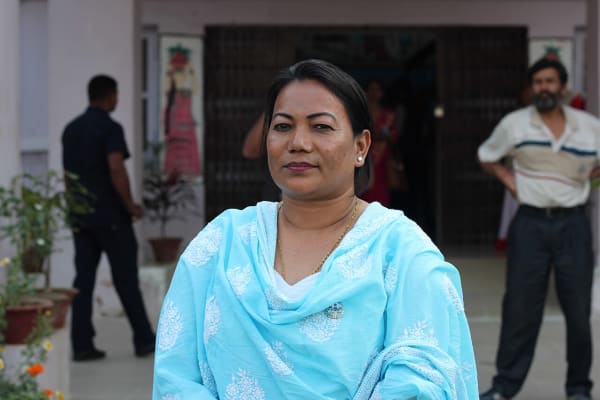
A large share of the trekkers we take into the Himalaya are women travelling without a partner or a group, and Nepal handles that well — the trails are busy, the lodges are family homes, and the culture is welcoming rather than intrusive. Serious incidents are rare, and the practical irritations are small and solvable.
That said, the advice that helps is specific rather than reassuring, so this guide deals with the actual questions: the guide requirement, female guides, lodge sleeping arrangements, periods at altitude, clothing, harassment, and which routes suit a first solo trip.
What the Guide Rule Changed
Since April 2023, trekkers in Nepal's national parks and protected areas have been required to walk with a licensed guide. For solo women this changed the calculation in both directions: you can no longer legally walk the Annapurna or Everest trails entirely alone, and you also no longer have to.
Two further points matter if you are travelling alone:
- Restricted areas require a group of two. Upper Mustang, Dolpo, Manaslu, Nar Phu and Kanchenjunga permits are issued to two or more trekkers with a registered agency. A solo trekker can often be paired with another booking — ask early rather than assuming it is closed.
- Our pricing is tiered by group size, so a solo private trek costs more per person than two people sharing. Joining a scheduled group is the cheaper route, and often the more sociable one.
See our permits guide and guides and porters guide for the full picture.
Requesting a Female Guide
Nepal has a growing number of licensed female trekking guides, concentrated in the Annapurna and Langtang regions, and several organisations have trained women specifically for this work over the past two decades. We can arrange a female guide on most routes with enough notice.
Two honest caveats. Supply is still limited — in peak October and April weeks, demand exceeds the number of licensed female guides available, so book early. And on technical climbing trips the pool is smaller still. If having a female guide matters to you, say so at the enquiry stage rather than at the briefing.
Whoever guides you, the same standards apply: a licensed guide, insured, with assessed first aid and altitude training, and a clear code of conduct. If a guide's behaviour is ever inappropriate, you contact our office directly and we replace them — that escalation route is part of what booking with an agency buys.
Lodges, Rooms, and Sleeping Arrangements
- Teahouse rooms are twins. As a solo trekker you will usually have a twin to yourself below 4,000 m, and in peak season higher up you may be asked to share — your guide will arrange a same-gender share, and you can decline.
- Rooms have simple latches rather than locks. A lightweight door wedge or a small padlock for a hasp is worth carrying if it helps you sleep.
- Bathrooms are shared and often outside the main building above 3,500 m. Keep a head torch by the bed.
- Guides and porters sleep in staff quarters or the dining room, not in guest rooms.
- Lodge families are almost always a mother, grandmother, and daughters running the place. On most nights you will be in a house full of women.
The general experience our guests report is that lodges feel less like hotels and more like staying with a family who are extremely used to visitors — which is exactly what they are.
Periods, Hygiene, and Altitude
The practical stuff that rarely gets written down:
- Bring your own supplies for the whole trek. Pads are available in Kathmandu, Pokhara, and bigger trail villages; tampons and menstrual cups are not reliably stocked anywhere on the trail.
- Pack it out. Used products do not burn or decompose at altitude. Carry sealable or opaque dry bags and take everything back to the city. This is the single most-ignored piece of trail environmental etiquette in Nepal.
- Altitude can shift your cycle. Timing changes, heavier or lighter bleeding, and worse cramps at altitude are all commonly reported. Bring pain relief you know works for you.
- A menstrual cup needs clean hands and treated water — workable on the trail with sanitiser and a dedicated bottle, but think it through before relying on it at 5,000 m.
- Urinary tract infections are more common on treks because people drink less to avoid night-time trips outside. Do not do that. Drink the full three to four litres and accept the cold walk.
- Tell your guide if you are unwell. Nepali guides are professional about this and will not be embarrassed; a female guide can make that conversation easier.
A she-wee or similar funnel is genuinely useful above the treeline where there is no cover, and so is a pee cloth or a dedicated bandana.
Clothing, Harassment, and City Caution
On the trail, dress for the weather — trekking trousers and layers are unremarkable everywhere. In villages, temples, and monasteries, cover shoulders and knees. A lightweight long skirt or loose trousers is useful in the Kathmandu Valley and in Hindu pilgrimage towns like Muktinath.
Harassment on the trails is uncommon, and where it happens it is usually verbal rather than physical, and more often in cities than in the mountains. Practical measures that work:
- In Kathmandu and Pokhara, use hotel-arranged taxis or ride-hailing apps after dark rather than street taxis.
- Thamel is busy and well-lit on the main lanes, dark and quiet two streets off them. Walk the main lanes.
- Be firm rather than polite with persistent touts. A flat no is understood and respected.
- Carry a local SIM with data, share your itinerary with someone at home, and keep our office number saved.
- Trust your instinct about a lodge or a situation and say so to your guide. Changing lodge is easy and costs nothing.
One cultural note that prevents misreadings: Nepali women commonly hold hands with female friends, and physical affection between men and women in public is rare. Following local practice avoids unwanted attention more effectively than any other single thing.
Good Routes for a First Solo Trek
- Poon Hill — short, low, busy in a good way, with lodges every hour and a genuine Annapurna sunrise.
- Mardi Himal — a quieter ridge than the main Annapurna trails but never isolated, and five days from Pokhara in the short version.
- Langtang Valley — road-accessible, sheltered, and a community that has rebuilt itself and is glad you came.
- Annapurna Base Camp — the classic, with plenty of other trekkers and lodges at short intervals.
- Everest Base Camp — the busiest trail in Nepal, which for a first solo trip is a feature rather than a drawback.
- Mohare Danda — community-run lodges, often staffed by women, on a quiet ridge with a very warm welcome.
What we would not suggest for a first solo trek is a remote camping route — Dolpo, Kanchenjunga, or the technical passes — simply because you will be in a small crew for two weeks with no exit options. Those are better second or third trips, when you know the team and the country.