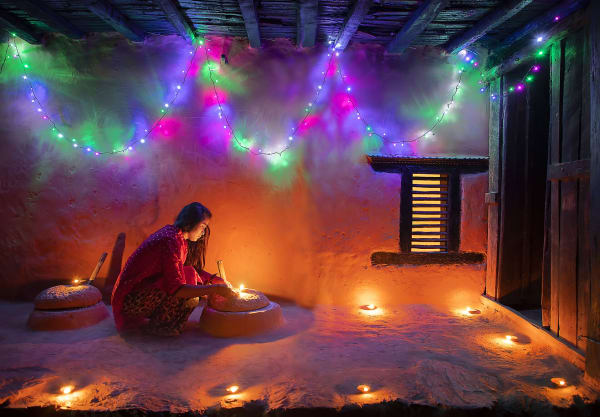

Most of Tihar is about someone else: the crow, the dog, the cow, the goddess, the brother. On the fourth evening, in the old houses of Kathmandu, Patan and Bhaktapur, the attention turns inward. Families sit in a row on the floor, each person in front of a small diagram drawn in flour and oil, and perform a puja to themselves.
This is Mha Puja — in the Newar language, the worship of the body, or of the self — and it marks the first day of the year in the Nepal Sambat calendar. In 2026 that is Tuesday 10 November, the start of the year 1147. It is the most distinctive thing the Kathmandu valley does during the festival, and the least known to visitors.
Who the Newars Are
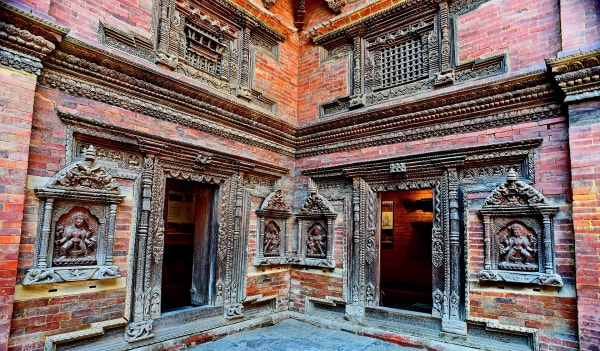
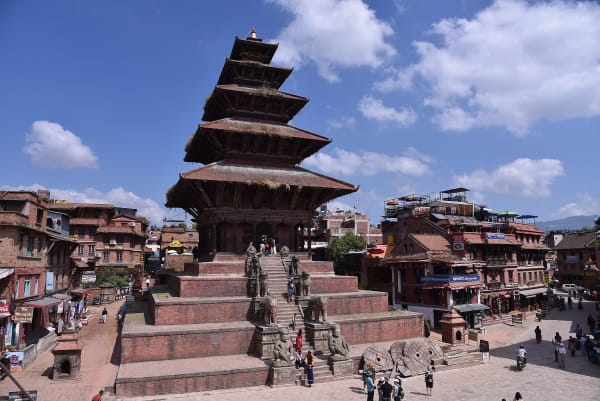
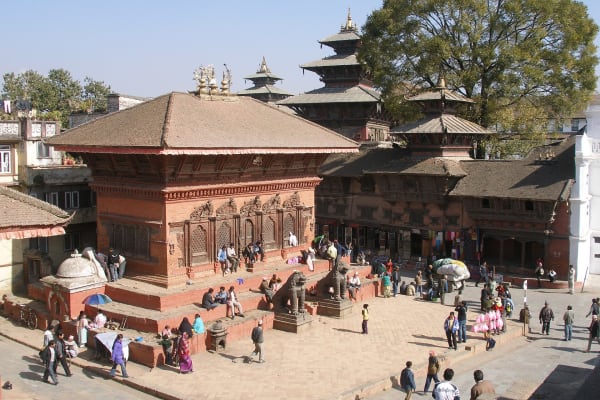
The Newars are the original inhabitants of the Kathmandu valley, and the people who built it. The pagoda temples, the carved windows, the brick squares that are now World Heritage Sites are theirs, as is the language — Nepal Bhasa — that the valley spoke before Nepali. They are both Hindu and Buddhist, often in the same family, and their calendar is crowded with festivals found nowhere else.
Their name for Tihar is Swanti. It keeps the days the rest of the country keeps and adds two of its own: Mha Puja on the fourth evening and Kija Puja, the Newar form of Bhai Tika, on the fifth. If you are in the valley over the festival, this is the layer to look for. Background on the cities is in our guides to Patan, Bhaktapur and the valley's heritage sites.
Nepal Sambat: A Calendar That Began With a Debt
Nepal uses several calendars at once. Official life runs on the Bikram Sambat, in which 2026 is mostly the year 2083. The Nepal Sambat is older in the valley and is a lunar calendar, which is why its New Year moves against the Western one. It always begins on the day after the new moon of Kartik — the morning after Laxmi Puja's lunar day.
Its origin is unusual. Tradition says the era was begun in 879 CE by a merchant named Sankhadhar Sakhwa, who came into a fortune and used it to pay off the debts of everyone in the valley, so that the people could start again free. A new era was declared to mark it. He is honoured today as one of Nepal's national heroes, and it is hard to think of another calendar founded on the cancelling of debt.
The Nepal Sambat was the valley's official calendar for a thousand years, was set aside in the early twentieth century, and has since been recognised again as a national era. You will see its dates on newspaper mastheads beside the others. The New Year greeting, in Nepal Bhasa, is Nhu Daya Bhintuna.
What Happens at Mha Puja
The ritual takes place at home on the evening of New Year's Day, on the top floor of the house or wherever the family eats. It is led by the senior woman of the household.
- The mandalas are drawn. The floor is purified and a row of circular diagrams is made, one for each member of the family, in rice flour, oil and red and yellow powder. Extra ones are drawn for absent relatives, for the household gods, and for the things the house depends on — the water jar, the broom, the grinding stone.
- The family sits. Each person takes their place cross-legged behind their own mandala, in order of age.
- Offerings are placed. Rice, flowers, fruit — always including a walnut and a large citron — and a sacred thread are set on each mandala.
- The wicks are lit. A long hand-rolled cotton wick soaked in oil is laid on the mandala and lit. It should burn steadily to the end of the ritual; a clear flame is a good sign for the year.
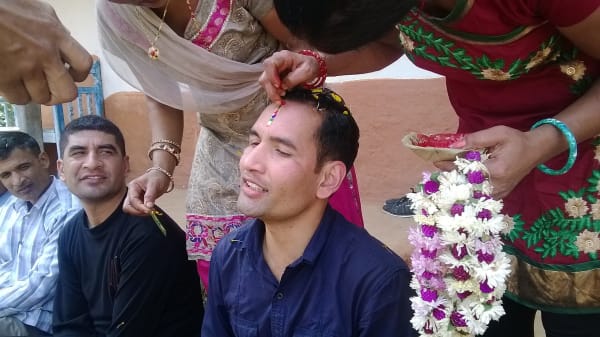
- The blessing. The senior woman gives each person a tika and a garland, and the sagan: a boiled egg, a small fried fish, a lentil cake, a piece of meat and a sip of home-distilled rice spirit, handed over in a fixed order as a wish for good fortune.
- The feast. A long meal, eaten in place, with many courses.
- The mandalas are swept away, from one end of the row to the other.
What does it mean to worship yourself? Not vanity. The idea is that the body is where the divine lives, and that a person who does not respect and care for their own being cannot do much good for anyone else. You begin the year by acknowledging that you are worth looking after. Nearly every visitor who has it explained to them says some version of the same thing: we could do with that at home.
What a Visitor Can See
Mha Puja itself is private — it happens behind closed doors, in a family's own upper room, and it is not staged for outsiders. What surrounds it is very public indeed.
| When (Tuesday 10 November 2026) | What | Where |
|---|---|---|
| Morning | Motorcycle and vehicle rallies with Nepal Sambat flags | Around Kathmandu and Patan |
| Late morning to afternoon | Cultural processions: traditional dress, dhime drums, masked dancers, floats | Basantapur (Kathmandu Durbar Square), Patan Durbar Square, Bhaktapur |
| All day | Bhintuna greetings; streets hung with red-and-white banners | The old quarters of all three cities, and Kirtipur |
| Evening | Mha Puja in homes; oil lamps on doorsteps and temple plinths | Residential lanes — quiet, lit, and atmospheric to walk |
Look for the women's dress: the haku patasi, a black sari with a red border, worn with a white shawl. It is the traditional dress of the Newar farming community, and on New Year's Day whole processions wear it. The drums are the dhime, a large two-headed drum played in ranks, loud enough to feel in your chest.
Occasionally a community group holds a public or demonstration Mha Puja, and some heritage hotels in Patan and Bhaktapur arrange for guests to observe or take part in one with a host family. If that interests you, ask us when you book and we will find out what is being offered this year. A Patan day tour on the 10th is easily shaped around the processions.
The Rest of Swanti
| Day (2026) | Newar name | What happens |
|---|---|---|
| Sat 7 November | Kwa Puja | The crow is fed |
| Sun 8 November | Khicha Puja; Laxmi Puja | The dog is honoured; lamps are lit for Laxmi |
| Mon 9 November | Sa Puja | The cow is honoured |
| Tue 10 November | Mha Puja; Nhu Daya | Worship of the self; New Year 1147 |
| Wed 11 November | Kija Puja | Sisters worship their brothers |
Kija Puja on the final day follows the same form as Mha Puja — brothers sit behind mandalas while their sisters perform the ritual for them — which shows how closely the two are related. The wider festival's last day is described in our Bhai Tika guide, and the dates in the Tihar calendar.
The Food
Newar cooking is the most elaborate in Nepal, and New Year is when it is shown off. The feast that follows Mha Puja can run to a dozen dishes served in sequence onto a leaf plate: beaten rice, spiced grilled buffalo, lentil pancakes, black soybeans, pickles, greens, curries, yoghurt, and rice beer or spirit poured from a height from a brass jug.
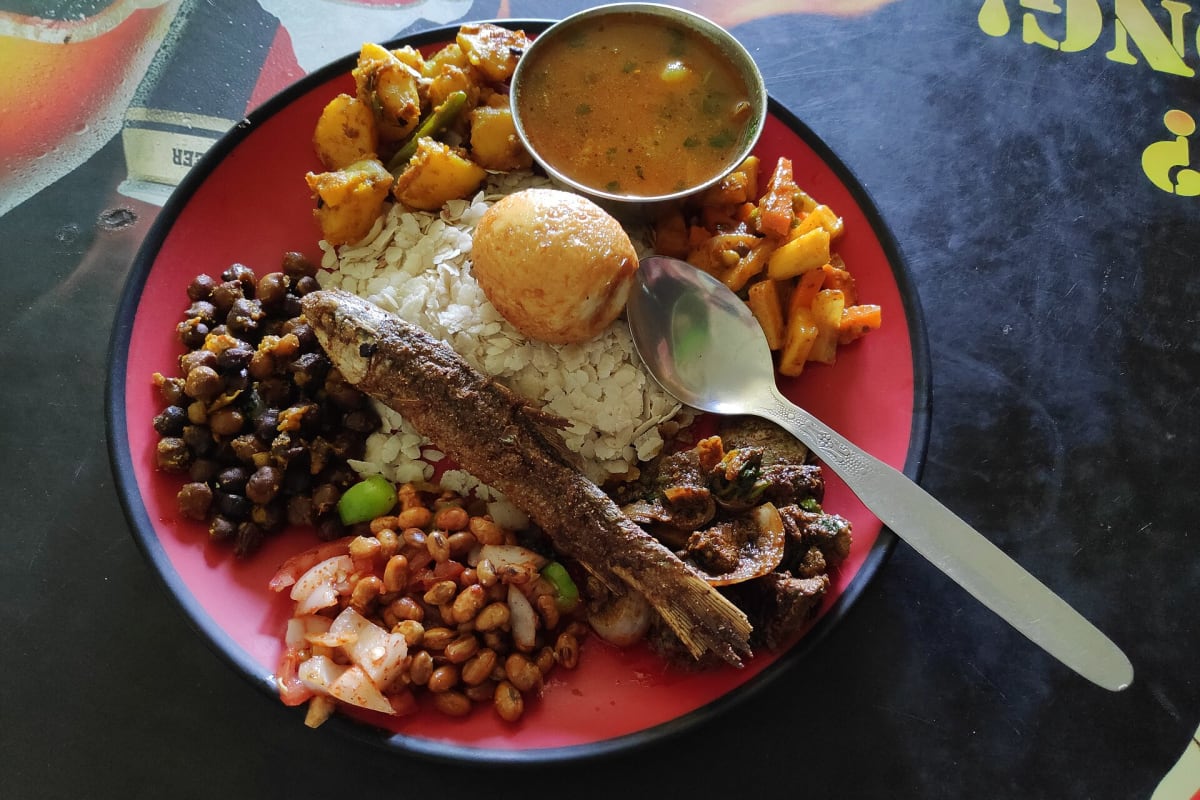
You do not need an invitation to taste it. Traditional Newar eating houses in Patan, Kirtipur and old Kathmandu serve the same dishes every day, and our Secret Food Tour in Kathmandu goes to several of them. The sweets of the season are covered in the Tihar food guide.
Shops and restaurants run by Newar families are often closed on the 10th and 11th. Tourist places stay open. The details for the city are in Kathmandu during Tihar, and the festival overall in our Tihar travel guide.