
Walk through a Nepali neighbourhood two days before Tihar and you will smell it: hot ghee and frying batter from every kitchen. Somebody's mother is sitting on a low stool beside a pan of oil, pouring loops of rice batter from her hand and lifting them out on a stick, and has been since morning. By evening there will be a basket of several dozen, and it will not be enough.
The food of Tihar is made to be given away. To the singers at the door, to the neighbours, to the brother on the last day, to the dog on the second. Much of it is sweet, most of it keeps for a week, and nearly all of it can be found by a visitor who knows what to ask for.
Sel Roti: The Bread of the Festival
Sel roti is a ring of fried rice bread about the size of a hand, crisp and reddish-brown outside, soft and slightly chewy within, and gently sweet. It is to Tihar what mince pies are to an English Christmas: the thing that has to be on the table for it to be the festival.
It is harder to make than it looks. Rice is soaked overnight and ground to a coarse wet paste, then beaten with sugar and ghee — some families add mashed banana, cardamom or a little milk — until it will drop from the hand in a continuous rope. The cook pours it in a circle straight into hot oil, turns it once with a thin stick, and hooks it out through the middle. Getting the batter right is a matter of feel, and every household believes its own is best.
- How it is eaten: at room temperature, with tea in the morning, with spiced potato pickle (aloo ko achar) or yoghurt as a snack, or just as it is.
- When you will meet it: pressed on you in any house you enter, handed to deusi-bhailo singers, on the Bhai Tika plate, and fed to dogs on Kukur Tihar.
- For those who avoid gluten: the bread itself is rice, but it is usually fried in oil used for other things. Ask.
The Other Fried Breads
| Name | What it is |
|---|---|
| Anarsa | A flat disc of rice-flour dough sweetened with sugar or jaggery, pressed into poppy or sesame seeds on one side and fried. Crunchy, like a dense biscuit. |
| Fini roti | A flaky, many-layered fried bread of wheat flour and ghee that shatters when bitten. Savoury-sweet; a speciality of the hill Brahmin and Chhetri kitchen. |
| Lakhamari | The Newar festival sweet: a hard, glossy, sugar-glazed bread made in rings, knots and plaits, some the size of a plate. Very crunchy, very sweet, and it keeps for weeks. |
| Khajuri | Small diamond-shaped fried biscuits of flour, ghee and sugar. Made in bulk; turns up in every tin. |
| Thekua | A stamped wheat-and-jaggery biscuit from the Terai, made for Chhath a few days after Tihar. |
All of these are dry and keep well, which is the point. A festival that involves visiting a dozen houses in three days needs food that can be made ahead, stacked in a tin and carried.
Mithai: The Sweet Shop
Alongside what is made at home there is what is bought. In the week before Tihar the sweet shops — mithai pasal — build pyramids of boxed sweets on the pavement and sell them by the kilo to be given as gifts. This is the South Asian milk-sweet tradition, and for many visitors the first proper meeting with it.
| Sweet | What to expect |
|---|---|
| Lalmohan | Deep-fried balls of milk solids soaked in syrup, served warm. Known elsewhere as gulab jamun. The easiest to like. |
| Rasbari | Soft white balls of fresh cheese in thin sugar syrup. Light and spongy. |
| Barfi | Dense milk fudge cut in squares, plain or with pistachio, coconut or cashew. |
| Peda | A small soft disc of reduced milk and sugar, flavoured with cardamom. |
| Laddu | A ball of fried gram-flour droplets bound with syrup. An offering to the gods as much as a food. |
| Jeri | Coils of batter fried and dipped in syrup — jalebi. Eaten hot for breakfast with a puffed bread called swari. |
| Kaju katli | Thin diamonds of cashew paste, sometimes with edible silver leaf. The gift-box favourite. |
Buy from a busy shop, where turnover is fast, and buy a mixed quarter-kilo to try rather than a box of one thing. These are intensely sweet; a piece or two with unsweetened tea is how they are meant to be eaten.
The Bhai Tika Plate
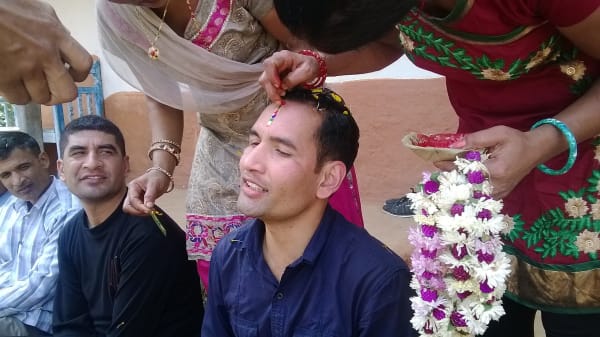
On the last day a sister hands her brother a tray — the sagun — and its contents are close to fixed.
- Sel roti, several rings.
- Mithai, a selection.
- Masala — which here means not spice but a packet of nuts and dried fruit: cashews, almonds, walnuts, raisins, dates, dried coconut, rock sugar, cloves and cardamom. Sold ready-mixed in the markets in decorated bags.
- Fruit, always including a citron (bimiro) and often a pomelo, with oranges, apples and bananas.
- A boiled egg and sometimes fried fish, for good fortune.
- Yoghurt, which accompanies every auspicious beginning.
The pomelo is worth a note of its own. Peeled, broken into segments and tossed with yoghurt, sugar, salt, chilli and toasted sesame, it becomes bhogate sadheko, a sharp, sweet, hot salad that families eat sitting in the sun on winter afternoons. It appears with the Tihar fruit and stays until February. If you see it, try it. The ritual the plate belongs to is described in the Bhai Tika guide.
The Newar New Year Feast
The Newars of the Kathmandu valley begin their year on the fourth day of Tihar and mark it, as they mark everything, with food. The centre of it is samay baji, a ritual plate that is also one of the great snacks of Nepal.
| On the plate | What it is |
|---|---|
| Baji | Beaten rice — flattened, dry and crisp. The base of everything. |
| Chhoila | Grilled buffalo meat dressed with mustard oil, chilli, garlic and fenugreek. Smoky and hot. |
| Wo (bara) | A thick pancake of ground black lentils, fried, sometimes with an egg or minced meat on top. |
| Bhatmas | Black soybeans fried crisp with ginger and garlic. |
| Aloo wala and greens | Spiced potato; wilted mustard leaf. |
| A boiled egg and a small fried fish | The auspicious pair. |
| Aila or thwon | Home-distilled rice spirit, clear and strong; or cloudy white rice beer. |
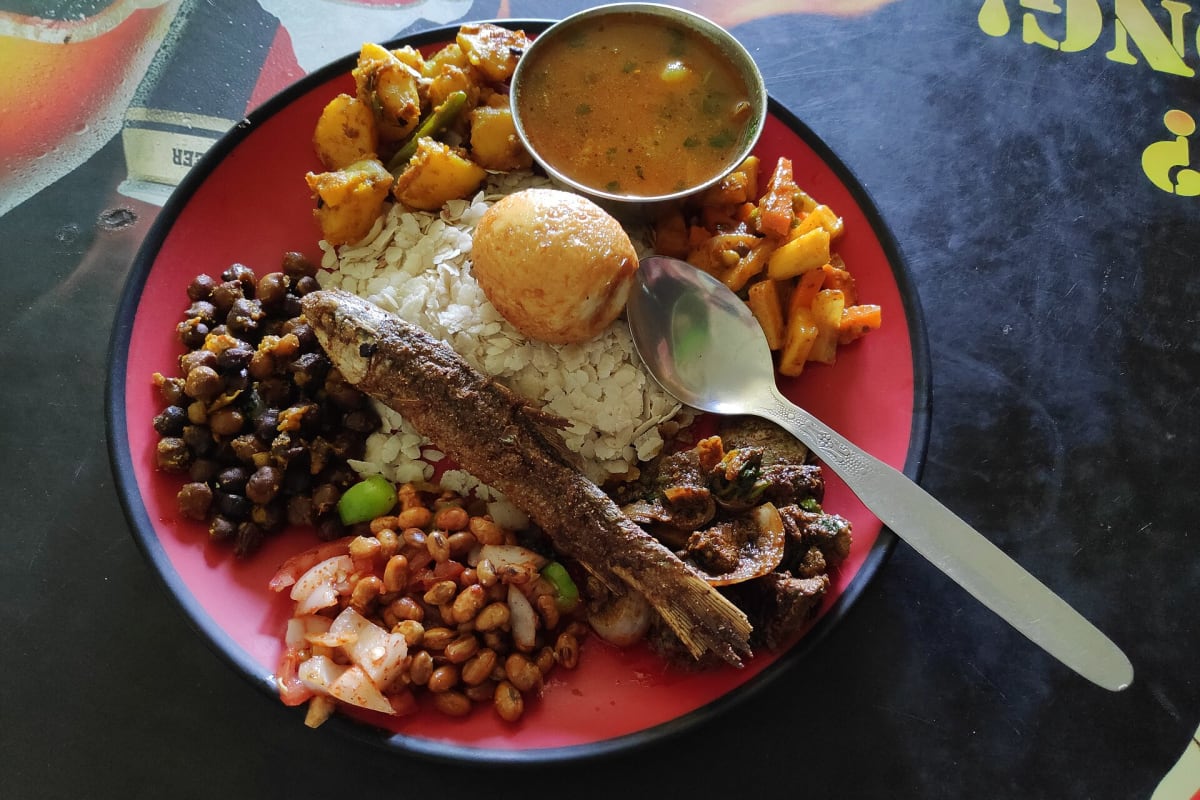
The full feast after the Mha Puja ritual adds a long sequence of curries, pickles and sweets; see Mha Puja and Nepal Sambat.
Where to Try It
- In someone's house. The best sel roti is never for sale. A homestay over the festival, or any invitation, is the way to it.
- Street stalls. In the days before Tihar, women fry sel roti to order at stalls in Ason, Kalimati and the neighbourhood markets of Kathmandu, and along Lakeside in Pokhara. Eat it hot from the pan.
- Sweet shops. The old-established mithai shops of New Road and Indra Chowk in Kathmandu; in Pokhara, around Mahendrapul. Follow the queue.
- Newar eating houses. The traditional bhatti of Patan and Kirtipur serve samay baji, bara and chhoila every day at low tables.
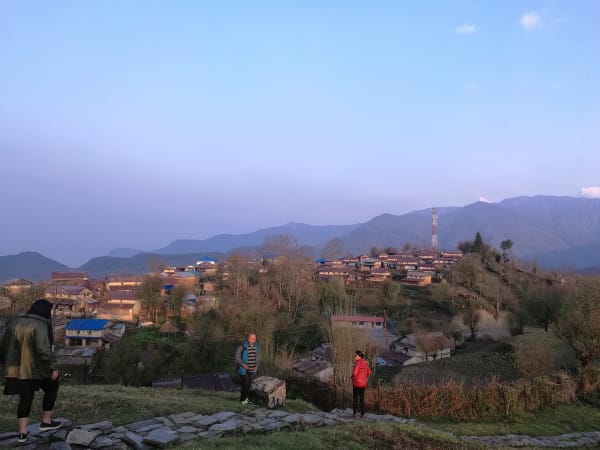
- Trekking lodges. In the Annapurna foothills, lodge kitchens make sel roti for the festival and are usually pleased to be asked for it at breakfast.
- With a guide. Our Secret Food Tour in Kathmandu walks the old city's food lanes and, in festival week, the markets that supply them.
Practical Notes
- Vegetarians do well at Tihar. The breads and sweets contain no meat, and many households eat no meat on Laxmi Puja. The Newar plate is the exception; ask for it without chhoila.
- Vegans have a harder time: ghee and milk are in almost everything. Sel roti fried in vegetable oil and made without milk exists; fruit and the nut mix are safe.
- Nut allergies: barfi, kaju katli and the Bhai Tika masala are nuts by definition, and sweets are stored together. Be explicit and cautious.
- Stomachs: fried food from a busy stall, cooked in front of you, is one of the safer things to eat. Milk sweets that have sat unrefrigerated are not. Home-made spirit varies in strength and quality — a taste is polite; a second glass is optional.
- Refusing: you will be offered more than you can eat. Accept a little, eat it, and put your hand over the plate with a smile when you have had enough.
- Taking some home: lakhamari, anarsa and boxed dry sweets travel well. Syrup sweets do not.
For the rest of what Nepal eats, on the trail and off it, see food on the trail, and for the festival three weeks earlier, the Dashain food guide. The festival itself is covered in our Tihar travel guide.