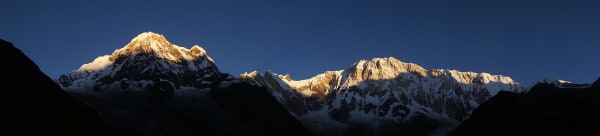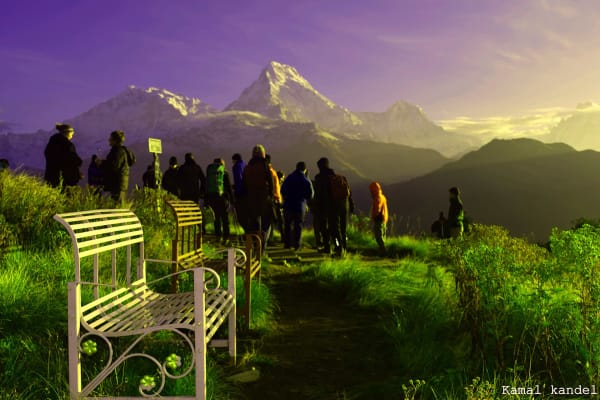

Ask a guide which month they like best for the Annapurna Base Camp trek and many will say December. The autumn crowds have gone, the sky is usually clear from dawn to dusk, and the great wall of peaks around the sanctuary is plastered in snow. The trade-off is cold: nights at base camp fall well below freezing, the days are short, and the upper gorge needs more care after snowfall than it does in October.
This guide covers what December is really like on the route, what changes in the lodges and on the trail, the one section that needs respect, and the kit that makes the difference between a cold night and a miserable one.
Annapurna Base Camp in December at a Glance
| Weather | Mostly dry and settled, with clear mornings. A passing winter storm can bring snow for a day or two |
| Daytime at base camp | Around 0 to 8°C in sunshine, much colder in wind or cloud |
| Night at base camp | Typically −10 to −15°C on a clear night |
| Pokhara | Pleasant: around 20°C by day and 7 to 8°C at night |
| Daylight | About ten and a half hours: sunrise around 6:45 AM, sunset around 5:10 PM |
| Crowds | Far fewer than in October and November, apart from the Christmas and New Year week |
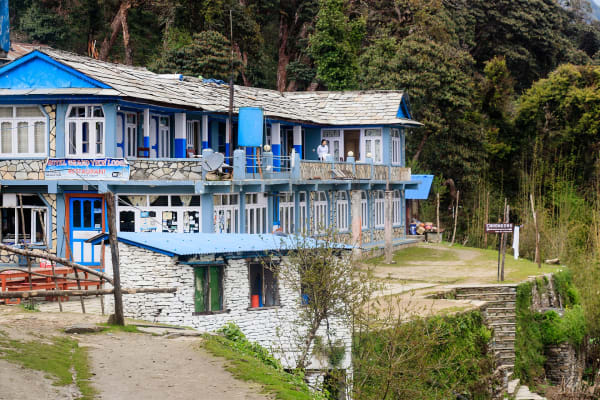
| Lodges | Open all the way to base camp, with fewer guests and simpler menus higher up |
| Permits | ACAP permit and TIMS card; a licensed guide is required |
December Weather on the Route
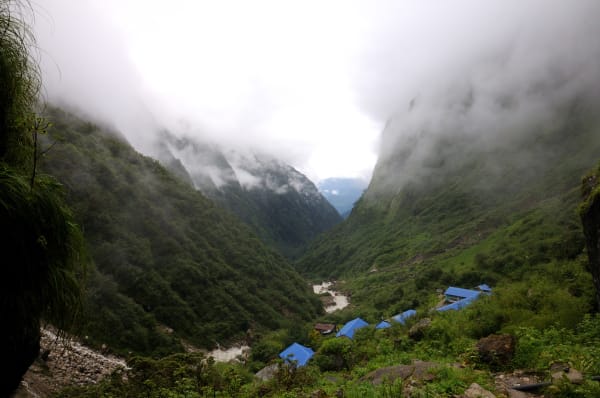
By December the post-monsoon clearing is complete and the dry season has settled in. Most days start cloudless, and the views of Annapurna South, Hiunchuli and Machhapuchhre from the lower villages are as sharp as they get all year. In the afternoon cloud sometimes builds in the gorge and clears again overnight. Rain at low altitude is rare.
The thing to watch for is the occasional winter storm. Weather systems from the west, known in Nepal as western disturbances, cross the Himalaya a few times each winter and can drop fresh snow on the upper route for a day or two. They are forecast several days ahead, and our guides keep an eye on them. This year the high peaks are already whiter than usual after the snow brought by Cyclone Arnab at the end of October, and our post-storm update covers what that did on the trail.
Altitude makes all the difference to how cold it feels. Pokhara is warm. Chhomrong and Sinuwa, at around 2,200 m, are crisp by night and pleasant in the afternoon sun. From Deurali upwards you are in winter, and at Machhapuchhre Base Camp (3,700 m) and Annapurna Base Camp (4,130 m) the cold after sunset is serious, though the sunshine on a still day is surprisingly warm.
What Changes on the Trail in December
- Fewer people. The trail and lodges are much quieter than in the peak autumn months, and you are more likely to have a room to yourself and a seat near the stove. The exception is the week from Christmas to New Year, when trekkers from Kathmandu and abroad come up on holiday.
- Short days. With sunset at about 5:10 PM and the gorge in shade earlier still, your guide will want to start promptly and arrive by mid-afternoon. Walking after dark in the cold is no fun.
- Cold rooms. Lodge bedrooms are not heated. The dining room usually has a stove in the evening, and everyone gathers around it. A good sleeping bag matters more than anything else you carry.
- Frozen water. Water bottles left out freeze overnight above Deurali. Sleep with yours inside your sleeping bag, and ask the lodge for boiling water to fill it before bed.
- Snow and ice underfoot. Above Deurali the trail may be snow-covered, and shaded sections freeze hard in the morning. Light microspikes make these sections much safer and are worth packing.
- Cold showers. Solar-heated showers are weak or absent in winter higher up. Many trekkers wait for the hot springs at Jhinu Danda on the way down, and they are wonderful after a cold week.
- Charging and Wi-Fi. Batteries drain fast in the cold and charging costs more higher up. Keep your phone in an inside pocket by day and in your sleeping bag at night.
The Avalanche Section: Deurali to Machhapuchhre Base Camp
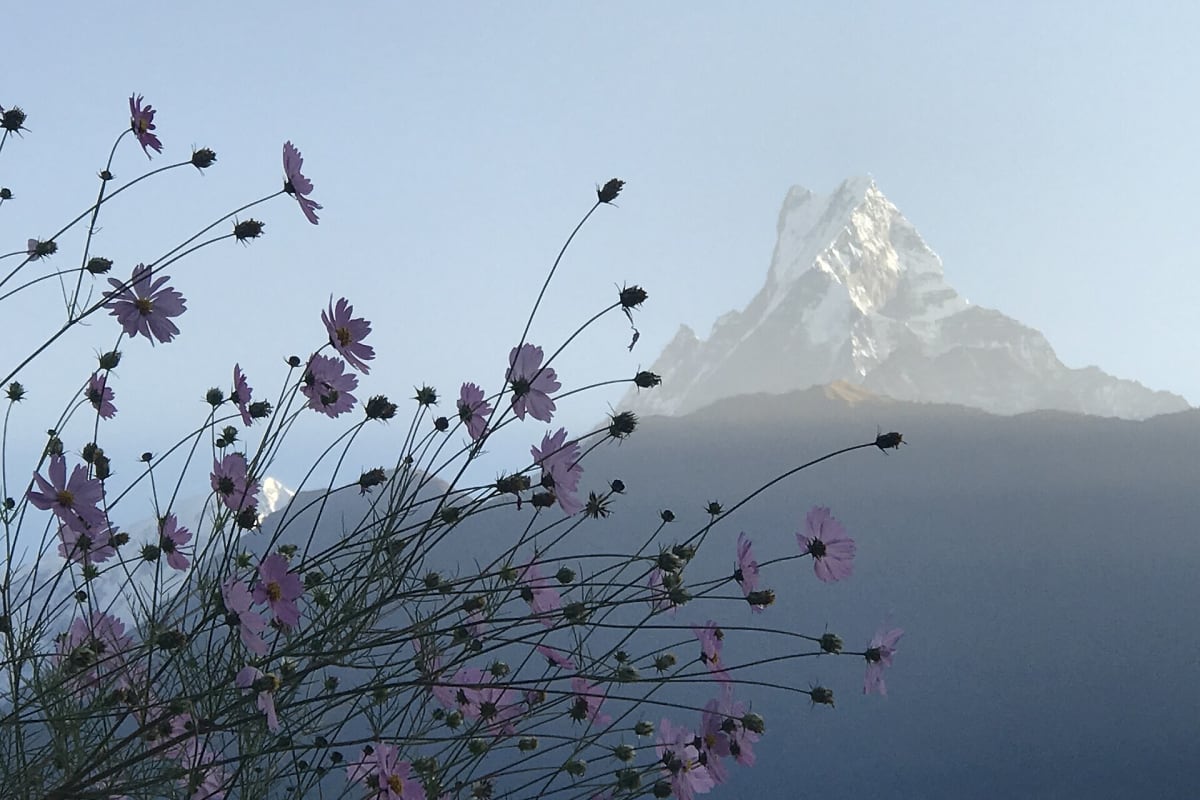
Above Bamboo the trail enters the upper gorge of the Modi Khola, a deep, narrow valley with steep walls on both sides. Between Hinku Cave, Deurali and Machhapuchhre Base Camp, avalanches can come down from the slopes above and cross the trail. It is the one part of the route that needs real respect, and it matters more in winter than in autumn.
The risk rises after heavy snowfall, when slopes above the trail are loaded and the sun begins to warm them. In January 2020 an avalanche near Deurali swept away a group of South Korean trekkers and their Nepali guides. Most December days are dry and the danger is low, but after a storm it is not.
- Ask before you cross. Our guides check with the lodges at Deurali and with people coming down before committing to the upper gorge after any new snow.
- Cross early. Snow is firmest and slopes most stable in the early morning, before the sun reaches them.
- Follow local advice. Lodge owners and conservation-area staff know which slopes have been running. If they point you to a different line or tell you to wait, do as they say, even if it is slower.
- Wait a day if in doubt. An extra night at Deurali or Bamboo costs very little. Keep a spare day in your plan so that waiting is easy.
A December Itinerary
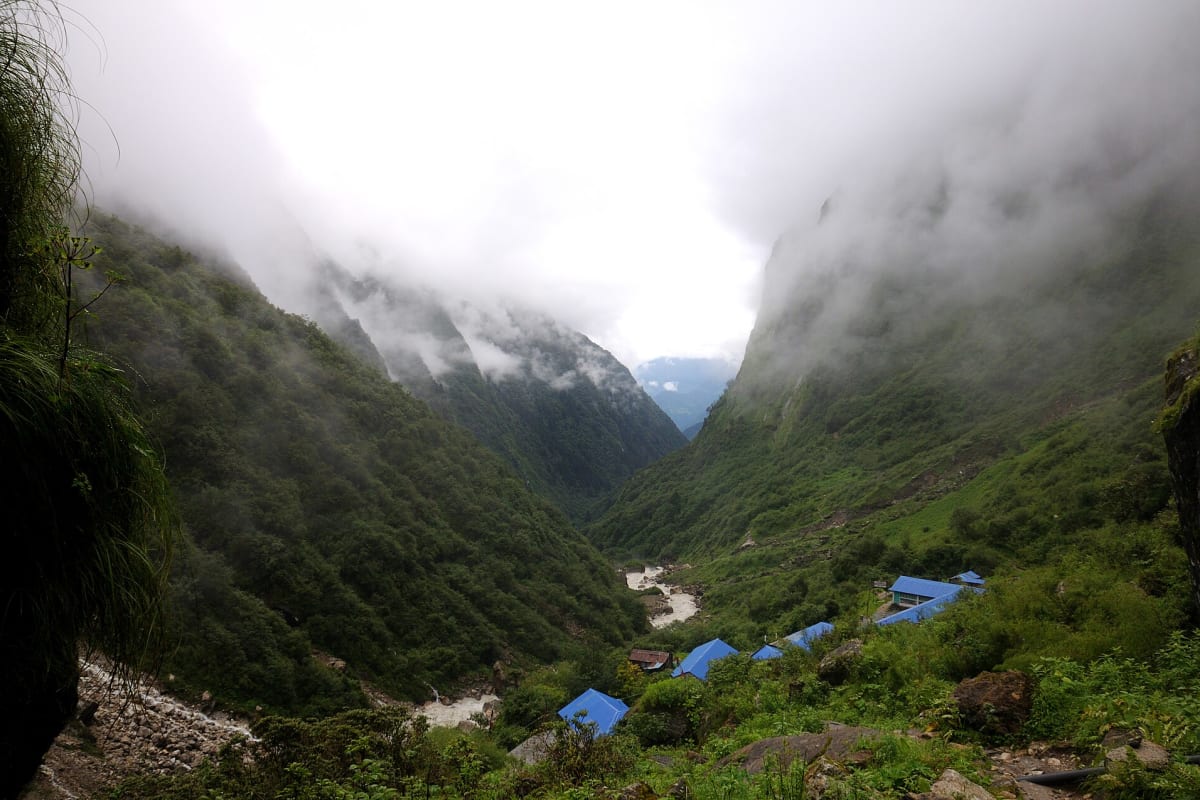
Our five-day Annapurna Base Camp trek from Pokhara works well in December as it stands. The table shows the plan and what to expect each day in winter. If you need a four-season sleeping bag or a down jacket, rent one in Pokhara or Kathmandu before you start.
| Day | Route | December notes |
|---|---|---|
| 1 | Drive from Pokhara (822 m) to Jhinu Danda (1,780 m), trek to Lower Sinuwa (2,340 m) | Crisp night; the first real cold |
| 2 | Lower Sinuwa to Deurali (3,230 m) | Start early: the gorge goes into shade by mid-afternoon. Below freezing at night |
| 3 | Deurali to Annapurna Base Camp (4,130 m) | The avalanche section, crossed in the morning after a conditions check. Very cold night at the top |
| 4 | Sunrise at base camp, descend to Bamboo (2,310 m) | The coldest and most beautiful morning of the trek; sunrise reaches the peaks around 6:45 AM |
| 5 | Bamboo to Jhinu Danda (1,780 m), drive to Pokhara | Stop at the hot springs below Jhinu before the drive |
Two December variations are worth considering. If you are worried about the cold at 4,130 m, you can sleep at Machhapuchhre Base Camp and walk up to Annapurna Base Camp before dawn for the sunrise. And if you have more time, the Annapurna Base Camp trek with Ghorepani Poon Hill adds the famous sunrise viewpoint at 3,210 m, which is spectacular in clear winter air. If you are starting from Pokhara, the five-day version from Pokhara fits into a shorter holiday.
December, November or January?
| November | December | January | |
|---|---|---|---|
| Weather | Settled and clear | Settled, colder | Coldest month; more chance of snow |
| Nights at base camp | Around −5 to −10°C | Around −10 to −15°C | Often −15°C or colder |
| Crowds | Busiest month of the year | Quiet, except Christmas to New Year | Quietest |
| Snow on the upper trail | Occasional | Likely in places | Likely, sometimes deep |
| Avalanche risk | Low | Low, higher after storms | Higher after storms |
For most people December is the sweet spot: almost November's weather with a fraction of its crowds. January is for those who don't mind real cold and are flexible about dates.
What to Pack for December
The standard Nepal packing list applies, with these winter additions:
- A four-season sleeping bag with a comfort rating of around −10°C or lower, and a liner. You can rent good ones in Kathmandu and Pokhara.
- A warm down jacket for evenings and early mornings at base camp.
- Insulated gloves or mittens, plus thin liner gloves for taking photos.
- A warm hat and a buff for your neck and face.
- Light microspikes for icy morning trails above Deurali.
- Gaiters if there has been recent snow.
- A wide-mouth water bottle that can take boiling water, to use as a hot water bottle at night.
- Sunglasses and strong sunscreen. Sun on snow at 4,000 m burns quickly, even in winter.
- Spare batteries or a power bank, kept warm.
Our guide to staying warm on a winter trek explains layering, sleeping warm and how to recognise frostbite and hypothermia.
Christmas, New Year and Tamu Lhosar on the Trail
Christmas Day is a public holiday in Nepal, and the lodges along the route are used to foreign trekkers celebrating it; some make a special dinner. New Year's Eve is busy with groups from Kathmandu and Pokhara, so book that week early.
On 30 December the Gurung villages along the lower route, including Ghandruk, Landruk and Chhomrong, celebrate Tamu Lhosar, the Gurung New Year, with dances, music and food. Walking through on that day is a real treat. Our guide to Christmas and New Year in Nepal has more ideas for the holiday period.
Book Annapurna Base Camp for December
We run the Annapurna Base Camp trek throughout December, and our guides check the upper gorge before every crossing. If you want to combine it with something else, the Mardi Himal and Annapurna Base Camp trek adds a ridge walk with close views of Machhapuchhre, and if the cold or the time does not suit you, the Annapurna Base Camp helicopter tour reaches the sanctuary in a morning.
Send us your dates through the trek page or our contact page and we will reply within 24 hours. Our complete guide to Annapurna Base Camp covers the route in every season.