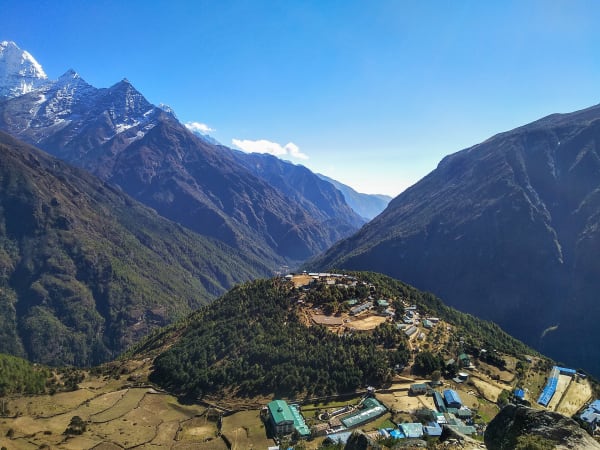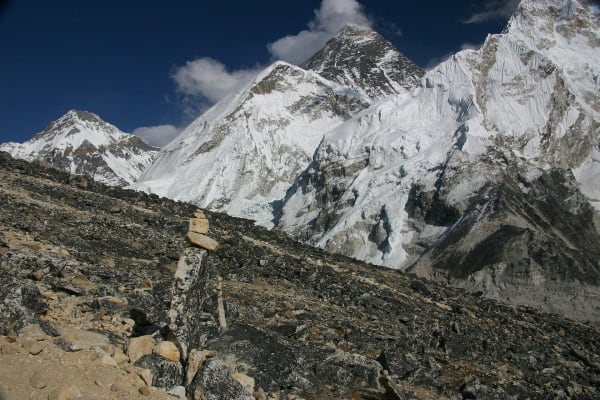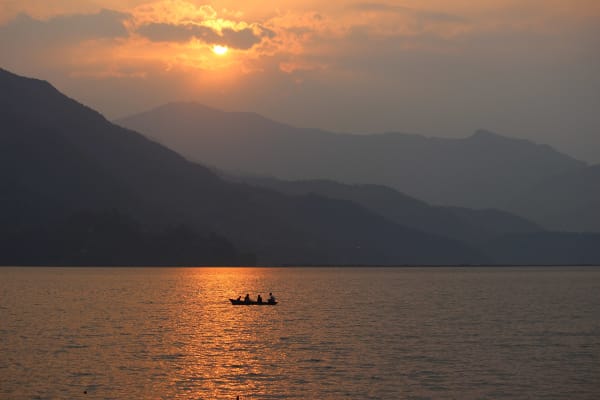

Peak season ends in the last days of November, and for about three weeks afterwards Nepal has a secret. The high pressure that makes autumn so reliable has not gone anywhere. The air is, if anything, cleaner. But the groups have flown home, the lodge owners have time to sit down with you, and trails that carried hundreds a day in October carry a dozen.
What has changed is the temperature and the margin for error. Nights are long and hard-frozen, the first winter snow can arrive in any week, and the highest lodges begin to close. December rewards people who pick the right route for it and pack properly — and is unforgiving of those who treat it as late autumn.
December Weather by Altitude
| Where | Altitude | Day | Night |
|---|---|---|---|
| Kathmandu | 1,400 m | 17 – 20°C | 2 – 5°C |
| Pokhara | 820 m | 19 – 22°C | 6 – 9°C |
| Chitwan | 150 m | 22 – 25°C | 8 – 11°C |
| Ghorepani / Namche Bazaar | 2,900 – 3,400 m | 5 – 9°C | −8 to −3°C |
| Annapurna Base Camp / Kyanjin Gompa | 3,900 – 4,100 m | 0 – 5°C | −14 to −8°C |
| Gorak Shep | 5,164 m | −6 to 0°C | −25 to −16°C |
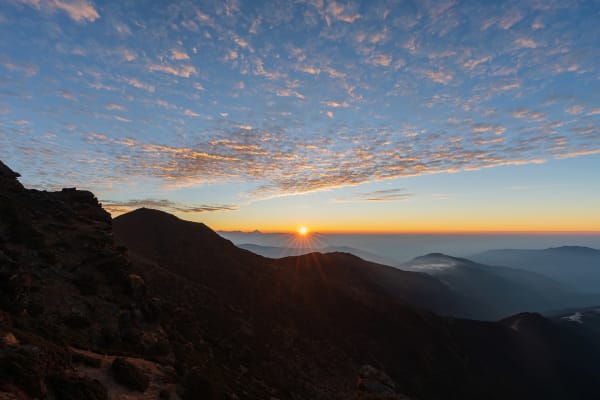
- It is dry. December is one of the least rainy months of the year. Most days are cloudless from dawn to dusk.
- Snow comes in pulses. Winter weather arrives from the west as short disturbances, a day or two long, a few times a month. Above about 3,000 metres they bring snow, which then lies on shaded ground until spring.
- Days are short. The shortest day of the year is 21 December: about ten hours and twenty minutes of light, with the sun off most valley floors by four.
- The lowlands are at their best. Kathmandu's mornings are often foggy and its nights cold in unheated rooms, but Pokhara and the Terai have warm, clear days.
Early or Late December?
| 1 – 15 December | 16 – 31 December | |
|---|---|---|
| Character | The tail of autumn | Winter proper |
| Snow on trails | Usually none below 4,000 m | Possible from 3,000 m after a front |
| High passes | Often still open | Frequently closed or serious |
| High lodges | Mostly open | Some closed on side routes and above 4,500 m |
| Other trekkers | Very few | A holiday surge from about the 22nd |
| Best for | Almost any route below 5,000 m | Lower routes, viewpoints, the lowlands |
The first half of the month is the one to aim at if you want altitude. The last ten days bring a wave of visitors on Christmas and New Year holidays, which fills Pokhara and the short treks but leaves the longer routes quiet; see Christmas and New Year in Nepal.
The Best Treks for December
The principle is simple: stay below about 4,000 metres, avoid anything that depends on crossing a pass, and favour south-facing routes that get the sun.
| Trek | Highest point | Why it works |
|---|---|---|
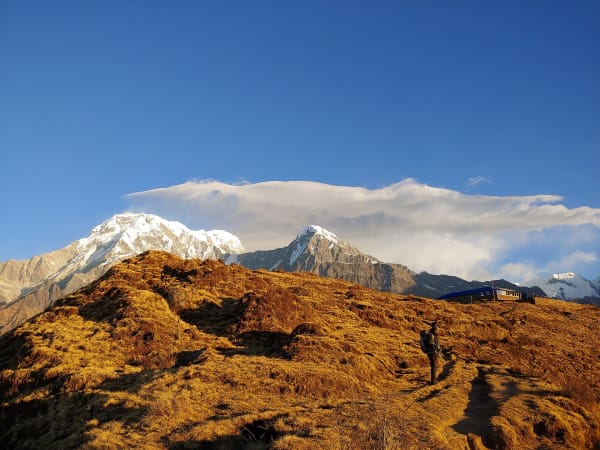
| Poon Hill | 3,210 m | Low, sunny, well-lodged, and at its clearest. The classic winter trek. |
| Mardi Himal | 3,580 m (High Camp) | Superb in early December. Snow on the upper ridge later; go as far as conditions allow. |
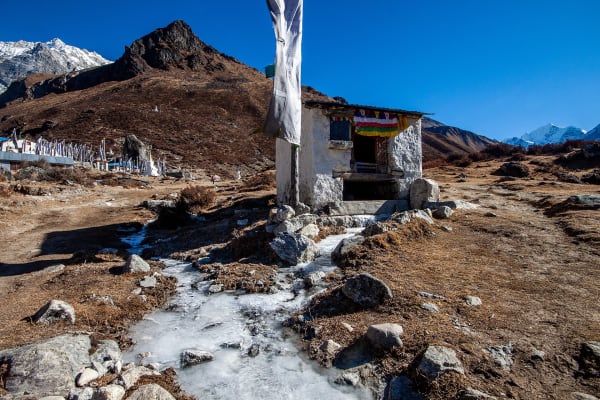
| Langtang Valley | 3,870 m | A sunny east-west valley with lodges open all winter and no flight needed. |
| Mohare Danda | 3,300 m | Community lodges, a wide panorama, and almost nobody. |
| Pikey Peak | 4,065 m | Everest from a ridge you reach by road. Cold on top; one night high. |
| Helambu | 3,650 m | Close to Kathmandu, through villages, mostly below the snow line. |
| Tamang Heritage Trail | 3,870 m (briefly) | Villages, homestays and a hot spring — culture rather than altitude. |
| Everest View trek | 3,880 m | Namche and Tengboche without the hard cold higher up. |
For a trek with no altitude at all, the village routes are in their element: clear views, warm sun, and winter crops in the fields. Ghalegaun and Sirubari are both open and at their most hospitable. Our full comparison is in winter trekking: the best routes.
Possible, With Care
| Trek | In December |
|---|---|
| Everest Base Camp | Done every winter. Lodges on the main trail stay open. Very cold above Dingboche; needs proper kit and a spare day or two. See Everest Base Camp in December. |
| Annapurna Base Camp | Usually fine in the first half. After heavy snow the gorge above Deurali carries avalanche risk and guides wait for it to settle. Go with someone who knows the slopes. |
| Gokyo Lakes | Reachable; the lakes freeze from mid-month. Some lodges close. Gokyo Ri is a cold, windy climb. |
| Khopra Danda | The ridge is exposed and holds snow. Possible in a dry spell. |
And the ones to leave for another season, unless you have winter mountain experience and a flexible plan: the Thorong La on the Annapurna Circuit, the Larke La on Manaslu, the Everest Three Passes, Upper Mustang beyond Kagbeni, and Gosaikunda's Lauribina pass. All can be closed for a week at a time, and the lodges that serve them shut.
What December Asks of Your Kit
- A sleeping bag rated to −15°C for routes up to 4,000 metres and −25°C above. This is the item not to compromise on.
- A heavy down jacket with a hood, and insulated trousers or thick thermals for evenings.
- Microspikes. Cheap, light, and the difference between walking and sliding on a frozen trail in shade.
- Gaiters if snow is forecast.
- Two pairs of gloves — liners and insulated — and a warm hat that covers the ears.
- An insulated bottle and a habit of filling it with hot water at night.
- A head torch and spare batteries. You will use it every morning and evening.
- Sunglasses and sunscreen. Snow glare at altitude burns faster than summer sun.
Almost all of it can be hired or bought in Kathmandu and Pokhara for much less than at home. The baseline is our trekking packing list.
Lodges, Flights and Practicalities
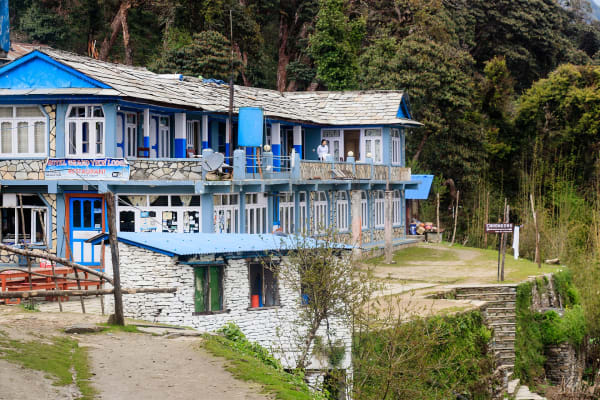
- Lodges on the main routes stay open; on side routes and at the highest stops some close as their owners go down for winter. A guide phones ahead. You will often be the only guests, and will eat in the kitchen by the fire with the family.
- Prices for rooms are often negotiable. Food costs the same as ever, because it was carried there.
- Heating means a stove in the dining room in the evening. Bedrooms are not heated anywhere.
- Water pipes freeze above about 3,000 metres. Showers become a bucket; washing becomes optional.
- Lukla flights normally return to Kathmandu's airport after the peak season, which ends the midnight drive to Ramechhap. The new problem is morning fog in the Kathmandu valley, which can delay departures until late morning from mid-December.
- Permits and offices run normally all month. There are no long festival closures.
- Road travel is at its easiest: dry roads and no landslides.
Altitude does not care about the season, but cold makes its early signs easier to dismiss — a headache blamed on the chill, tiredness on a bad night. Keep to a proper schedule; see our altitude guide.
December Beyond the Trails
It is worth remembering that half of Nepal is not mountains, and December is when the other half is at its best.
- Chitwan and Bardia. Cool, dry and clear. As the tall grass is cut back, wildlife viewing improves week by week through the winter. See our Chitwan guide and the three-day Chitwan tour.
- Birds. Winter migrants arrive on the wetlands of the Terai from November. Koshi Tappu is the place for them.
- Lumbini. The birthplace of the Buddha is on a hot plain that is only comfortable in winter.
- Pokhara. Warm days, mountain views from the lake nearly every morning, and paragliding in stable air.
- Mountain flights. Winter visibility is the best of the year when the valley fog clears; the Everest mountain flight is a way to see the high peaks without the cold.
A common December plan is a week on a low trek and a week split between Pokhara and the jungle. Tell us what you would like to see and we will suggest how to divide it. For the month before, see trekking in November.