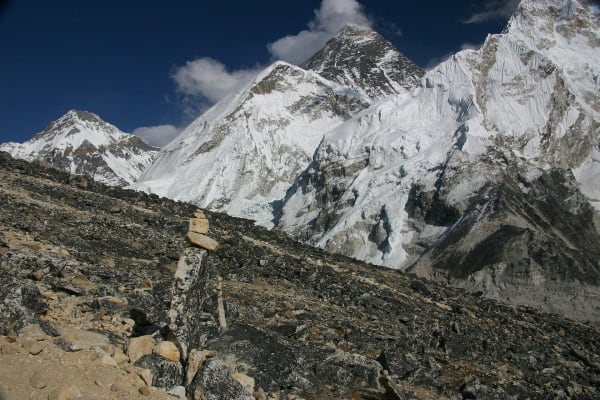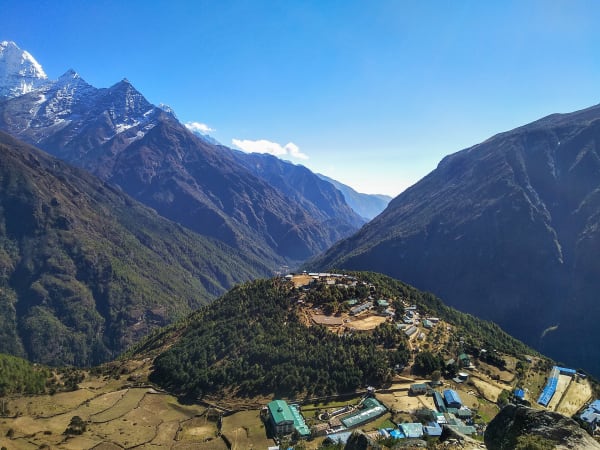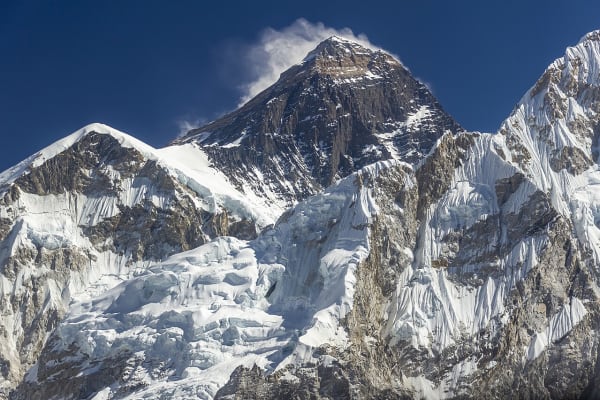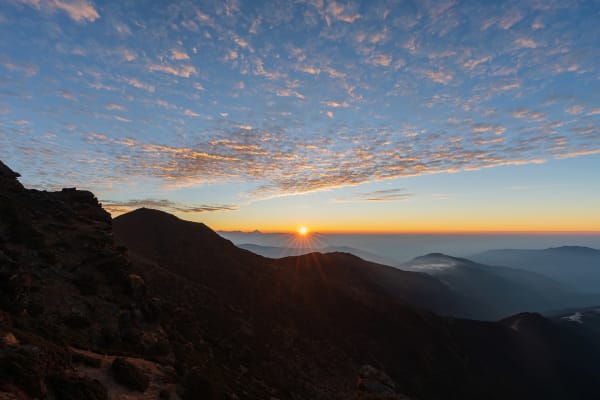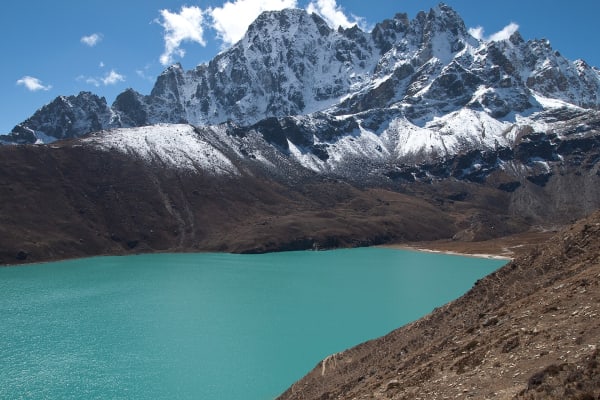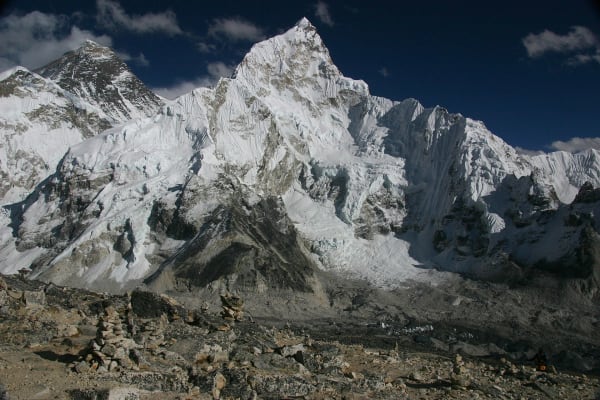

By the first week of December the queues on the Namche hill are gone. The yak trains are fewer. At Tengboche the monks have the courtyard to themselves, and in the lodges at Lobuche — where in October you might have slept on a bench — the owner asks which room you would like. Outside, the mountains stand against a sky so clear and so dark blue that it looks retouched.
This is the Everest region in early winter, and for a certain kind of trekker it is the best month there is. The catch is in the thermometer. At Gorak Shep in late December the temperature inside your bedroom at night is the same as outside it, and outside it is twenty below. Nothing about the trek is harder in December except staying warm, and that is entirely a matter of preparation.
Temperatures Stop by Stop
| Stop | Altitude | Day | Night |
|---|---|---|---|
| Lukla | 2,860 m | 6 – 10°C | −4 to 0°C |
| Namche Bazaar | 3,440 m | 4 – 8°C | −9 to −5°C |
| Tengboche | 3,867 m | 2 – 6°C | −12 to −7°C |
| Dingboche | 4,410 m | −1 to 4°C | −17 to −11°C |
| Lobuche | 4,940 m | −4 to 1°C | −21 to −15°C |
| Gorak Shep | 5,164 m | −6 to 0°C | −25 to −17°C |
By day, in the sun and out of the wind, it is perfectly pleasant to walk in, and the trail is dry. December is one of the driest months of the year in the Khumbu. Snow falls only when a winter front passes, perhaps two or three times in the month; it usually amounts to a few centimetres and makes the trek prettier and slower for a day.
The real cold is from four in the afternoon, when the sun goes, to eight the next morning, when it comes back. That is sixteen hours, and most of the skill of a winter trek lies in managing them.
What Is Open
- Lodges on the main trail from Lukla to Gorak Shep stay open all winter. Not all of them — perhaps one in three at the highest stops — but there is always a bed, and you will not need to book.
- Namche Bazaar is a year-round town: bakeries, gear shops, the Saturday market and working ATMs.
- Tengboche monastery holds its daily prayers as usual.
- The rescue clinic at Pheriche normally closes after the autumn season. The nearest staffed medical help in winter is lower down, which is one reason to trek with a guide who carries a proper first-aid kit and knows the evacuation procedure.
- Side routes are different. In the Gokyo valley and on the passes — the Cho La, Renjo La and Kongma La — many lodges close and the crossings may be snowbound. The Three Passes are not a December trek for most people.
With few guests, lodge life changes for the better. Everyone gathers round a single stove fed with dried yak dung, the owner's family eats with you, and you are likely to end the evening knowing a good deal about how a Sherpa village gets through the winter.
Flights in Winter
After the peak season ends, Lukla flights normally go back to operating from Kathmandu itself instead of from Ramechhap. That removes the four-hour night drive that autumn trekkers endure, and it is one of December's real conveniences. Confirm the arrangement when you book, as it is set each season by the aviation authority.
Winter has its own delay, though, and it is at the Kathmandu end. From about mid-December the valley often fills with fog overnight, and the airport cannot dispatch the first flights until it lifts — sometimes at nine, sometimes at eleven. Because Lukla closes when the wind rises around midday, a late start can cost the whole day's schedule.
- Allow two buffer days at the end of the trek in the second half of December.
- Book the first flight anyway; when the fog clears, they go in order.
- Know the helicopter option. Helicopters can often fly when planes cannot. See Lukla flight delays and backup plans.
The Equipment That Makes It Comfortable
People who say they were miserable on a December trek were, almost without exception, under-equipped. People who had the right kit describe it as the best trek they have done. The list is not long.
| Item | December standard |
|---|---|
| Sleeping bag | Comfort rating of −20°C or lower, plus a fleece or silk liner. Ask the lodge for an extra blanket on top. |
| Down jacket | Expedition weight, with a hood. You will wear it at dinner and possibly to bed. |
| Legs | Thermal leggings from Namche up; down or synthetic insulated trousers for the evenings above Dingboche. |
| Hands | Liner gloves plus insulated mittens. Fingers are the first thing to suffer on Kala Patthar. |
| Feet | Insulated trekking boots, one size up for a thick sock. Down booties for the lodge. |
| Traction | Microspikes, for the icy stretches near Lobuche and on the moraine. |
| Face | Buff, balaclava for summit morning, sunglasses with side protection. |
| Bottles | Two wide-mouthed one-litre bottles that take boiling water. No hydration bladder — the tube freezes. |
- Hot water bottle every night. Fill both bottles at dinner, put them in the sleeping bag. They are your heating and your morning drinking water.
- Sleep with your electronics and your boot liners.
- Dress before you get cold, not after. Put the down jacket on the moment you stop walking.
- Eat a lot. You burn far more in the cold. Order the extra dal bhat.
The full baseline list is in our Everest Base Camp packing list. Everything on the winter list can be hired in Kathmandu.
Altitude, Health and the Cold
The altitude schedule is the same in any month: two nights at Namche, two at Dingboche, no more than about 500 metres of sleeping gain a day above 3,000 metres. Do not let short days or an empty trail tempt you to skip a rest day. The detail is in the day-by-day itinerary.
- Dehydration is the winter trap. Cold dulls thirst and the air is desert-dry. Aim for three to four litres of fluid a day, most of it warm.
- The Khumbu cough — a dry, hacking cough from breathing cold air hard — affects most winter trekkers above Dingboche. Breathe through a buff, sip hot drinks, and see our guide to it.
- Frostnip on fingers, toes, nose and cheeks is a real possibility on the dawn climb of Kala Patthar. Numbness is the warning; stop and rewarm.
- Sun. The winter sun is low but the air is thin and the snow reflects it. Lips and the underside of the nose burn.
- Insurance must cover helicopter evacuation to 6,000 metres. In winter, with the Pheriche clinic closed, that matters more, not less. See travel insurance for trekking.
Consider going to Kala Patthar in the afternoon rather than for sunrise. It is far warmer, the light on Everest's west face is better, and you are not climbing at five in the morning in the coldest hour of the coldest month.
Is December Right for You?
| December suits you if… | Choose another month if… |
|---|---|
| You value solitude over comfort | You feel the cold badly or have poor circulation |
| You have done a multi-day trek before | This is your first trek at altitude and you want company on the trail |
| You can spare two buffer days | Your flight home is fixed and tight |
| You are prepared to buy or hire proper winter kit | You are hoping to manage with autumn gear |
| You want the clearest photographs of the year | You want to cross the Cho La or do the Three Passes |
If you are in the second column but have December dates, there are good answers. The Everest View trek goes as far as Tengboche, stays below 3,900 metres and takes a week. The Pikey Peak trek shows you Everest from the south without a flight. And the Everest Base Camp helicopter tour lands at Kala Patthar and has you back in Kathmandu for lunch — in winter visibility, a remarkable morning.
For the trek itself, the twelve-day Everest Base Camp trek is the right length, and many winter trekkers choose the helicopter return from Gorak Shep, which spares the cold walk back down and takes the return flight out of the fog's hands. The month before is covered in Everest Base Camp in November.