
For most of the year, night in a Nepali town is dark. Street lighting is patchy, shops shutter early, and the old brick lanes of the Kathmandu valley are navigated by memory. Then there is the new moon of Kartik, the blackest night of the autumn, when every one of those lanes is edged with flame.
This is Laxmi Puja, the centre of the Tihar festival and the night the rest of South Asia calls Diwali. Laxmi, goddess of wealth and good fortune, is believed to walk the earth and enter the houses that are clean, bright and open to her. So every household makes itself as clean, bright and open as it can. In 2026 the night falls on Sunday 8 November.
What a Household Does
The work starts days before, and it is the women of the house who do most of it.
- Cleaning. The house is swept and washed from roof to gate, and often freshly painted. Laxmi does not enter a dirty house.
- Garlands. Strings of orange marigold and purple globe amaranth are hung across the lintel of every door and window.
- The trail. A line is painted on the ground from the front gate, across the yard, through the door and up to the room where the family shrine is kept. Traditionally it is drawn in red mud and cow dung; small footprints are stamped along it in rice-flour paste, pointing inwards.
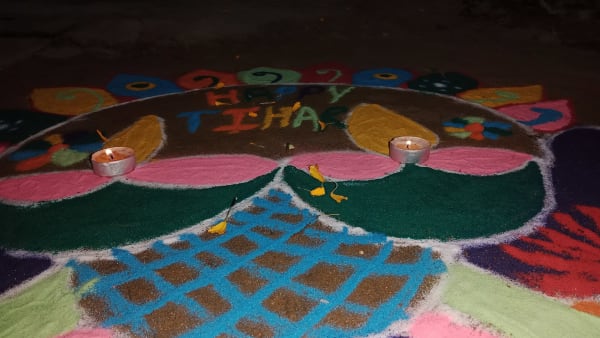
- The rangoli. At the threshold, a circular pattern in coloured powder, with a lamp at its centre, marks the place where the goddess is received.
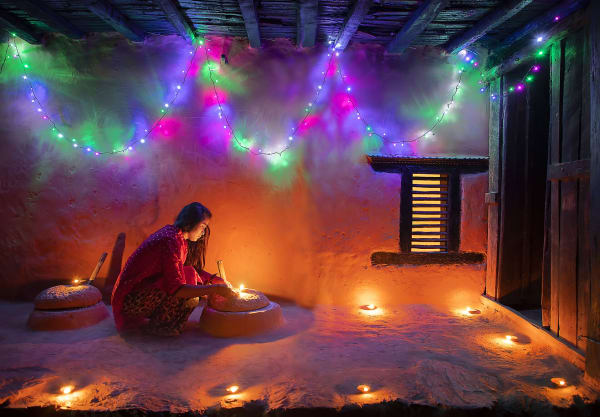
- The lamps. At dusk, small clay saucers filled with mustard oil and a cotton wick are lit and set along the trail, on every window ledge, and round the edge of the roof.
- The puja. In the early evening the family gathers at the shrine. Money, jewellery and — in a trading household — the account books are laid before the image of Laxmi and blessed for the year ahead.
- The open door. Doors and windows are left open and the lights kept burning late, in some houses all night.
Shops do the same at their own thresholds, which is why commercial streets are among the best lit. For many trading families this night closes the old accounts and opens the new.

Laxmi Puja in 2026
| Sunday 8 November | What is happening |
|---|---|
| Morning | Kukur Tihar — dogs garlanded and fed. Flower markets at their peak. |
| Early afternoon | Houses washed and decorated; rangoli made at doors and shop fronts. |
| About 5.15 pm | Sunset. The first lamps are lit. |
| 5.30 – 7.30 pm | Families perform the puja at home. Streets fill as people come out to look. |
| 6 – 10 pm | Bhailo singers go from house to house. The best hours for walking. |
| Late night | Lights left burning. Card games indoors. |
The moon will not help you: this is by definition the darkest night of the month, which is the point. Carry a torch for the unlit stretches between the lit ones.
Where to Walk in Kathmandu
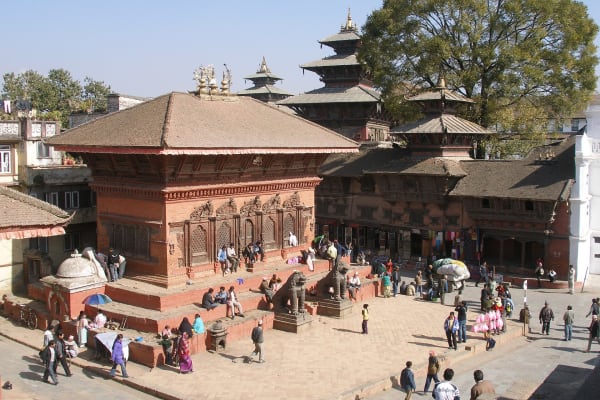
- Ason, Indra Chowk and the lanes to Durbar Square. The old trading heart of the city. Every shop front has its rangoli and its row of lamps, and the small temples at each crossroads are ringed with flame.
- New Road. The jewellers' street, where gold shops compete in electric light.
- Thamel. Less traditional and very lively: restaurants and hotels decorate heavily, and bhailo groups work the whole district.
- Boudhanath. Buddhist, and lit with butter lamps on any night of the year, but on Tihar the houses round the stupa join in. Calm, and easy to walk.
- A rooftop. From any tall hotel roof, or from the steps of Swayambhunath, the whole valley glitters to the hills.
A guided evening walk helps here more than on most occasions, because the best of it is in courtyards you would not know to enter. Our Kathmandu day tour can be run as an afternoon-and-evening walk on the 8th; the day-by-day picture for the city is in Kathmandu during Tihar.
Bhaktapur and Patan: Lit by Flame
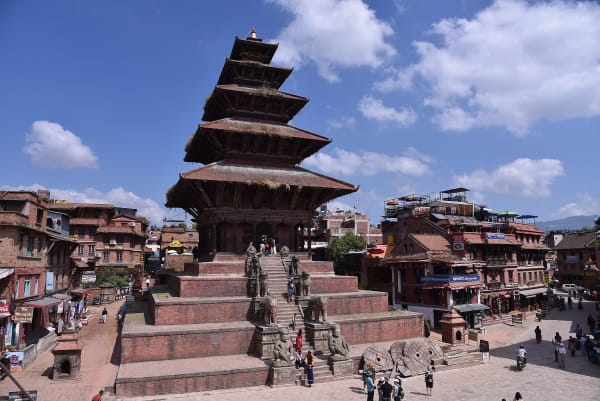
The two older cities of the valley are where the night is at its most beautiful, for a simple reason: they still use oil lamps. In Bhaktapur, traffic is kept out of the old town, and on Laxmi Puja the stepped plinths of the temples in Taumadhi and Durbar squares are lined with hundreds of clay lamps. The brick glows; there is no neon. It looks the way it would have looked three centuries ago.
Patan is similar on a smaller scale, with the stone Krishna temple and the palace front lit from below, and the lanes behind the square — where metalworkers and woodcarvers live above their workshops — each with its painted trail leading in from the street.
Stay the night in one of them if you can. Taxis back to Kathmandu are scarce after eight on a festival evening, and the squares are at their best after the crowds thin. See our guides to Bhaktapur and Patan, or the Bhaktapur and Patan day tours.
Pokhara and the Villages
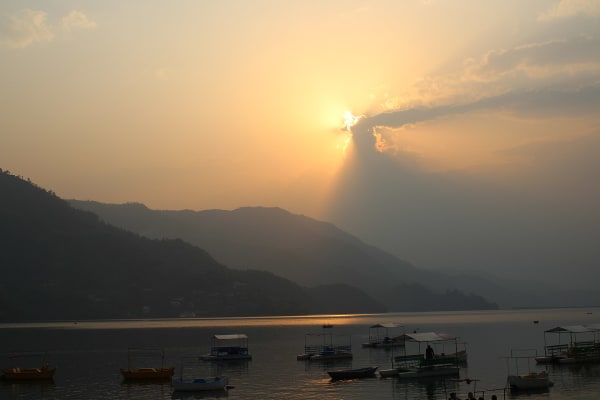
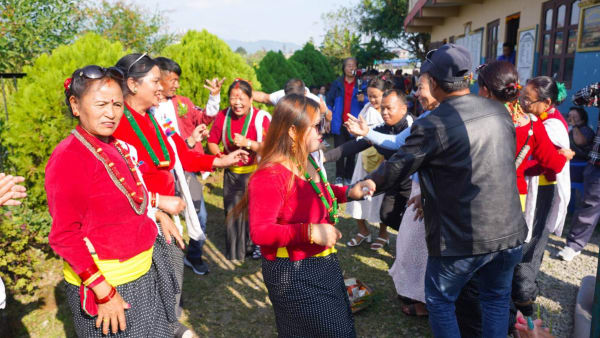
In Pokhara, the festival has a holiday-town character. The whole of Lakeside is strung with lights reflected in the water, restaurants lay out elaborate rangoli on the pavement, and the singing goes on later and louder than anywhere else. It is the easiest place in the country to be swept into a dance.
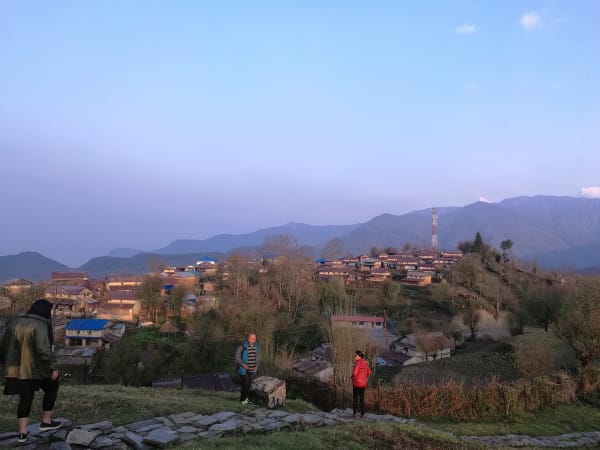
In a hill village the scale is different and the effect, if anything, stronger. There is no electricity competing with the lamps. Each house on the terraced slope has its own small constellation, and from across the valley you can count the households. The bhailo group is the village's own daughters, and they will reach every door before midnight.
A homestay over these dates — Ghalegaun, Sirubari — puts you inside one of those houses for the evening.
Rangoli, and the Markets That Supply the Night
The floor patterns are worth a closer look. A rangoli is made freehand, by trickling coloured powder between finger and thumb: first a chalk outline, usually a lotus or a geometric star, then fields of colour, then petals and grains of rice for texture. It takes an hour or more and will be walked away by morning. Nobody minds. It is made to be used once.

Everything needed for the night is bought in the two or three days before, and the markets are a sight in themselves: mounds of marigolds sold by the garland, sacks of coloured powder in a dozen shades, towers of clay lamps, strings of fairy lights, sugar sweets and dried fruit. In Kathmandu the place to see it is the stretch from Ason to Indra Chowk; go on the afternoon of the 6th or 7th.

Being a Good Guest of the Night
- Do not step on a rangoli or on the painted trail into a house or shop. Walk round.
- Mind the lamps. They are at ankle height, they are open flame, and loose trousers and scarves catch easily. Keep children close.
- Look in, but do not walk in. Doors are open for the goddess. Wait to be invited — which, if you linger and smile, you very likely will be.
- Carry small notes. A bhailo group that sings for you should be given something.
- Expect firecrackers. They are banned and let off regardless, mostly by boys, mostly without warning.
- Walk rather than ride. Traffic in the old city is slow and taxis are few after dark. Wear shoes you can walk in for three hours.
- Ask before photographing a family at its puja. The street is public; the shrine is not.
For camera settings and where to stand, see photographing Tihar. For the festival as a whole, our Tihar travel guide.