
You will hear it before you see it. Somewhere down the street a single voice half-sings, half-shouts a line, and a dozen others answer with two words: deusi re! Another line; the same answer. A drum starts. By the time the group reaches the house you are standing outside, a circle has formed, somebody is dancing in the middle of it, and the family has come to the door with a tray.
Deusi and bhailo are the songs of Tihar, and the nearest thing Nepal has to carol singing — if carol singers also danced, improvised jokes about the householder and blessed the roof to turn to gold. They are the sound of the festival, and of all its customs the one a visitor is most likely to be pulled into.
Deusi and Bhailo: The Difference
| Bhailo | Deusi | |
|---|---|---|
| Sung by, traditionally | Girls and women | Boys and men |
| Night, traditionally | Laxmi Puja | The following night, Govardhan Puja |
| Refrain | Bhailo, or bhailini aayin aangana — the bhailo singers have come to the courtyard | Deusi re |
| In 2026 | Sunday 8 November | Monday 9 and Tuesday 10 November |
That is the tradition. In practice the two have merged. Mixed groups sing both on any night from Laxmi Puja to the eve of Bhai Tika, and most people simply say deusi-bhailo for the whole business. In 2026 expect it on the evenings of 8, 9 and 10 November, and in tourist districts a night or two either side.
How a Visit Works
- The group arrives at the gate or courtyard and announces itself with the opening chant.
- The leader sings the lines. He or she is called the bhatyaune, and carries the whole performance — a long string of verses, part memorised, part made up on the spot. After each line the group shouts the refrain.
- The verses turn to the house. The family is praised, teased, and reminded how far the singers have walked and how slippery the path was.
- The dancing starts. A drum — the two-headed madal — and these days often a guitar or a speaker. Members of the household are pulled in.
- The family brings the offering. On a flat bamboo tray: husked rice, flowers, a lit lamp, and on top of it money, fruit and sel roti.
- The blessing. The leader sings the closing verses, wishing the household wealth, health and long life, in proportion to what was on the tray.
- On to the next door.
A full performance takes ten to twenty minutes. A group may visit dozens of houses in a night and keep going until the small hours, though in the cities the police now usually ask them to finish by about ten.
What the Songs Say
The verses vary by region and by leader, but a few lines turn up everywhere, and knowing them lets you follow what is going on.
| The line, roughly | What it means |
|---|---|
| Hami tyasai aayenau, Bali Rajale pathayeko | We did not come of our own accord — King Bali sent us |
| Rato mato, chiplo bato | Red mud, slippery path — the trouble we had getting here |
| Yo gharko chhano sunko hos | May the roof of this house be gold |
| Barsa dinko chaad ho | It is a festival that comes once a year |
The King Bali of the first line is the heart of it. Bali was a demon king famous for his generosity, who never refused a request. The god Vishnu, in the form of a dwarf, asked him for as much land as he could cover in three steps, then grew to cosmic size, covered earth and heaven in two, and for the third pushed Bali down to the underworld. In return for his honesty Bali was allowed to visit his people once a year.
The singers are his messengers. That is why they say they did not come by themselves, and why refusing them is bad form: you are being asked for a gift in the name of the most generous king who ever lived.
What to Give
Giving is the point, and the amounts are modest.
| Situation | A reasonable gift |
|---|---|
| A group of children sings at your café table | 50 – 100 rupees |
| A group performs for a few minutes at your restaurant or hotel | 200 – 500 rupees from the table |
| A full programme with dancing at your lodge or homestay | 500 – 1,000 rupees, or what your guide suggests |
| You are a guest in a house when a group comes | Nothing — the household gives. Add a note to their tray if you wish |
Hand the money to the leader or put it on the tray, with both hands or the right hand. You will be blessed, sometimes at comic length. If you have nothing on you, a smile and a namaste is acceptable; an irritated wave is not.
Many groups today are collecting for something: a school, a youth club, a village road, a temple repair, a neighbour's medical bill. Organised troupes carry a banner or a receipt book saying so. The custom has become one of the main ways Nepali communities raise money for themselves, at home and in the diaspora.
Where to Hear It
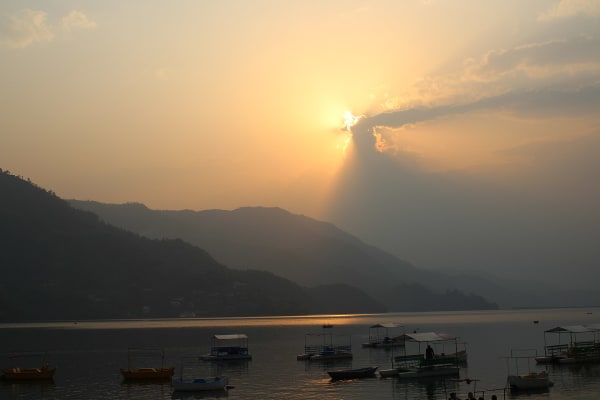
- Lakeside, Pokhara. The loudest and most sociable in the country. Groups from the surrounding Gurung and Magar villages come down in traditional dress, and every restaurant terrace becomes a stage.
- Thamel, Kathmandu. Constant from dusk, ranging from three small children with a tin to rehearsed dance troupes.
- Residential Kathmandu and Patan. The real thing, house to house, in neighbourhoods such as Baneshwor or the lanes of old Patan. Go with someone local.
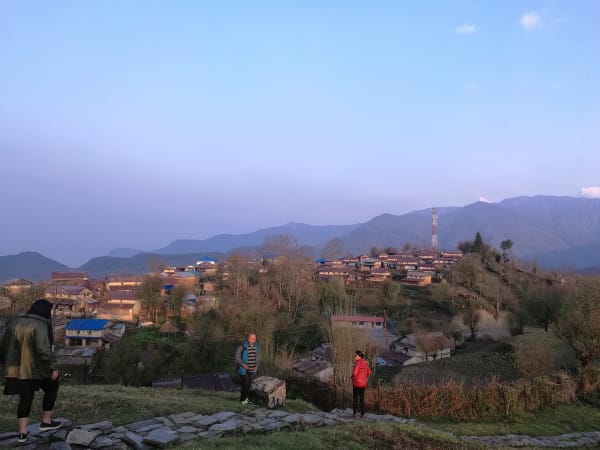
- Hill villages. The whole village turns out, the group visits every house, and the night ends with a shared meal bought with the takings.
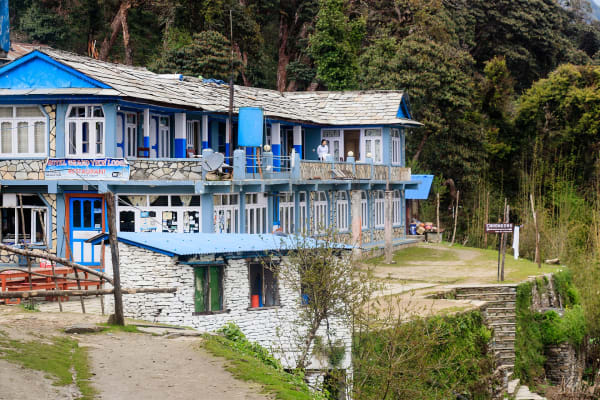
- Trekking lodges in the Annapurna foothills. Ghandruk, Landruk, Ulleri, Dhampus: lodge staff and village youth perform for trekkers, who are expected to dance.
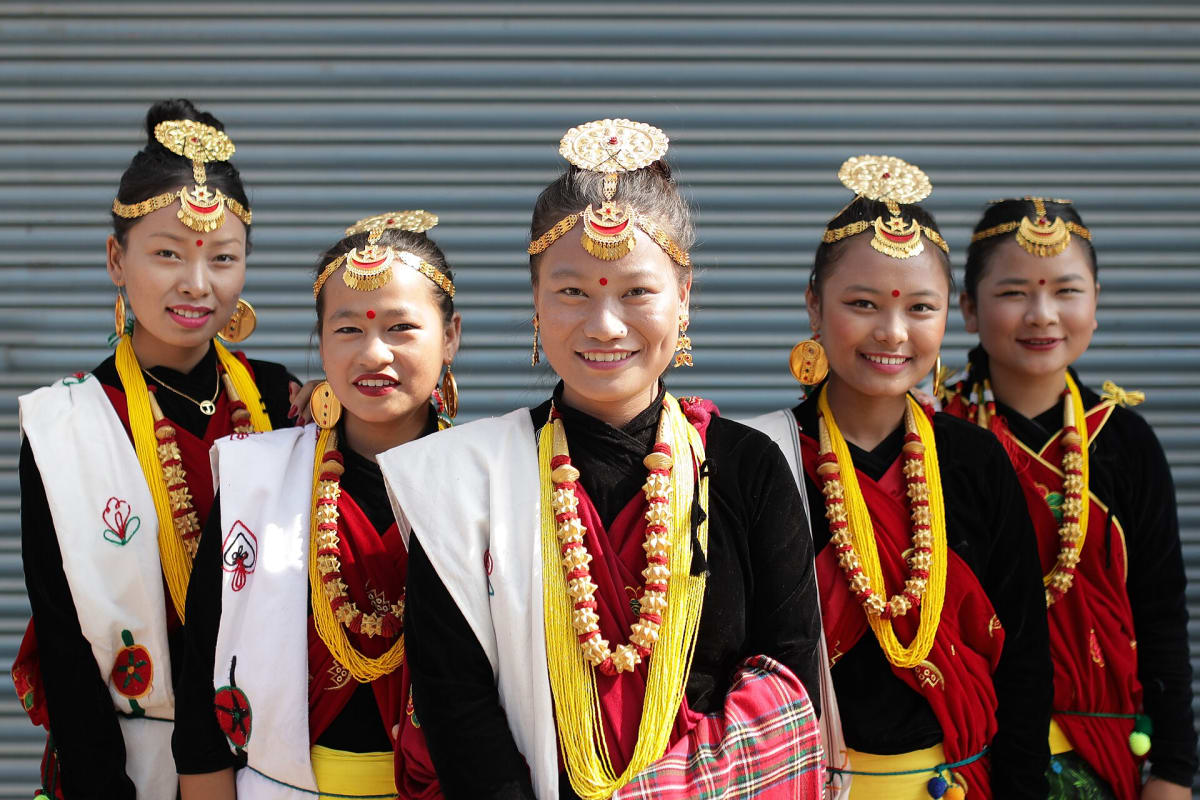
When the Dancing Reaches You
It will. A foreigner at the edge of a deusi circle is a foreigner who is about to be in the middle of it.
- Say yes. Nobody expects skill. Raise your hands, turn your wrists, follow the person opposite. Thirty seconds is enough to delight everyone.
- Learn the refrain. When the leader finishes a line, shout deusi re! with the rest. That is the whole of the chorus part.
- Take shoes off if the dancing is in a courtyard or on a porch where others have.
- Ask before filming faces close up, especially children. Wide shots of the circle are fine.
- Accept the sel roti. You may be handed a share of what the group has collected.
- Know when to stop. If a group is drunk or persistent late at night — it happens — a small note and a firm goodnight closes the matter.
If you are on a trek over these dates, tell your guide you would like to see a village programme rather than avoid one. Routes through the Gurung villages — the Poon Hill trek, the Mohare Danda trek, a stay at Ghalegaun — are the best for it. More in trekking during Tihar.
Old Custom, New Forms
Older Nepalis will tell you it is not what it was — that the leaders no longer know the long verses, that film songs have replaced the madal, that it has turned into a way of collecting money. All partly true, and said about most living traditions by the people who grew up with them.
What strikes a visitor is how alive it is. Schools rehearse for weeks. Offices send teams to each other's buildings. Nepali communities from London to Sydney hold deusi-bhailo nights in hired halls. The form adapts — a rap verse here, a choreographed routine there — and the structure underneath is unchanged: a line, a shouted answer, a gift, a blessing.
For how the singing fits into the rest of the festival, see our Tihar travel guide and the night it begins, Laxmi Puja.