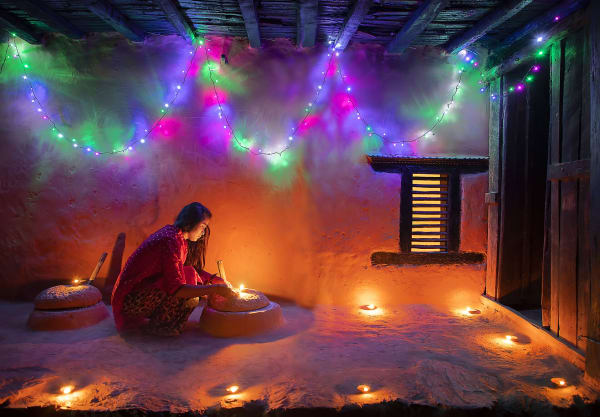

Dashain is a festival of blood and red powder under a midday sun. Tihar is its opposite in every way a camera cares about: it happens at dusk and after dark, its colours are orange, magenta and gold, and its subjects are a flame the size of a fingertip and the face of the person bending over it.
That makes it rewarding and technically awkward. The dynamic range is brutal, the best pictures are at ground level, and the moments you want are private ones that happen in doorways. None of it needs expensive equipment. It needs knowing what is coming, getting there before it starts, and asking nicely.
A Shot List for 2026
| When | Subject | Where and how |
|---|---|---|
| Thu 5 – Sat 7 November, 3 – 6 pm | The markets: heaps of marigolds, garland makers, cones of coloured powder, stacks of clay lamps | Ason to Indra Chowk in Kathmandu. A short lens, a high viewpoint from a first-floor window or temple step. |
| Sat 7 November, dawn | Crows on rooftops | Any roof terrace. More mood than event. |
| Sun 8 November, 7 – 11 am | Garlanded dogs: portraits, dogs asleep on temple steps, the moment the tika goes on | Thamel, the old city, Durbar Square, Boudhanath. Get low. |
| Sun 8 November, 2 – 5 pm | Rangoli being made; hands trickling powder | Shop fronts and house gates. Overhead, or from the side at ground level. |
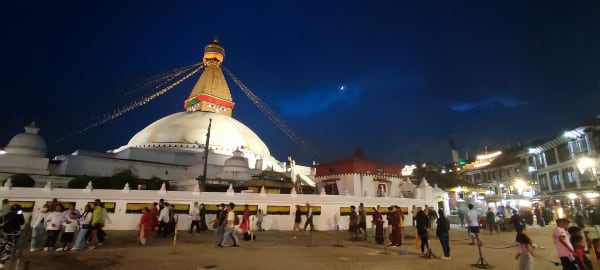
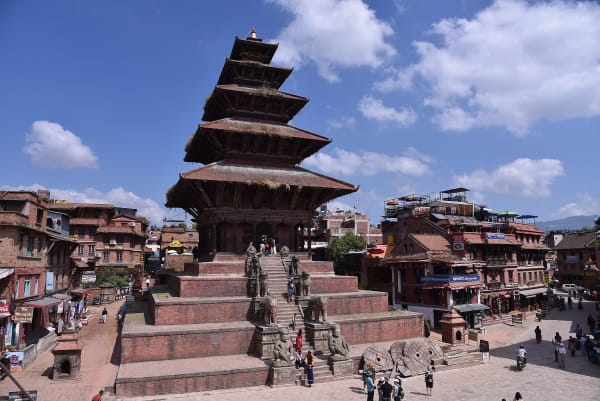
| Sun 8 November, 5 – 6 pm | Blue hour: the first lamps against a sky that still has colour | Bhaktapur's Taumadhi Square, Patan Durbar Square, or a rooftop. The best half hour of the festival. |
| Sun 8 November, 6 – 9 pm | Faces lit by flame; lamp-lined lanes; bhailo groups | Old-city lanes and courtyards. |
| Tue 10 November, 11 am – 3 pm | New Year processions: drummers, women in black and red saris, masked dancers | Basantapur, Patan, Bhaktapur. Hard light; work in open shade or shoot detail. |
| Wed 11 November, late morning | The seven-colour tika; the queue on the causeway | A family home, by invitation; Rani Pokhari from outside the railings. |
| Wed 11 November, 4 – 5.30 pm | Streets full of striped foreheads and purple garlands in low light | Anywhere people are walking. |
What each of these days is, and the exact timings, is in the Tihar dates guide.
Shooting by Lamplight
An oil lamp gives very little light and a great deal of contrast. The camera's meter sees a dark frame, brightens it, and turns the flame into a white blob and the shadows into grey mush. Take control of the exposure and the picture appears.
- Expose for the flame, not the scene. Dial in one to two stops of negative exposure compensation, or meter off the lit side of a face. Let the background go black. That is what the night looked like.
- Shoot in the blue hour. For twenty to thirty minutes after sunset the sky is bright enough to balance the lamps, and buildings keep their shape. After that you are photographing flames in a void — which has its own appeal, but is a different picture.
- Use a fast lens if you have one. A 35 mm or 50 mm at f/1.8 is the ideal Tihar lens. Wide open, a row of lamps behind your subject turns to soft discs of gold.
- Raise the ISO without guilt. A sharp, grainy picture beats a clean, blurred one. ISO 3200 to 6400 is normal for hand-held work by lamplight.
- Keep the shutter at 1/60 or faster for people. Flames flicker and hands move.
- Set white balance by hand — daylight, or around 3,500 K. Auto white balance will try to neutralise the warmth that is the whole point.
- Shoot RAW if your camera allows. You will want the latitude in the shadows.
- Turn the flash off. It destroys the light you came for and is rude at a puja. No exceptions.

Phone Cameras
A recent phone is very capable at Tihar, sometimes more than a camera in inexperienced hands, because its night processing is built for exactly this. A few adjustments make the difference.
- Tap on the flame, then drag the exposure down. On most phones a sun icon or slider appears beside the focus box. Pull it until the flame has shape.
- Use night mode for scenes, not for people. It needs one to three seconds; anyone moving will smear. For a still lane of lamps, it is superb. Brace against a wall.
- Switch night mode off for dancers and dogs and accept a darker frame.
- Wipe the lens. A smeared lens turns every lamp into a streak. In a week of marigolds and oily fingers, it will be smeared.
- Get the phone on the ground. Turn it upside down so the lens is at floor level beside a rangoli. This is the easiest good picture of the festival.
- Avoid the digital zoom. Walk closer.
Dogs, Rangoli and Garlands
Dogs
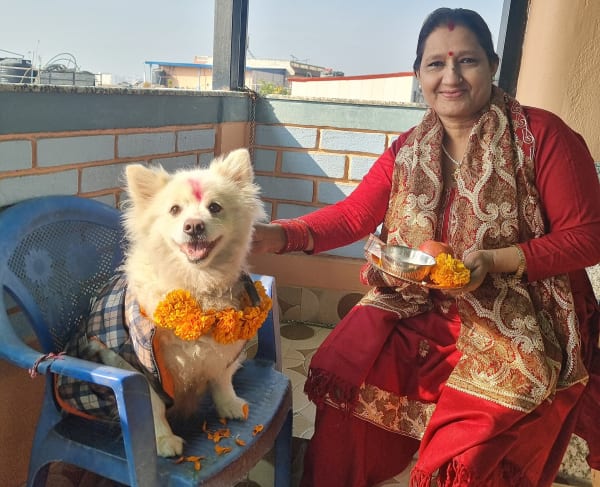
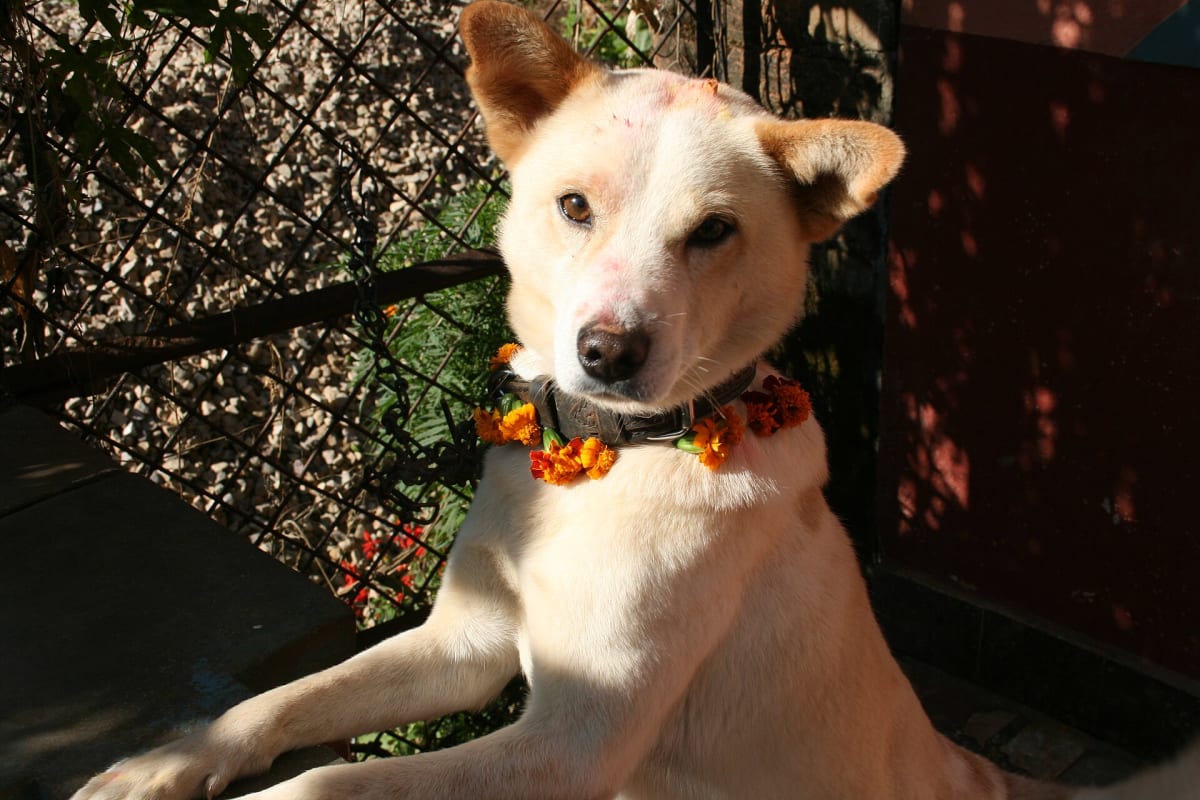
Kukur Tihar morning is the one part of the festival in good light. Kneel or lie down so that the lens is at the dog's eye level; shot from standing height, a dog is a back and a tail. Focus on the near eye. Soft open shade under a temple roof is kinder than direct sun, which blows out orange marigolds very easily — check your highlights. And stay at a respectful distance from dogs you do not know; a longer lens is safer than a closer face. More in Kukur Tihar.
Rangoli
Two angles work. Directly overhead, with the pattern filling the frame — hold the camera flat and watch for your own shadow and feet. Or almost flat to the ground from one side, with the lamp in the centre sharp and the colours falling away. The making is better than the finished thing: ask if you may photograph the hands.
Garlands and markets
Marigold orange is the colour most cameras get wrong, pushing it to a flat, glowing yellow. Underexpose by a third to two thirds of a stop to hold the detail in the petals. In the markets, look for repetition — a wall of hanging garlands, a row of identical lamp stacks — and wait for one person to walk into it.
People, Permission and Being Invited In
The street is public and people at Tihar are, on the whole, delighted to be photographed. The doorway is the boundary. A family at its Laxmi Puja is at prayer in its own house, with the door open for a goddess, not for you.
- Ask before you raise the camera at anything that is clearly a ritual. A gesture and a smile is enough. Photo khichna hunchha? — may I take a photo? — is better.
- Accept no gracefully and stay to watch anyway.
- Never step on a rangoli or the painted trail to get an angle. It is the one thing that will lose you all goodwill instantly.
- Shoes off if you are invited beyond the threshold.
- Show people the picture. It is the simplest thank-you there is, and it usually leads to three more.
- Offer to send it, take a number, and actually do it.
- Children: ask a parent, and do not post identifiable close-ups of other people's children.
- Rani Pokhari on Bhai Tika is a place of loss for many of those queueing. Photograph the scene, not the faces.
- Give to the singers you photograph. A deusi-bhailo group that has performed for your camera has earned its 100 rupees.
The surest way to photograph the inside of the festival is to be a guest at it. A homestay over the dates, or a guide who takes you to his own family's house, gets you pictures no amount of walking the streets will. Our Kathmandu Photography Tour and Nepal Photography Tour are run by guides who shoot themselves, and in festival week are planned around the evenings.
Kit, and Looking After It
| Bring | Why |
|---|---|
| One fast prime (35 or 50 mm, f/1.8 or faster) | The whole night can be shot on it |
| A standard zoom | For the markets and the processions by day |
| A small travel tripod or bean bag | Blue-hour scenes of lit squares; long exposures of lamp-lined lanes |
| Spare batteries | Nights are long, and cold drains them |
| A lens cloth, several | Powder, oil and marigold pollen get on everything |
| A small torch | For finding your settings, and your way home |
| A plain shoulder bag | Less conspicuous than a camera backpack in a crowd |
- Coloured powder is abrasive. Do not change lenses in the markets, and blow dust off before wiping.
- Watch the flames. Camera straps, scarves and loose sleeves dangle into ground-level lamps when you crouch.
- Crowds on the 8th are dense. Keep the strap across your body and the bag in front.
- Firecrackers go off without warning and close by. They are also, at a distance, a picture.
- Drones need a permit in Nepal and are not allowed over the heritage squares. Leave it in the hotel.
Beyond the Valley
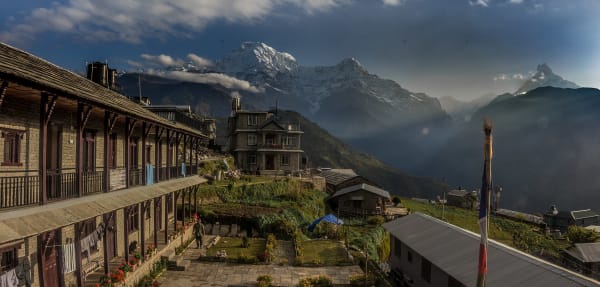
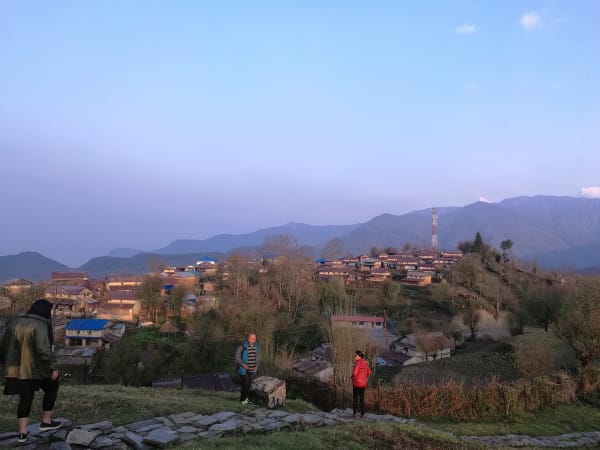
If you have the time, pair the city with something different. A Gurung hill village on Laxmi Puja night has no electric light to compete with the lamps: a long exposure from the opposite slope shows every house as a cluster of points under the snow peaks. Pokhara has reflections — Lakeside's lights in still water at blue hour. And two days after Bhai Tika, Janakpur holds Chhath, with thousands of people standing in ponds at sunset and sunrise among lamps and sugarcane; it is arguably the more spectacular festival to photograph. See our Chhath guide.
For the wider festival, start with the Tihar travel guide; for the night itself, Laxmi Puja; and for the same advice applied to the festival three weeks earlier, photographing Dashain.