
Most Hindu worship is directed at an image. Chhath is directed at the thing itself. On a November evening, families carry baskets of fruit down to the nearest water, the women who have been fasting wade in to their waists, and everyone turns west and waits. When the sun touches the horizon they lift their offerings to it. Twelve hours later they are back in the same water in the dark, facing east, waiting for it to return.
It is the great festival of the Mithila region and of the Terai, the lowland strip along Nepal's southern border, and it is unlike anything in the hills. There is no priest, no temple and no idol — only the sun, the water and a discipline of fasting that is among the strictest in the Hindu year. In 2026 Chhath runs from 13 to 16 November, beginning two days after the end of Tihar.
Chhath 2026: The Four Days
| Date | Day | What happens |
|---|---|---|
| Friday 13 November | Nahay Khay — bathe and eat | The devotee bathes in a river or pond, cleans the house and eats one simple meal: rice, lentils and bottle gourd, cooked without onion or garlic. |
| Saturday 14 November | Kharna | A day-long fast without water, broken after sunset with rice pudding made with jaggery, and flatbread. After this meal the main fast begins: about thirty-six hours with no food or water. |
| Sunday 15 November | Sandhya Arghya — the evening offering | The main day. In the late afternoon families go in procession to the water. At sunset the fasting devotees stand in it and offer the baskets to the setting sun. |
| Monday 16 November | Usha Arghya — the dawn offering | Before first light everyone returns. The offering is made to the rising sun, the fast is broken at the water's edge, and the blessed food is shared out. |
The name comes from the word for six: the main offering falls on the sixth day after the new moon of Tihar. It is one of the few festivals in the calendar where the setting sun is honoured as well as the rising one — an acknowledgement, people will tell you, that what goes down comes back.
What You See at the Water
In the days before, each family claims a spot on the bank and prepares it: the ground is plastered smooth with mud, a small platform is built, and the place is marked out with banana trunks and strings of lights. By the afternoon of the main day the whole shore of a pond is a continuous row of these, each with its family behind it.
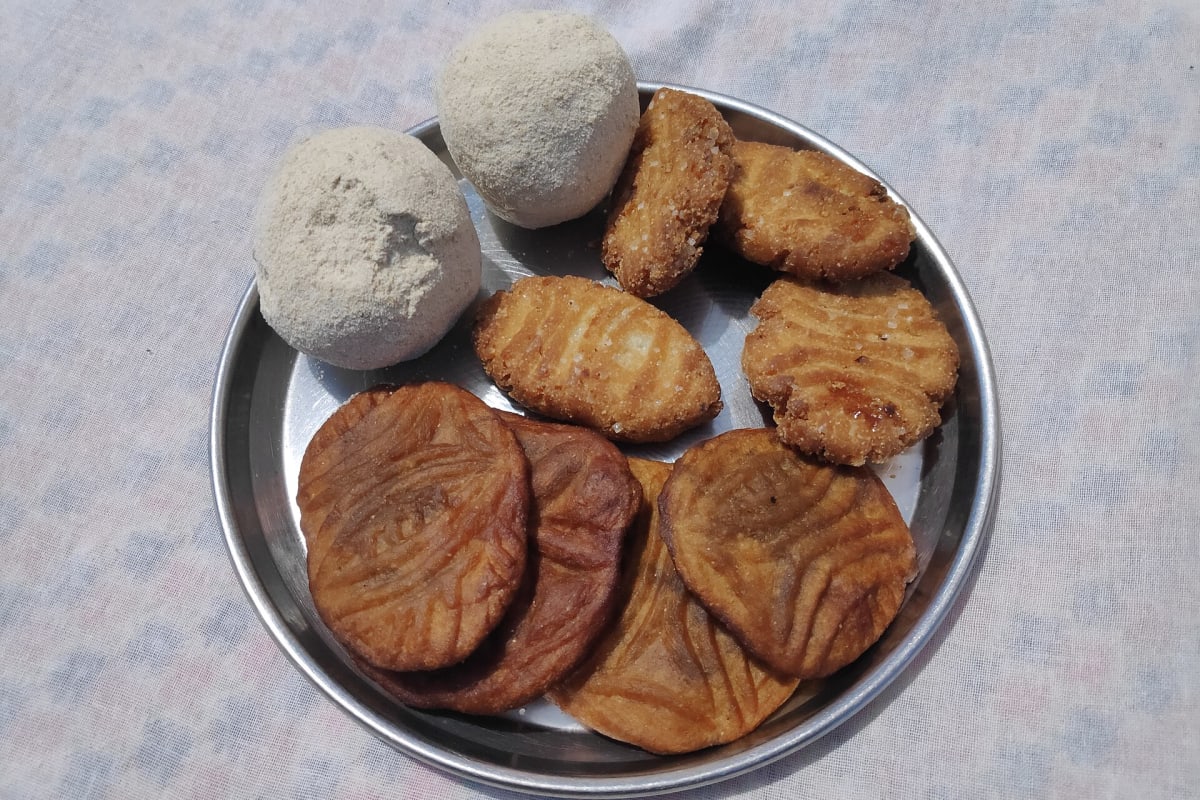
- The baskets. Offerings are carried in flat bamboo winnowing trays and deep bamboo baskets, on the head, by a male relative who walks barefoot. They hold whole hands of bananas, coconuts, pomelos, sugarcane, radishes, ginger and turmeric still on the plant, and the stamped biscuits called thekua.
- The sugarcane. Tall stalks with their leaves are tied at the top to make a canopy over the offerings, with clay lamps and small clay elephants set underneath.
- The devotees. Mostly women, in new saris of yellow, red and orange, with a line of vermilion drawn from the tip of the nose to the parting of the hair. They stand in the water holding a basket, sometimes for an hour.
- The offering. As the sun reaches the horizon, milk and water are poured over the basket towards it. Family members take turns to pour.
- The singing. Slow, plaintive folk songs in Maithili and Bhojpuri, sung by the women, about the sun and the goddess Chhathi Maiya. You will hear them from loudspeakers for a week beforehand.
- The night. Lamps are set afloat; many families stay at the bank until dawn.
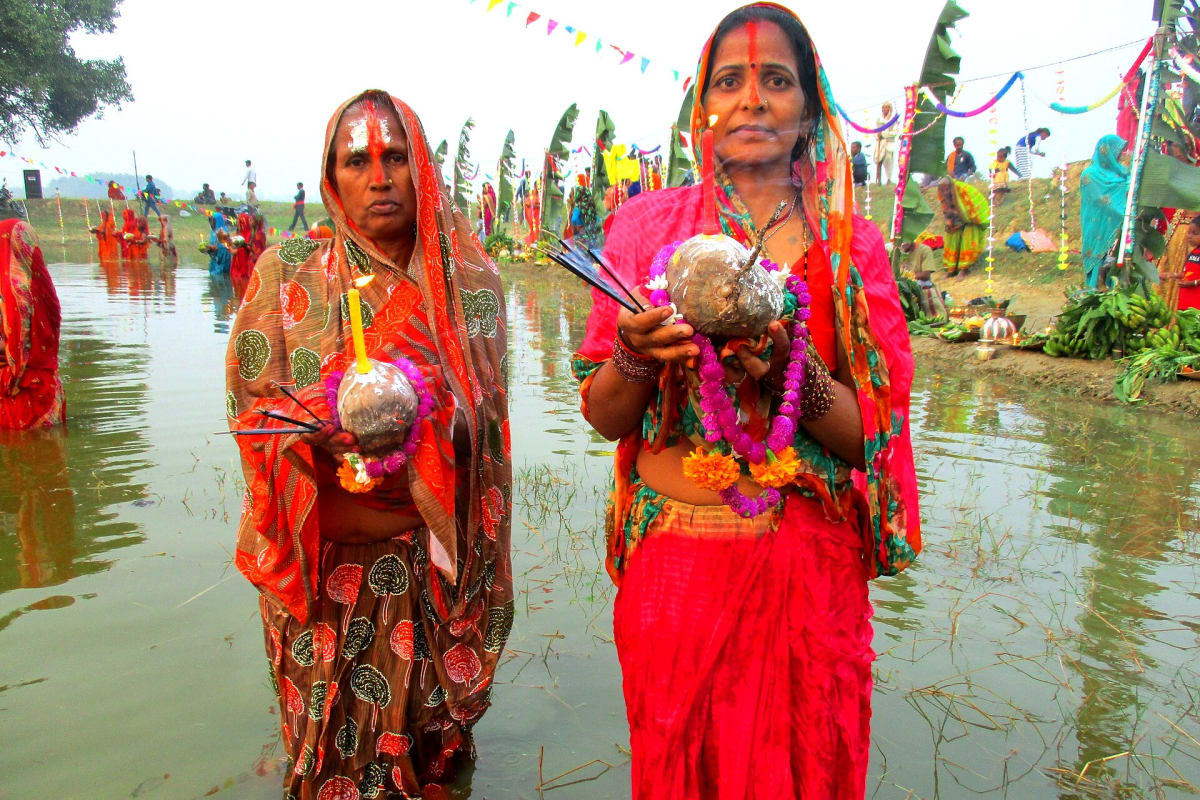
The dawn offering is the more moving of the two. It is cold, the mist is on the water, the devotees have not eaten or drunk for a day and a half, and the first edge of the sun produces a sound from ten thousand people that you do not forget.
Janakpur: The Place to See It
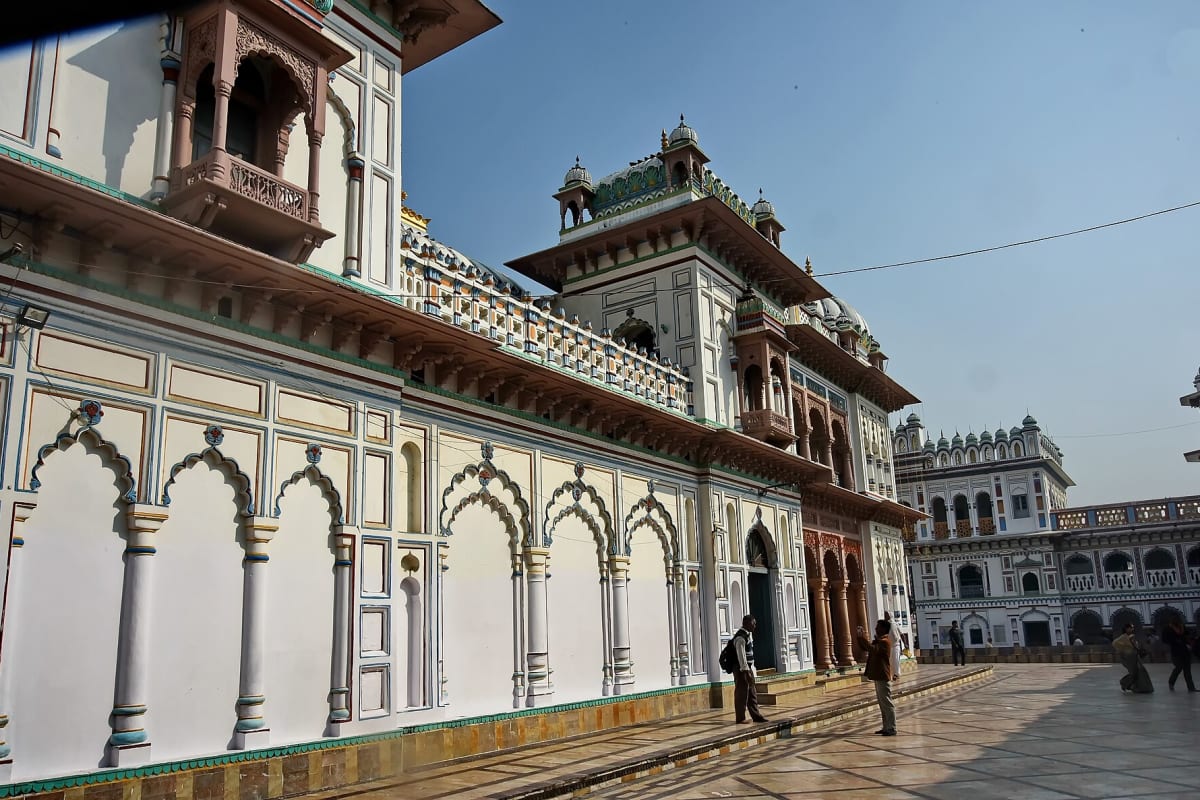
Janakpur, in the eastern Terai near the Indian border, is the old capital of Mithila and, in the Ramayana, the birthplace of Sita. It is a city of ponds — dozens of them, rectangular, stone-stepped, built over centuries for exactly this kind of ritual bathing — and at Chhath every one is ringed with lamps.
| Where | What it is like |
|---|---|
| Ganga Sagar and Dhanush Sagar | The two large sacred ponds near the centre. The biggest crowds and the most elaborate decoration. |
| The smaller ponds | Quieter, more local, and easier to move around. Ask at your hotel which is closest. |
| Janaki Mandir | The vast white marble temple to Sita, built in 1910 in a style more Rajasthani palace than Nepali shrine. Lit at night; the centre of the old town. |
| The lanes around the temple | Sweet shops, bangle sellers, and stalls selling everything needed for the baskets. |
Janakpur is also the home of Mithila painting, the bold, flat, intricately patterned art that the women of the region paint on the mud walls of their houses and now on paper. Workshops on the edge of town can be visited, and at festival time freshly painted walls are everywhere in the surrounding villages.
Getting there
- By air: daily flights from Kathmandu, about twenty-five minutes. Book early for 13 – 16 November.
- By road: six to eight hours from Kathmandu on the highway through Sindhuli, a dramatic mountain road that drops to the plains.
- Where to stay: a small number of mid-range hotels near the centre. They fill for the festival; reserve well ahead.
- How long: two nights. Arrive on the 14th or the morning of the 15th, see both offerings, leave on the 16th.
Chhath in Kathmandu
You do not have to go to the plains. Hundreds of thousands of people from the Terai live in the capital, and over the past two decades Chhath has become one of Kathmandu's own public festivals, kept by many hill families too.
- Kamal Pokhari, a pond in the centre of the city, is decorated and lit and draws large crowds.
- The Bagmati ghats at Gaurighat and Guheshwori, upstream of Pashupatinath, are the main riverside site.
- Nag Pokhari and other neighbourhood ponds hold smaller gatherings.
- Temporary pools. Where there is no water, communities build tanks on open ground for the purpose.
The evening offering on Sunday 15 November is the easier one to attend: go at about four, and expect road closures near the sites. It is a real Chhath with fewer of the things that make Janakpur's unforgettable — less water, more concrete — and it costs you nothing but an afternoon. A Kathmandu day tour can finish at one of the ghats.
How to Behave
Chhath is governed by ideas of purity that are stricter than at most festivals. Visitors are welcome and will be treated kindly; these are the things that matter.
- Do not touch the offerings, the baskets or the prepared ground. Everything has been made by people who bathed first and cooked in a cleaned kitchen, and a stranger's hand undoes it.
- Do not step over anything laid on the ground, and take your shoes off where others have.
- Stay out of the water unless you are invited in.
- Stand behind the families, not between them and the sun.
- Ask before photographing a devotee close up. Wide views are fine. No flash at dawn.
- Dress modestly, with shoulders and knees covered.
- Accept the prasad if it is offered after the dawn ritual — a thekua, a piece of fruit — with your right hand, and eat it. It is an honour to be given it.
- Do not offer food or water to someone who is fasting.
Fitting It Into a Trip
Chhath is the natural last chapter of an autumn in Nepal, and in 2026 it comes at a convenient moment: the peak of the trekking season is passing, flights are easier to get, and the Terai is at its most pleasant — warm days of 25 to 28°C, cool nights, clear air.
| If you are… | Consider |
|---|---|
| Finishing a trek around 12 – 13 November | Fly to Janakpur on the 14th, back to Kathmandu on the 16th |
| In Kathmandu for Tihar (7 – 11 November) | Stay four more days; see Chhath at the Bagmati or fly south |
| Heading for the jungle | Combine Janakpur with the Koshi Tappu Wildlife Reserve, three hours east, where the winter birds are arriving |
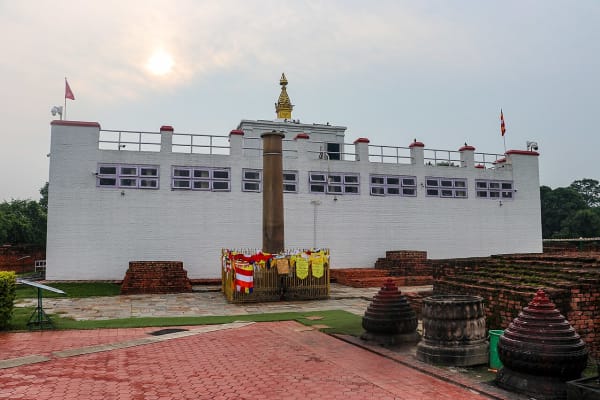
| On a cultural tour | Add Janakpur to Lumbini and Chitwan for a journey along the plains |
We arrange Janakpur as a two- or three-day extension with flights, a local guide who speaks Maithili, and a hotel within walking distance of the ponds. How Chhath sits alongside the season's other festivals is in what's on in Nepal this autumn; the one before it is in our Tihar guide.