
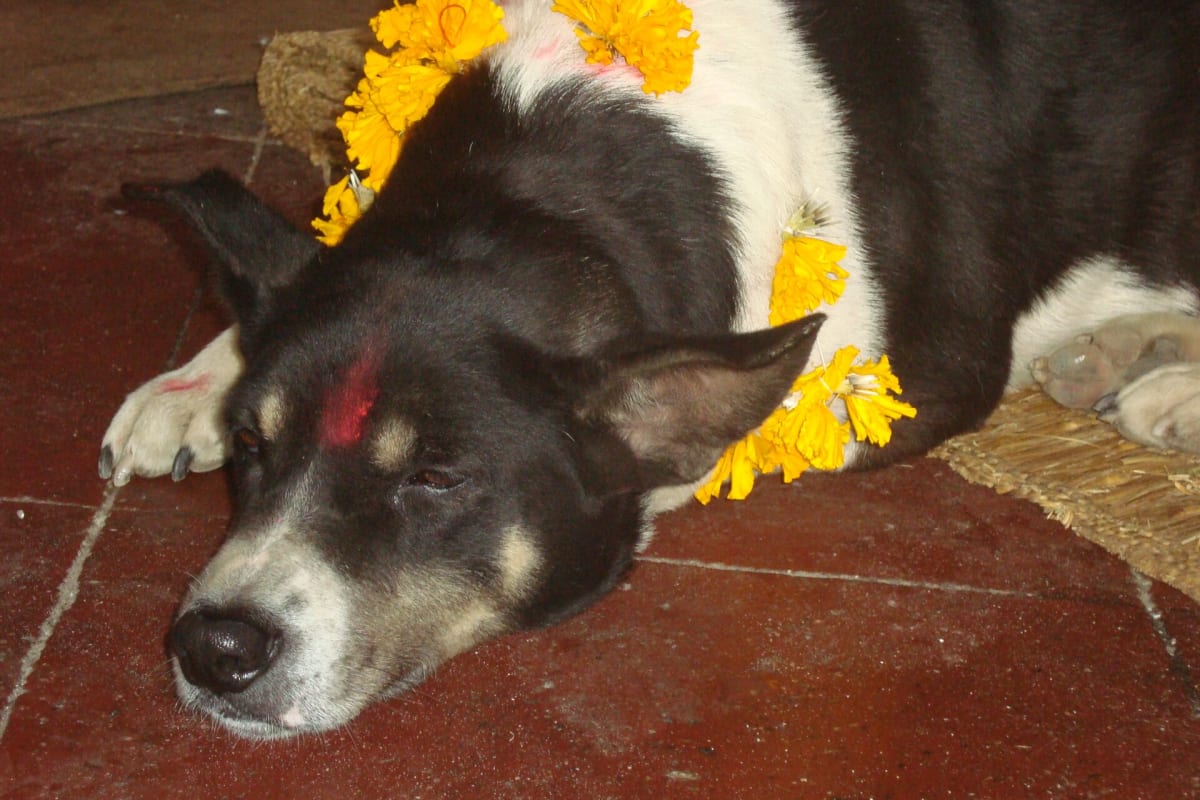
There is a morning each autumn when the street dogs of Kathmandu are the best-dressed creatures in the city. They pad through Thamel with marigolds round their necks and a smear of red powder between their eyes, looking faintly embarrassed and extremely well fed. Behind house gates, family pets sit through a short ceremony with more or less patience and are rewarded with meat, eggs and milk.
This is Kukur Tihar, the day of the dog, and it is the part of Nepal's festival of lights that the rest of the world has taken to its heart. In 2026 it falls on Sunday 8 November.
What Happens
The ritual is simple and takes a few minutes. The dog is given three things.
- A garland — a mala of orange marigolds, hung round the neck as it would be for an honoured guest.
- A tika — a mark of red powder, sometimes mixed with rice and yoghurt, pressed onto the forehead as a blessing.
- Food — the best the household has. Meat, boiled eggs, milk, rice, and the ring-shaped fried bread called sel roti.
A lamp and incense may be offered, and a few words said. Then the dog is free to go, usually at speed. The same is done for dogs that belong to nobody: people carry plates of food and bags of garlands out to the strays on their street, who on this one day are approached as guests rather than chased off.
Among the Newars of the Kathmandu valley the day is called Khicha Puja, and the form is the same.
Why Dogs Are Honoured
Tihar's five days all turn on Yama, the god of death, and the dog is his gatekeeper. In Hindu tradition two dogs, each with four eyes, guard the road to Yama's realm and watch over those who travel it. To honour a dog is to make a friend of the animal you will one day have to pass.
There is a second story, from the end of the Mahabharata. The righteous king Yudhishthira climbs towards heaven with his brothers, his wife and a stray dog that has followed them. One by one the others fall. At the gate, the god Indra tells him he may enter but the dog may not. Yudhishthira refuses to abandon a creature that has been loyal to him — and the dog is revealed to be the god Dharma, testing him. He passes.
And there is Bhairav, the fierce form of Shiva whose masks and shrines are everywhere in the Kathmandu valley. His mount is a dog. In a city full of Bhairav temples, dogs are never entirely without standing.
Beneath the mythology is something plainer. Dogs guard the house and the herd, and for one day a year the debt is acknowledged.
What You Will See
- Family pets being garlanded at home, from about seven in the morning. If you are staying in a guesthouse or homestay with a dog, ask to watch.
- Street dogs fed and garlanded through the morning. By ten or eleven most dogs in the tourist districts are wearing marigolds, some of them several garlands deep.
- Working dogs. The police and army canine units hold formal ceremonies for their sniffer and tracker dogs, with medals as well as garlands. They are widely covered in the Nepali press.
- Shelters and rescue groups. Several animal welfare organisations in the valley hold open celebrations for the dogs in their care. Arrangements change each year — check their pages a few days before.
- Marigold sellers doing the fastest trade of the week from first light.
Where to Be on the Morning of 8 November
| Place | What to expect |
|---|---|
| Thamel and the old city, Kathmandu | Garlanded street dogs outside every shop; the lanes around Ason and Indra Chowk are full of flower stalls |
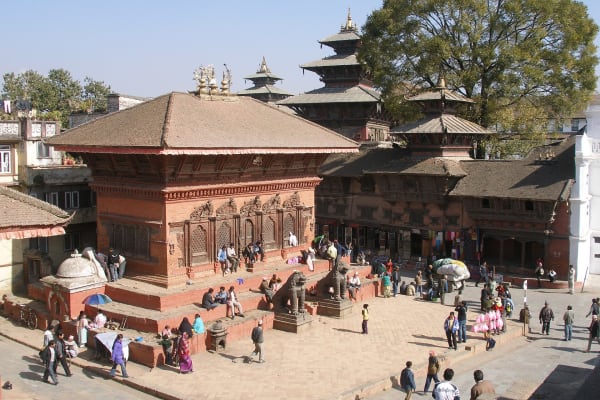
| Kathmandu Durbar Square | Dogs asleep on temple plinths in their garlands — the photograph everyone wants |
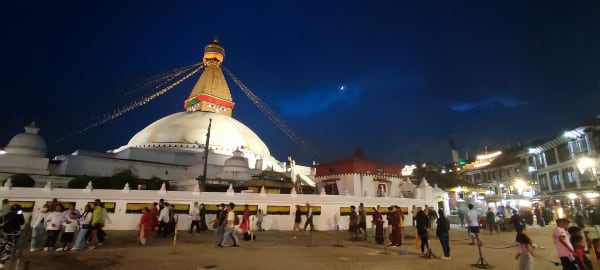
| Boudhanath | The stupa's resident dogs are well looked after all year and thoroughly decorated today |
| Patan and Bhaktapur | The Newar version, in brick courtyards; quieter and more domestic |
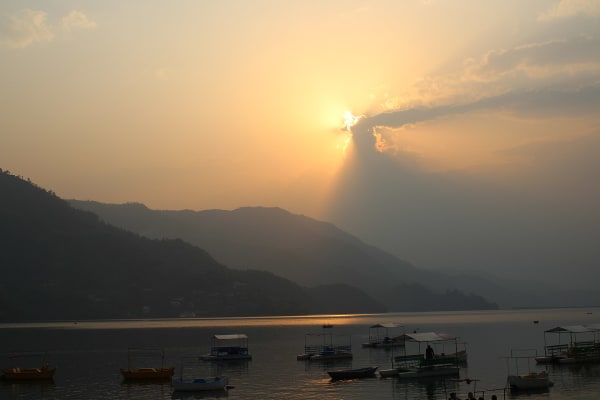
| Lakeside, Pokhara | Café dogs and lakeshore strays garlanded by owners and travellers together |
| Any village | Farm dogs and herding dogs honoured in the yard alongside the household's animals |
Go early. The ceremonies are over by mid-morning and the afternoon belongs to preparing for Laxmi Puja, which in 2026 falls the same evening. A morning walk through the old city followed by the lights after dark makes Sunday 8 November the single best day of the festival; see Laxmi Puja: the night of lights.
On a trek, you will see less of it in the Buddhist high country. But most lodge kitchens are staffed by people from the middle hills, and the lodge dog generally gets its garland regardless. Trekking dogs — the ones that attach themselves to a group and walk with it for days — tend to do especially well.
Taking Part — Safely
Visitors are welcome to join in, and it is one of the pleasures of being in Nepal that day. It needs one piece of plain information: rabies is present in Nepal, and street dogs are its main carrier. The risk on any one encounter is small. The disease, once symptoms appear, is always fatal. So take part with some care.
- Garland dogs that have an owner present, and ask first. Hotel dogs, café dogs and your guide's family dog are ideal.
- Let locals handle the street dogs. They know which ones are friendly. Watch, photograph, and hand over a garland for someone else to place.
- Do not put your face near a dog you do not know, however placid it looks, and do not reach over its head — approach from the side.
- Leave a sleeping or eating dog alone.
- Feed sensibly. Plain meat, eggs and rice are fine. Chocolate, grapes, raisins and cooked bones are not.
- If you are bitten or scratched, or licked on broken skin: wash the wound with soap and running water for fifteen minutes, then go to a travel clinic in Kathmandu or Pokhara the same day for post-exposure treatment. Do not wait to see whether the dog seems ill.
Whether to have the rabies vaccine before travelling is a question for your doctor; our guide to vaccinations for Nepal sets out the considerations.
The Other 364 Days
It would be dishonest to leave the picture there. The Kathmandu valley has tens of thousands of free-roaming dogs. Many are community dogs, fed and watched over by the street they live on. Others have a hard time of it, and the garland does not change that.
What has changed it, slowly, is the work of local organisations that vaccinate, sterilise and treat street dogs year-round. If the festival moves you, the useful response is a donation to one of them rather than a bag of treats: a vaccination protects a dog, and the people around it, for far longer than a meal. Your hotel or guide can point you to a group working in the area you are staying.
Travellers who fall for a particular dog on the trail sometimes ask about taking it home. It can be done, through a rescue organisation, with months of paperwork and quarantine requirements that depend on your country. It is not a decision to make on the last day of a trek.
The Rest of the Festival
Kukur Tihar is the second of five days. The crow is honoured the day before; the cow and the ox on the days after; and the festival ends with Bhai Tika, when sisters bless their brothers. The full sequence for 2026 is in the Tihar dates guide, and how to plan a trip around it is in our Tihar travel guide.
A Kathmandu day tour on the morning of the 8th, adjusted to walk through the old city rather than drive between sites, is the simplest way to see it with someone who can explain what is going on — and who knows the dogs.