
Kirtipur sits on a long ridge at the south-western corner of the Kathmandu Valley, about six kilometres from the centre of the city. Below it spread the campus of Tribhuvan University, Nepal's oldest university, and the cricket ground where the Nepal Premier League is being played this month. Thousands of people pass the foot of the hill every match day. Very few of them go up.
They should. The old town on top is a Newar settlement of brick houses, carved windows, temple squares and water tanks, where farming families still dry grain on the paving and the lanes are too narrow for cars. It has a history as dramatic as anywhere in the valley, and none of the crowds of Bhaktapur or Patan. This guide covers what to see, a walking route, the food, and the places nearby that make a full day of it.
Kirtipur at a Glance
| Where | A ridge on the south-western edge of the Kathmandu Valley, above Tribhuvan University |
| From Thamel | 30 to 45 minutes by taxi; local buses run from Ratna Park |
| Time needed | Half a day for the old town; a full day with Chobhar and Taudaha Lake |
| Best time of day | Morning, when the air is clearest and the mountain view from the top is most likely |
| Best season | October to December, for clear skies; spring is good but hazier |
| Who lives there | Mostly Newar families, many of them farmers who still work the fields below the ridge |
| Combine with | Chobhar Gorge, Taudaha Lake, Bungamati and Khokana, Pharping, or an NPL match at the TU ground |
A Short History: The Town That Held Out
In the middle of the 18th century the Kathmandu Valley was divided between three Newar kingdoms, centred on Kathmandu, Patan and Bhaktapur, and Kirtipur was a fortified hill town in the orbit of Patan. To the west, Prithvi Narayan Shah, the king of Gorkha, was working his way towards the valley, and Kirtipur, on its high ridge at the valley's edge, stood in the way.
It did not fall easily. Gorkha attacked in 1757 and was beaten back; Kalu Pande, one of Prithvi Narayan Shah's most trusted commanders, was killed in the fighting. A second attempt in 1764 also failed. The third, in 1767, became a siege that lasted for months before the town surrendered. Accounts from the time say the conqueror punished Kirtipur by having the noses of its men cut off, a story that is still told in the valley. Kathmandu and Patan fell the following year and Bhaktapur in 1769, and the modern state of Nepal grew out of that conquest.
The siege left marks you can still see. The Bagh Bhairab temple in the middle of the old town is hung with swords and shields from the fighting, and the town's sense of itself as the place that held out longest has never quite gone away.
What to See in Kirtipur
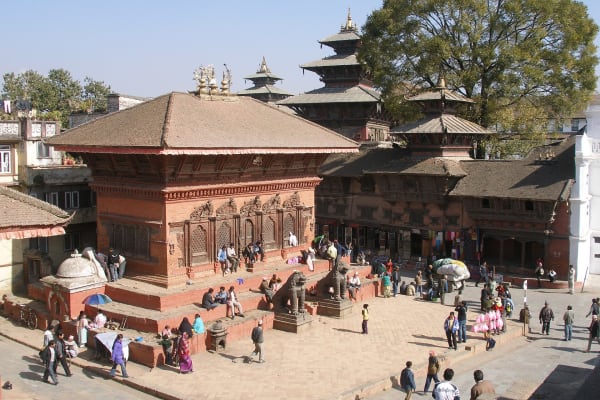
The old town is built along a ridge with two high points. The Chilancho stupa sits on the southern hill, the Uma Maheshwar temple on the higher northern one, and the Bagh Bhairab temple in the saddle between them. Everything worth seeing is within a twenty-minute walk.
Bagh Bhairab Temple
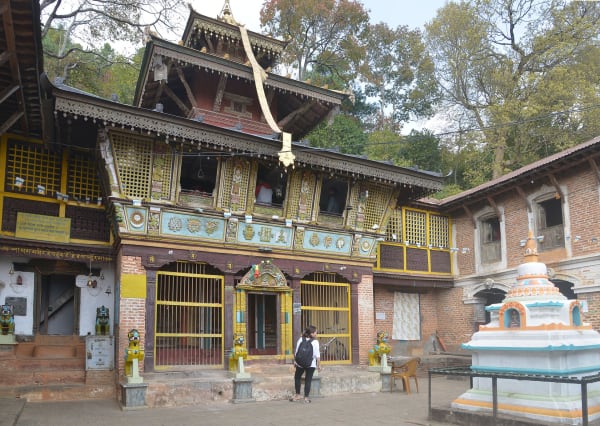
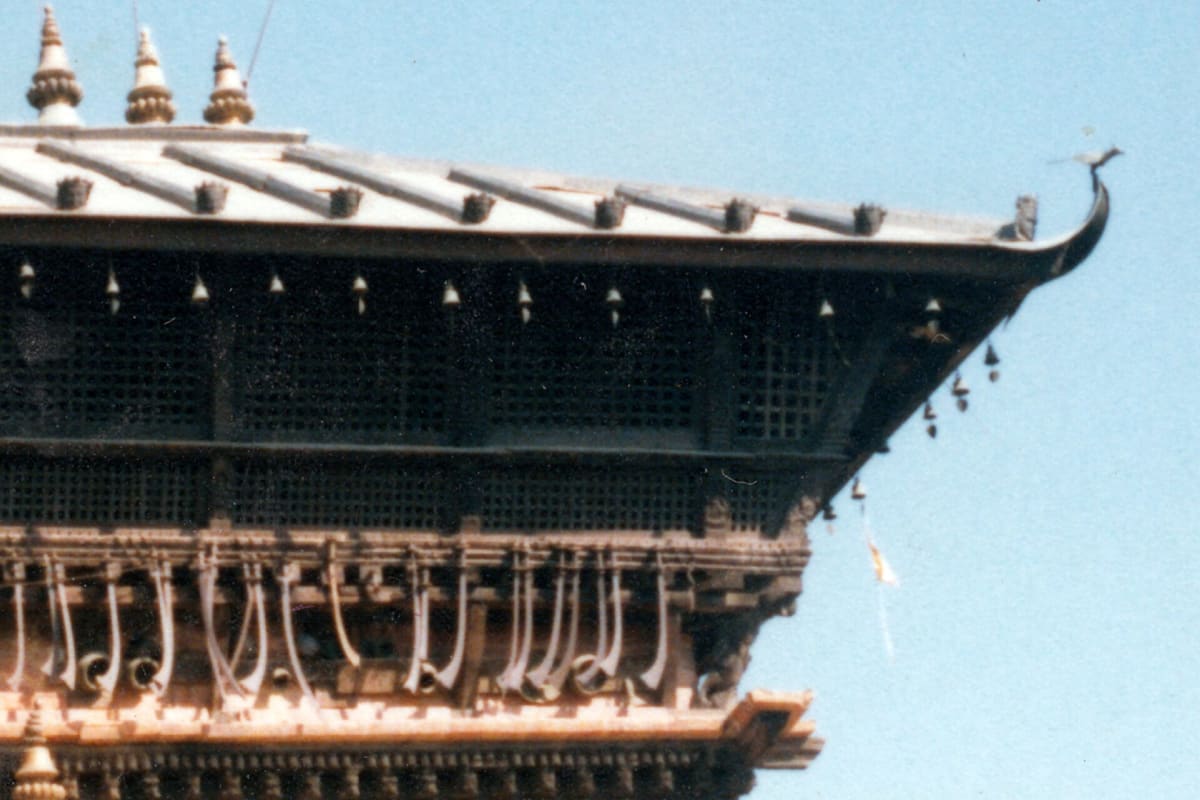
Bhairab is the fierce form of Shiva, and in Kirtipur he takes the form of a tiger: bagh means tiger. His three-roofed temple, probably built in the 16th century and known locally as Ajudeu, is the guardian shrine of the town. Look up at the walls under the eaves, where the swords and shields of 1767 hang, and at the carved roof struts. The temple is in daily use, with offerings and bells, and animal sacrifices on some festival days, so watch from the edges and ask before you photograph worshippers.
Chilancho Stupa
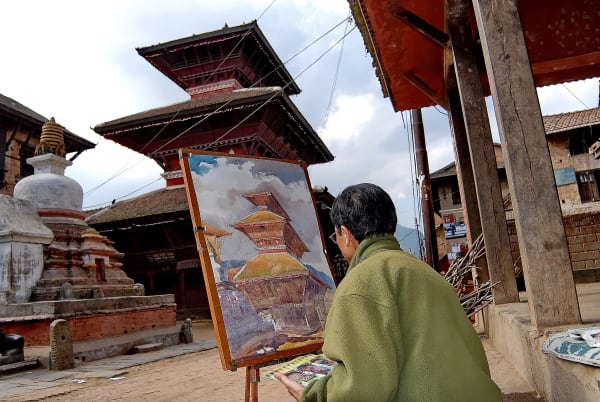
On the southern hill stands the Chilancho stupa, a white dome surrounded by four smaller stupas and a ring of Buddhist courtyards. An inscription found here is dated to Nepal Sambat 635, the year 1515, which makes it one of the older Buddhist monuments in the valley. It is a quiet place in the morning, with prayer wheels, pigeons and children on their way to school.
Uma Maheshwar Temple
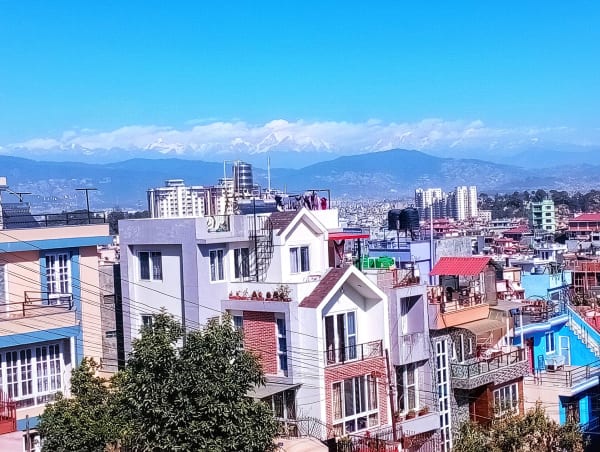
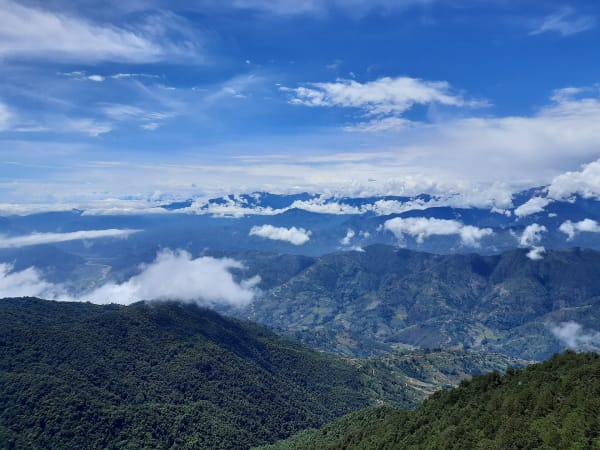
The highest point of the town is crowned by the Uma Maheshwar temple, dedicated to Shiva and his consort Parvati and known locally as Kwacho Dega. It dates from the 17th century and is said to have had four roofs until the great earthquake of 1934 brought one down. The real reason to climb up is the view. From the terrace you look out over the whole Kathmandu Valley, and on a clear morning in autumn or winter the snow peaks of the Langtang and Jugal Himal line the northern horizon.
The lanes themselves
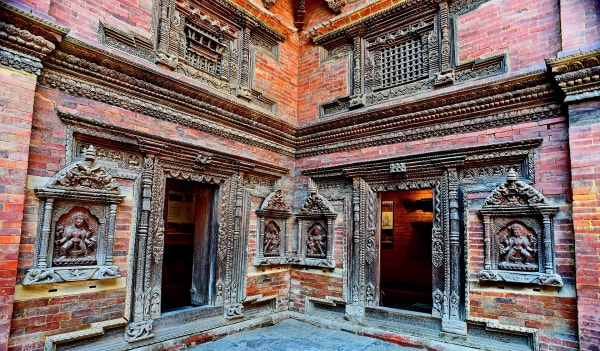
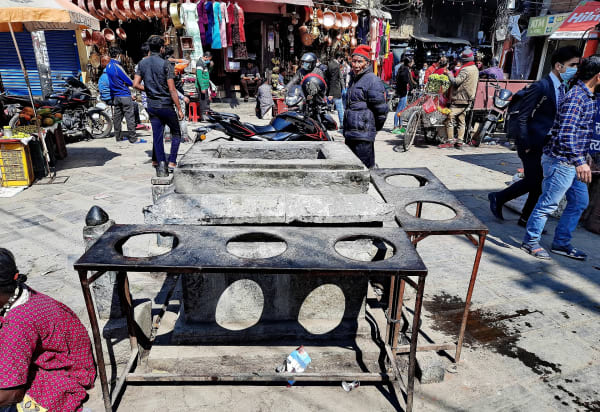
Between the monuments, the pleasure of Kirtipur is simply walking. The lanes are paved in brick and lined with three- and four-storey houses with carved wooden windows. Small squares hold stone water spouts, shrines and resting platforms where older men sit in the sun. In autumn the paving is covered in grain laid out to dry, and you will see weaving, spinning and the everyday life of a Newar town that has not been rebuilt for visitors.
A Walking Route Through the Old Town
This loop takes two to three hours at an easy pace, with time to stop. It is uphill at the start and uses stone steps throughout, so wear shoes with some grip.
- Start at the bottom of the hill. Taxis and buses stop at the foot of the old town, near the market at Naya Bazaar. Take the stepped lanes uphill towards the south.
- Chilancho stupa. Walk a clockwise circuit of the stupa and its courtyards, as Buddhists do.
- Along the ridge to Bagh Bhairab. Follow the lanes north along the spine of the ridge to the temple square in the saddle. Find the swords on the walls.
- Up to Uma Maheshwar. Climb the steps to the top of the northern hill for the view across the valley. This is the best place to sit for half an hour.
- Back down for lunch. Wander down through the lanes on the eastern side of the ridge and find a Newar restaurant for a late lunch.
If you are going to an NPL match, the cricket ground is at the foot of the hill on the university campus. Do the walk in the morning, eat lunch in Kirtipur, and you will be in your seat well before a 4:30 PM start.
What to Eat in Kirtipur
Kirtipur is a good place to try Newar food, which is quite different from the dal bhat you will eat on the trail. Small family-run restaurants around the old town serve it at local prices. Things to look for:
- Samay baji: the classic Newar platter of beaten rice with spiced meat, black soybeans, ginger, a boiled egg and pickles. It is a festival and ritual meal, and the best introduction to the cuisine.
- Choila: buffalo or chicken grilled over a flame and tossed with mustard oil, chilli and spices. Strong and smoky.
- Bara: a savoury lentil pancake, eaten plain or with an egg or minced meat on top. Good for vegetarians.
- Chatamari: a thin rice-flour crêpe with toppings, sometimes called Newar pizza.
- Yomari: a steamed rice-flour dumpling filled with molasses and sesame, eaten above all at the Yomari Punhi festival in December.
- Aila: a strong, clear spirit distilled from rice or millet, served in small clay cups. Treat it with respect, especially before a hike.
Our guide to food on the trail covers what you will eat once you leave Kathmandu, and the Kathmandu food tour is a good way to taste more of the valley's cooking with someone who knows where to go.
Nearby: Chobhar, Taudaha and the Southern Valley
Kirtipur sits at the start of the road south towards Pharping, and several of the valley's quieter sights are a few kilometres away. Together they make a full day.
- Chobhar Gorge. The Bagmati river leaves the valley here through a narrow cut in the hills. Legend says the valley was once a lake, and that the bodhisattva Manjushri sliced through the rim with his sword at this spot to drain it. On the hill above stands the Adinath Lokeshwar temple, its walls hung with pots and pans offered by newly married couples, and at the river is the Jal Binayak temple to Ganesh.
- Taudaha Lake. A small lake just south of Chobhar, said to be the home of Karkotak, the serpent king who stayed behind when the great lake drained. In winter it fills with migrating ducks, and it is one of the easiest places in the valley to go birdwatching.
- Bungamati and Khokana. Two Newar villages a short drive south-east, known for wood carving and mustard-oil pressing. Our Bungamati and Khokana village tour walks between them on a path through the fields.
- Pharping and Dakshinkali. Further south, a cluster of Buddhist monasteries and caves and the Dakshinkali temple to the goddess Kali. See our Pharping and Dakshinkali tour.
- Champadevi. The hill behind Taudaha is one of the best half-day hikes in the valley, covered in our guide to day hikes from Kathmandu.
Getting There and Practical Tips
- By taxi or ride-hailing app: 30 to 45 minutes from Thamel across the Ring Road at Balkhu. Ask for the old town, not the university, or you will be dropped at the campus gate. On NPL match days the road is busy for an hour or two before the start.
- By bus: local buses and microbuses to Kirtipur leave from the Ratna Park area in central Kathmandu. They are cheap and crowded; keep your bag in front of you.
- Go early. Morning light is best for photographs, and the view of the mountains from Uma Maheshwar usually disappears into haze by late morning.
- Temple etiquette: take your shoes off where others do, walk around stupas clockwise, and don't touch offerings. Some inner shrines are open only to Hindus; ask before going in, and don't photograph inside if you are asked not to.
- Dress: shoulders and knees covered is the respectful choice in any temple area.
- Money: carry small notes. Cards are not accepted in most small restaurants and shops.
Seeing Kirtipur With Us
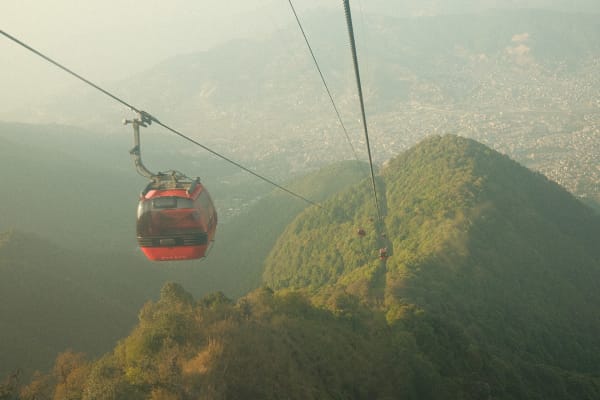
Kirtipur fits easily into a day in Kathmandu before or after a trek. You can add it to the Kathmandu Valley tour, to a Patan day tour, or pair it with the Chandragiri cable car, which is on the same side of the valley. If you have a spare day while waiting for a Lukla flight or recovering from a trek, it is one of the best uses of it.
Tell us what you would like to see when you book, and we will build it into your days in Kathmandu. You can reach us through the contact page; we reply within 24 hours.